Best Carbon Seatposts 27.2: Ultralight Upgrades for MTB and Road Bikes
When upgrading a bike, a carbon seatpost in 27.2mm diameter combines lightweight performance with strong shock absorption. This guide highlights five leading options, detailing specifications, weight, and setup tips to help riders choose the right post for road, mountain, or hybrid bikes. Each product section includes a direct link to its Amazon listing for quick reference.
Summary of chosen products
| Product | Brand | Diameter | Length | Setback | Approx Weight |
|---|---|---|---|---|---|
| TPard Carbon Seatpost 27.2/31.6 | TPard | 27.2 mm | 350 mm | 0 mm | ~220 g |
| Carbon SeatPost 27.2 350mm | Litetop | 27.2 mm | 350 mm | 0 mm | ~220 g |
| HUAONG Carbon Fiber Seat Post 27.2 | HUALONG | 27.2 mm | 350 mm | 20 mm | ~170–175 g |
| Zipp Service Course B2 Seatpost | Zipp | 27.2 mm | 350 mm | 0 mm | Not stated |
| RXL SL Carbon Fiber Seatpost | RXL SL | 27.2 mm | 350 mm | 25 mm | ~210 g |
TPard Ultralight Carbon Seatpost 27.2/31.6

TPard presents a high-strength carbon seatpost crafted from full 3K T800 carbon fiber. The post weighs approximately 220 g and fits Φ27.2 × 350 mm, with a total length of 350 mm and a tube length of 325 mm. The head length is 25 mm, and the post offers zero setback and an adjustable length range from 0 to 320 mm. Rated for up to 220 lbs, it suits both mountain and road bikes. When choosing size, verify your internal diameter or compare with your original seatpost specs.
Litetop Carbon SeatPost 27.2
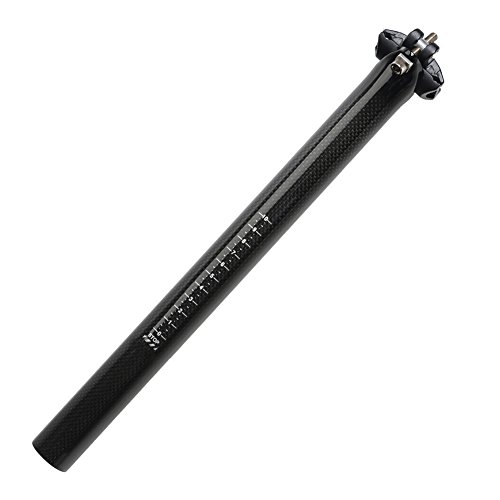
Litetop offers a 27.2 × 350 mm carbon seatpost using 3K carbon fiber. The design mirrors TPard with a 350 mm total length, 325 mm tube length, and 25 mm head length. It weighs roughly 220 g and carries a 580 lb strength rating, with 0 mm setback. The post is intended for use with the original frame diameter; ensure the diameter matches your seat tube for an accurate fit and secure clamping.
HUAONG Carbon Fiber Seat Post 27.2

HUAONG’s 27.2 mm carbon seatpost emphasizes lightweight performance and durability. The post weighs around 170 g to 175 g and features a 350 mm length with a 20 mm offset. It is designed to improve handling, pedal efficiency, and ride comfort by absorbing bumps. The design recommends a maximum rider weight under 100 kg and advises against overtightening beyond 5 Nm, ensuring proper clamping without damage to the carbon structure.
RXL SL Carbon Fiber Seatpost 27.2

RXL SL’s seatpost combines carbon fiber with a 27.2 mm diameter and a 350 mm length. Weighing about 210 g, it uses a 25 mm setback and recommends sizing by the original post diameter or the frame’s inside diameter. Tightening torque guidance is around 4 Nm for secure installation, preventing over-torque injuries to the carbon. The 3K matte appearance adds a subtle, performance-focused aesthetic to riders’ bikes.
Zipp Service Course B2 27.2×350 Seatpost

The Zipp Service Course B2 seatpost uses 3D forged AL-7050 aluminum for strength and a lightweight profile. It features a low-profile dual bolt cradle for precise saddle positioning and a zero-offset design with a 27.2 mm diameter. While not carbon, its optimized clamp and aero-focused construction are favored by competitive riders seeking reliable performance in a minimalist form factor.
Buying Guide: Key Seatpost Choices
Diameter and compatibility: Ensure the seatpost diameter matches the internal diameter of your seat tube. Measure the original post or consult the bike’s frame specifications to select a matching size. Carbon posts excel at reducing weight and absorbing vibrations, improving climbing efficiency and sprint power on uneven terrain.
Length and setback: Typical road and MTB setups use 350 mm posts; 0 mm setback provides a straight saddle alignment, while 20 mm setback shifts the saddle backward to optimize power transfer and posture. Consider how saddle position affects knee clearance, cockpit fit, and overall center of gravity.
Weight and strength: Lighter posts reduce unsprung weight and can enhance acceleration. But ensure the post can handle your riding style and rider weight. Some posts advertise 220 g or around 170–175 g, with varying maximum load recommendations. Respect manufacturer torque specs to preserve carbon integrity.
Material and construction: Carbon fiber seatposts offer excellent vibration damping and stiffness-to-weight ratio. Aluminum posts, including some Zipp models, can provide reliable clamps and easier adjustments but at higher weight. For competitive racing, a setback-adjustable or ultra-light option may improve aerodynamics and pedaling efficiency.
Installation and maintenance: Clean inside the seat tube, apply minimal torque within recommended limits, and avoid overtightening to prevent fiber damage. Regularly check clamp bolts for tightness, especially after rough terrain or crashes. If you’re unsure of the correct diameter, consult a bike shop or the frame manufacturer’s guidelines.
Riding style and compatibility: For cross-country MTB and road endurance builds, a 27.2 mm diameter carbon post with a suitable length provides a balance of stiffness and compliance. If you frequently ride on rough surfaces or carry weight on the bike, consider slightly heavier posts with a larger cross-section or a carbon layup designed for durability.
Note: The product information above is based on listed features and typical specifications. Always verify diameter, length, and set-back against your frame and seatpost requirements before purchasing. Do not rely on photos alone to confirm compatibility.