Best Check Engine Light Scanner Tools for Quick Car Diagnostics
When the check engine light (CEL) comes on, a reliable OBD-II scanner helps identify the fault, read codes, and monitor vehicle data in real time. The right tool saves time and prevents guesswork, whether you’re a DIYer or a professional. Below is an overview of five highly capable scanners commonly recommended for American vehicles, followed by a practical buying guide to help you choose the best model for your needs.
| Product | Brand | Key Strength | Typical Use |
|---|---|---|---|
| ANCEL AD310 Classic | ANCEL | Clear, fast read/clear of codes; live data | DIY fixes and quick CEL checks |
| MOTOPOWER MP69033 | MOTOPOWER | Wide protocol support; user-friendly display | Broad vehicle compatibility |
| VDIAGTOOL VD10 | VDIAGTOOL | Large DTC library; clear codes; I/M readiness | Everyday diagnosis and clear codes |
| BlueDriver Bluetooth Pro | BlueDriver | Professional-grade diagnostics; repair tips | Smartphone-based advanced diagnostics |
| WEJOWE OBD2 Scanner | WEJOWE | Extensive DTC library; multilingual | Multilingual, feature-rich code reading |
ANCEL AD310 Classic Enhanced OBD II Scanner
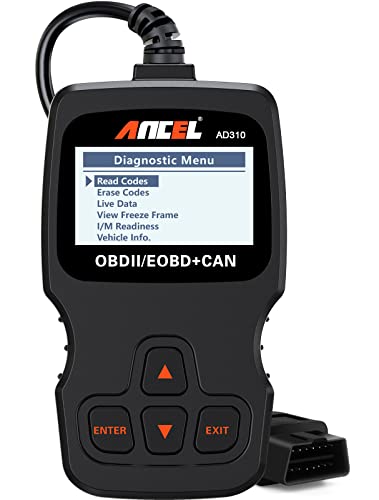
The ANCEL AD310 is a popular, compact OBD II scanner designed to identify the cause of the check engine light quickly. It reads and clears diagnostic trouble codes for emissions-related issues, while also displaying live data, freeze-frame information, I/M readiness, and vehicle information. Its sturdy, compact build includes a thick insulated 2.5-foot cable, reducing the risk of damage during use. The device operates without batteries, drawing power from the vehicle’s OBD-II port, and provides fast, accurate results suitable for everyday maintenance and on-the-spot diagnostics.
MOTOPOWER MP69033 Car OBD2 Scanner

The MOTOPOWER MP69033 offers broad OBD-II protocol support for most 1996 US-based, 2000 EU-based, and Asian cars, including newer CAN vehicles. It features a built-in DTC library for quick fault code interpretation, a 2.8-inch LCD with backlight, and real-time data streams. This device is powered directly from the vehicle via the OBD-II port, eliminating the need for batteries or external chargers. The MP69033 is designed for quick diagnostics, displaying real-time data such as vehicle speed, engine load, coolant temperature, and RPM to aid quick troubleshooting.
VDIAGTOOL VD10 OBD2 Scanner
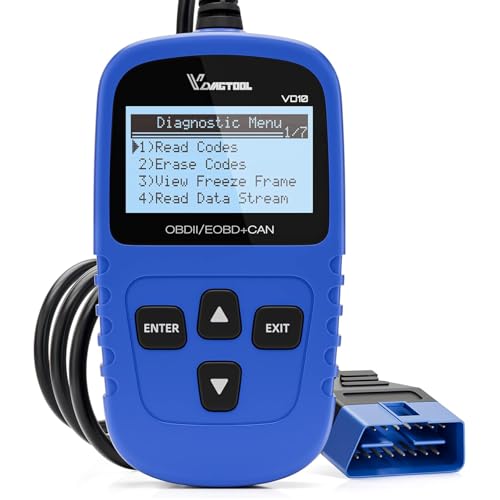
VDIAGTOOL’s VD10 is positioned as a practical DIYer tool with a straightforward interface. It reads and clears codes, displays live data, and shows I/M readiness and vehicle information. The scanner is designed to diagnose faults quickly and clearly, helping owners troubleshoot issues without needing an online search. It also emphasizes ease of use and quick access to DTC definitions from its built-in database, supporting a broad range of OBD-II vehicles and introspective fault analysis for common engine problems.
BlueDriver Bluetooth Pro OBDII Scan Tool
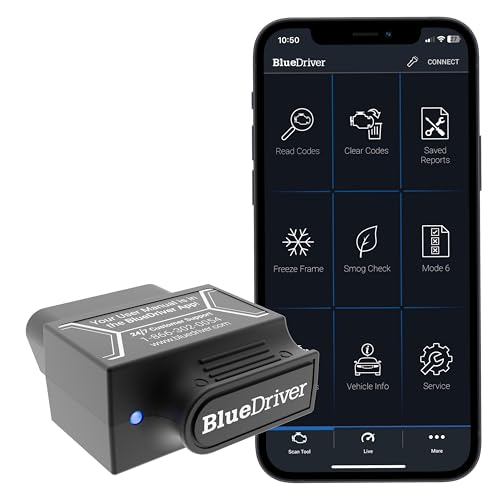
BlueDriver combines ease of use with professional-grade diagnostics. Paired with a smartphone, it reads and clears trouble codes and offers enhanced diagnostics that reveal repair advice and live data. It supports a wide range of systems, including ABS, SRS, and TPMS, providing unlimited repair reports and real-time health monitoring. The tool’s software updates extend its capabilities over time, making it a strong option for ongoing vehicle maintenance across multiple cars and owners.
WEJOWE OBD2 Scanner Diagnostic Tool

WEJOWE emphasizes a robust built-in DTC library with tens of thousands of codes and interpretations. It supports 98% of post-1996 vehicles and offers multilingual support, making it a practical choice for multilingual users. The device reads and clears codes, shows I/M readiness, retrieves VIN, displays live data, and supports a broad range of vehicle information. Its comprehensive data access is designed to help users identify faults quickly and plan subsequent repairs more efficiently.
ANCEL AD410 Enhanced OBD2 Scanner

The AD410 from ANCEL provides enhanced diagnostics with broad OBD-II compatibility, including CAN and other protocols. It offers quick read and clear code functionality, mono-systems testing (like O2 sensors and EVAP), and monitor readiness. While it shares features with the AD310, the AD410 is designed to deliver deeper system testing and broader applicability across a wide range of 1996+ vehicles, including newer CAN-based models. It’s a strong option for those needing more advanced checks beyond basic CEL interpretation.
Buying Guide: Key Considerations For Choosing a Check Engine Light Scanner
- Vehicle compatibility: Ensure the scanner supports your vehicle’s year, make, model, and OBD protocol (OBD-II is standard for 1996+ US vehicles, CAN, ISO, and other protocols vary by region).
- Code reading and clearing: Look for devices that read stored, pending, and live codes, and can clear CELs after repairs. Some models also offer MIL reset and I/M readiness testing.
- Live data and graphs: Real-time sensor data helps assess engine health. Consider models with clear graphs and data streams for easier interpretation.
- Interface and usability: LCD displays, backlighting, multilingual support, and intuitive menus improve handling, especially for DIY users and professionals on the go.
- Library size and definitions: A larger DTC database speeds fault identification. Some scanners offer offline definitions, while others require online lookups or updates.
- Power source: Most handheld scanners draw power from the vehicle; a battery-free design reduces clutter. However, some mobile-first scanners rely on Bluetooth connections to a phone and may need charging considerations.
- Language and regional support: For multilingual users, a scanner offering several languages helps avoid misinterpretation of codes and definitions.
- Expandability and updates: Some models provide ongoing firmware updates and repair insights. Consider whether updates are free or require a subscription.
- Budget vs. feature set: Professional-grade tools cost more but provide deeper diagnostics and broader vehicle coverage. For casual use, mid-range scanners often cover most common needs.
In summary, the best check engine light scanner depends on your vehicle fleet, comfort with diagnostics, and whether you value features like live data, repair guidance, or broad compatibility. The models listed above balance ease of use with robust diagnostic capabilities, making them suitable for American drivers seeking reliable, real-time vehicle health information.