Best Car Code Readers for Vehicles in 2026: Fast Diagnostics, Wide Compatibility, and Easy Use
Choosing a reliable car code reader can save time and money by quickly identifying engine issues and monitoring systems. This guide highlights five top OBD2 scanners, comparing compatibility, features, and ease of use to help American drivers find the right tool for home diagnostics and quick repairs.
Summary of selected products
| Product | Brand | Key Benefit | Connectivity |
|---|---|---|---|
| ANCEL AD310 Classic Enhanced Universal OBD II Scanner | ANCEL | Fast code reading/clearing; robust build | OBDII Port (passive power) |
| FOXWELL NT301 OBD2 Scanner | FOXWELL | Live data, VIN retrieval, basic diagnostics | OBDII |
| VDIAGTOOL VD10 OBD2 Scanner | VDIAGTOOL | Large DTC database; clear codes, freeze frame | OBDII |
| ZMOON ZM201 Professional OBD2 Scanner | Zmoon | Live data, I/M readiness, VIN, 50k+ DTCs | OBDII |
| BlueDriver Bluetooth Pro OBDII Scan Tool | BlueDriver | Advanced diagnostics; repair reports; mobile integration | Bluetooth |
ANCEL AD310 Classic Enhanced Universal OBD II Scanner
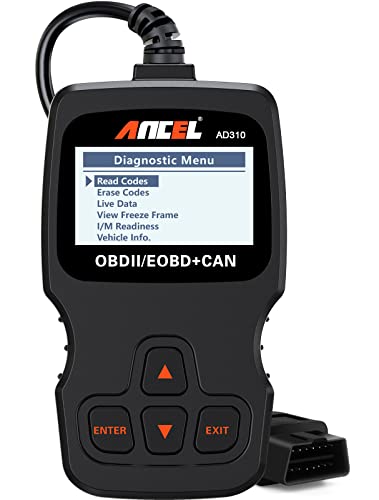
The ANCEL AD310 offers broad compatibility with 1996 and newer OBD2 vehicles, providing quick reads of diagnostic trouble codes, emissions data, and live data streams. It features a compact, sturdy design with a 2.5-foot cable and a clearly labeled keypad. Users can read and clear codes, view freeze frame data, and monitor I/M readiness, all without external power sources. The device is known for its ease of use and fast code retrieval, making it suitable for DIYers and professional technicians alike.
Key capabilities
Reads and clears emission-related codes, displays live data, and supports memory data and freeze-frame capture. It powers directly from the vehicle via the OBDII port, eliminating the need for batteries.
MOTOPOWER MP69033 Car OBD2 Scanner

The MOTOPOWER MP69033 supports all OBDII protocols from 1996 onward and offers a practical suite of functions including code reading and erasing, live data, I/M readiness, VIN retrieval, and more. Its 2.8-inch LCD provides clear visibility, and the scanner is designed for direct OBDII power, with no external battery requirement. It is compatible with many global markets and offers multilingual support to accommodate a diverse user base.
What it covers
Reads and clears codes, displays live data, and provides vehicle information. It supports real-time graphs and data flow, helping pinpoint issues even when a repair is not yet identified.
ZMOON ZM201 Professional OBD2 Scanner

The ZMOON ZM201 provides a robust engine-focused diagnostic experience with a large database of DTCs and capabilities to read/reset codes, view live data with graphs, and monitor EVAP and O2 sensor tests. It disables no critical functions; instead, it emphasizes engine diagnostics and I/M readiness. It’s ideal for users who want a clear, engine-centric view of faults and repair progress.
Operational scope
Works with vehicles after 1996 (US) / 2002 (EU) / 2008 (Asia). It runs directly from the OBDII port and does not require a battery.
BlueDriver Bluetooth Pro OBDII
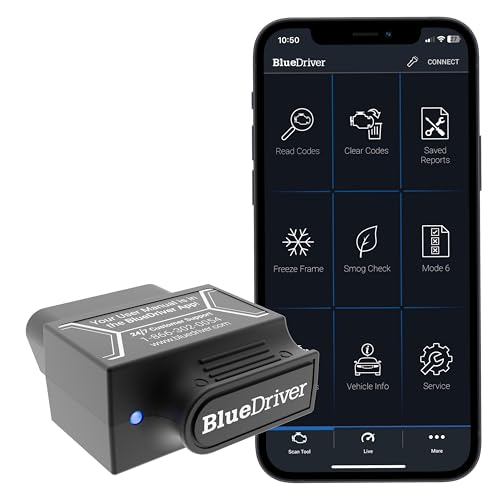
BlueDriver stands out as a wireless, subscription-free diagnostic platform for iPhone and Android. It reads and clears trouble codes and offers extensive coverage of ABS, SRS, TPMS, and other systems. It provides unlimited repair reports and live data monitoring, making it a comprehensive investigative tool for ongoing vehicle health and performance analysis. BlueDriver shines for those who prefer mobile use and proactive maintenance insights.
Buying Guide: Key Considerations And Comparisons
What to look for when choosing a car code reader:
- Vehicle compatibility: Confirm that the device supports your vehicle’s year, make, and model, plus the OBDII protocol used in your region (US, EU, Asia).
- Core features: Prioritize reading/erasing codes, viewing live data, I/M readiness, VIN retrieval, and freeze-frame capabilities. If you need EVAP or EV diagnostics, check for those options.
- User interface: A clear display, intuitive menus, and logical code definitions save time. Large screens and backlighting help in poor lighting conditions.
- Power and connectivity: Most devices draw power from the OBDII port; some offer Bluetooth or Wi-Fi for mobile apps. Consider whether you prefer a handheld or wireless solution.
- Data depth: Some tools include tens of thousands of DTC definitions or advanced live data graphs. More extensive databases reduce the need for online lookups.
- Multi-language support: Helpful for non-English users or multilingual households.
- Software updates: Tools with ongoing updates provide access to new codes and improved definitions over time.
- Build quality and portability: A sturdy design and compact size reduce damage risk in tight engine bays.
- Limitations: Some devices focus only on engine (no ABS/SRS/Trans), while others offer broader system coverage. Choose according to your diagnostic goals.
Comparison at a glance:
- ACHEL AD410 vs AD310: AD410 offers broader diagnostics and harder system checks but may be heavier; AD310 emphasizes simplicity and portability for quick checks.
- FOXWELL NT301 vs ZMOON ZM201: NT301 excels in live data and VIN retrieval for quick checks; ZM201 emphasizes a large DTC database and EVAP testing.
- VDIAGTOOL VD10 vs MOTOPOWER MP69033: Both provide essential OBDII features, with VD10 highlighting a strong DTC database and freeze-frame insights, while MP69033 focuses on a clear LCD and broad compatibility.
- BlueDriver: Distinct for wireless operation and repair guidance reports, suitable for mobile users who prefer app-based diagnostics; not a direct handheld alternative.
Usage scenarios to consider:
- Home DIY maintenance: A handheld reader with clear codes and instant definitions helps non-professionals quickly identify issues.
- Shop readiness: Mechanics may favor tools with broader system support, advanced live data, and robust data logging.
- Mobile diagnostics: Wireless tools with robust app ecosystems allow diagnostics on-the-go and remote record-keeping for repairs.