Best Code Scanners for Cars: Compare Top OBD2 Tools for 1996+ Vehicles
Finding the right OBD-II scanner can save time, money, and headaches when diagnosing check engine lights. The following five products showcase popular options with broad compatibility, live data, and clear fault-code definitions. This guide highlights how each tool reads codes, supports widespread vehicle protocols, and helps you decide which scanner fits your DIY or professional needs.
| Product | Brand | Key Benefit |
|---|---|---|
| ANCEL AD310 Classic Enhanced Universal OBD II Scanner | ANCEL | Compact, fast diagnostics; easy to read data |
| MOTOPOWER MP69033 Car OBD2 Scanner | MOTOPOWER | Multifunction with LCD display and broad protocol support |
| FOXWELL NT301 OBD2 Scanner | FOXWELL | Live data and general fault code reading; no ABS/SRS |
| VDIAGTOOL VD10 OBD2 Scanner | VDIAGTOOL | Built-in DTC lookup and large feature set |
| ANCEL AD410 Enhanced OBD2 Scanner | ANCEL | Wide compatibility with advanced diagnostic tests |
ANCEL AD310 Classic Enhanced Universal OBD II Scanner
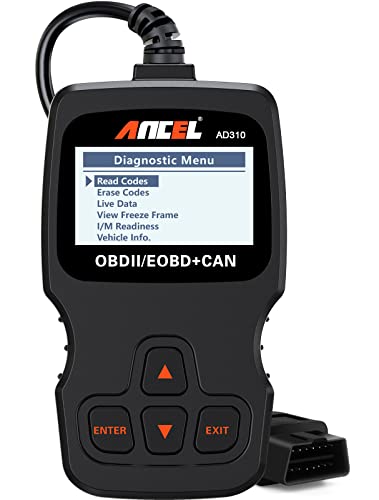
The AD310 from ANCEL is a compact, budget-friendly OBD II scanner designed for quick reads of emission-related codes and live data from 1996 and newer vehicles. It supports standard OBD II protocols and can read and clear diagnostic trouble codes, view freeze frames, monitor readiness, and collect vehicle information directly from the OBD port. The device emphasizes a sturdy build with a 2.5-foot insulated cable and a lightweight body, making it easy to handle in cramped engine bays. It delivers fast, accurate results that help determine whether a repair is needed before visiting a shop. Users power the unit directly from the vehicle, with no external battery or charger required. The AD310’s user-friendly interface and clearly labeled buttons support quick diagnostics for both DIY enthusiasts and professionals.
Strengths include a robust build, portability, and rapid fault-code resolution. Some users may want more advanced features such as ABS/SRS diagnostics or bidirectional controls, which are outside the scope of this model. Still, for basic code reading and clearing, the AD310 remains a popular, reliable choice for many cars built since 1996.
MOTOPOWER MP69033 Car OBD2 Scanner

The MP69033 by MOTOPOWER offers a broad OBD-II feature set designed for versatile use across 1996 to present vehicles, including many EU, US, and Asian cars. It provides a built-in DTC lookup library, enabling quick identification of engine light causes, and supports reading, erasing codes, viewing freeze frames, I/M readiness, data flow, and real-time graphs. The device outputs vehicle data on a clear 2.8-inch LCD screen with white backlight and adjustable contrast, improving readability in various lighting. It draws power directly from the vehicle via the OBDII port, so no extra batteries are needed. Its multilingual support (English, German, Dutch, Spanish, French, Italian) makes it accessible to a wide audience.
While the MP69033 covers many protocols and languages, it may lack some advanced features found in higher-end models, and some users may require more extensive live data visualization or special function support. For general maintenance checks, code clearing, and basic diagnostics, it provides solid performance and value.
FOXWELL NT301 OBD2 Scanner

The NT301 from FOXWELL is a capable code reader focused on essential OBD-II functions and live data, ideal for quick checks and frequent diagnostics. It enables reading DTCs, accessing emissions readiness, turning off the check engine light, and retrieving VIN under the right conditions. Graphing live data allows quick spotting of sensor anomalies over time. The device emphasizes straightforward operation, though it does not support ABS, SRS, transmission, or some advanced monitoring features. This makes it a strong choice for hobbyists or professionals who want a reliable, affordable tool for routine diagnostics and code clearing. Proper operation requires ignition to be on for code reading, and complete repair is needed before certain codes can be cleared.
Limitations include a lack of broader system testing beyond engine-related codes and a caution that repeated fault codes may reappear if underlying issues remain unresolved. For users primarily needing fast code reading and basic live data, the NT301 offers dependable performance with a simple interface.
VDIAGTOOL VD10 OBD2 Scanner
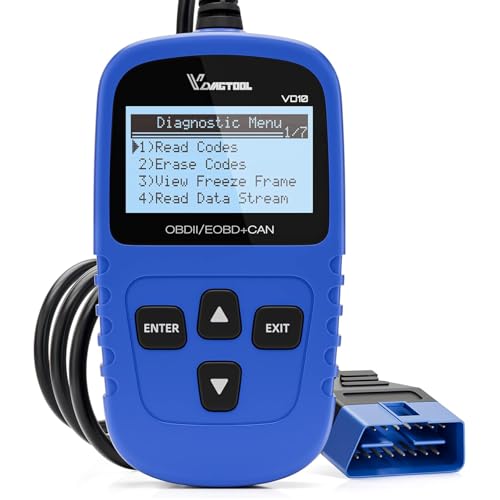
The VD10 from VDIAGTOOL targets a broad audience of DIYers and car owners, offering a mix of essential OBD-II functions and a built-in DTC library with over 3,000+ codes. It supports reading and clearing codes, live data streams, freeze-frame viewing, I/M readiness checks, and vehicle information retrieval. The scan tool is designed for ease of use and quick diagnosis, enabling users to identify root causes without external resources. It emphasizes reliability and speed by directly communicating with the vehicle’s OBD-II port for power. The TFT display provides definitions and on-screen guidance, helping users understand fault codes without needing online searches.
Considerations include the depth of code definitions and whether you need expanded capabilities such as ABS/SRS or transmission diagnostics. The VD10 offers strong core functionality for everyday maintenance and troubleshooting across a wide range of OBD-II compliant cars.
ANCEL AD410 Enhanced OBD2 Scanner

The AD410 by ANCEL is a more advanced OBD-II scanner designed for wider compatibility and enhanced diagnostics. It supports all 16PIN vehicles with OBDII, including multiple communication standards (KWP2000, ISO9141, J1850 VPW, J1850 PWM, CAN). It is compatible with 1996 US, 2000 EU, and Asian vehicles, including light trucks and SUVs, and offers multilingual capabilities. The AD410 can quickly read and clear stored emission-related codes, pending codes, and provides a vast DTC lookup library with over 42,000 entries. It also supports MIL reset, monitor readiness checks, and basic fault-code interpretation to aid pre-purchase or pre-repair assessments. Note that it is primarily an engine code reader and does not support ABS, SRS, or certain other systems.
Advantages include extensive DTC coverage and practical testing capabilities for EVAP and O2 sensors. For users seeking deeper diagnostics on engine and emission systems, the AD410 provides a solid blend of breadth and simplicity, with the caveat that it does not replace full-system scan tools for more complex diagnostics.
WEJOWE OBD2 Scanner with Mode 6 & 8

The WEJOWE OBD2 scanner emphasizes a comprehensive suite of professional features, including a built-in library with tens of thousands of DTC definitions, mode 6 and mode 8 tests, I/M readiness, and VIN retrieval. It targets users who want deeper diagnostics beyond standard codes, with a focus on accurate fault identification and fast code clearing. The tool is compatible with most post-1996 vehicles and supports multiple languages. Its extensive DTC lookup and support for advanced modes make it a robust option for hobbyists who are building a broader diagnostic toolkit. If you require more than basic read/clear capabilities, this scanner can be a strong contender.
Buying Guide: Key Purchase Considerations For Code Scanners
- Vehicle compatibility: Confirm the scanner supports your car’s year, make, model, and OBD protocol (OBDII/CAN). Some scanners emphasize wide compatibility across US, EU, and Asian vehicles; others focus on specific brands or features.
- Core functions: Prioritize basic read/clear codes, live data, freeze-frame, I/M readiness, and VIN retrieval. If you need more, look for advanced modes like Mode 6/8, EVAP tests, or bi-directional controls.
- Display and usability: A readable screen, backlight, and clear navigation help, especially when diagnosing in dim garages. Consider a larger display for quicker data interpretation.
- Power source: Most units draw power from the vehicle; some require no external battery. Ensure your preferred model doesn’t need chargers or batteries to operate.
- DTC database size: A larger built-in library reduces the need to search online for definitions. Models with tens of thousands of codes offer better coverage, particularly for older or less-common vehicles.
- One-time vs. subscription: Some tools offer free, no-subscription access to repair reports or code definitions; others require ongoing fees for updates or advanced features.
- Language and regional use: If multiple users will operate the tool, multilingual support can improve comprehension and usability in different markets.
- Ease of use vs. depth of diagnostics: Hobbyists may prefer simpler interfaces, while professionals might need comprehensive diagnostics, live data graphs, and more robust data logging.
- Physical build: A sturdy body and reliable cable reduce wear in tight engine bays. Portability matters if you frequently carry the tool between vehicles or shops.
When choosing, balance price with feature depth and vehicle coverage. For casual maintenance, a compact, straightforward reader suffices. For DIY enthusiasts seeking broader testing (including EVAP, O2 sensor checks, and live data trails), a model with a larger DTC library and expanded diagnostic modes is worth the investment. Always verify compatibility with your vehicle’s protocol and confirm whether the device supports required features like MIL reset or bidirectional testing before purchase.