Best Connecting Rods for Boosted Engines
Turbocharged and supercharged builds demand components that survive high horsepower and extreme RPM. This guide highlights five high-performance connecting rods that suit boosted engines across GM, VW/Audi, Chevy small blocks, Honda/Acura, and Subaru platforms. Each option balances strength, weight, and reliability to help you choose rods that keep your boost levels in check and your engine performing at peak power.
| Product | Brand | Fit / Applications | Notable Feature |
|---|---|---|---|
| Roneeson Engine Connecting Rod | Roneeson | GM trucks and sedans including Avalanche, Silverado, Suburban, Tahoe; Camaro; Corvette; Express; Savana; Sierra; Yukon; more | Broad vehicle compatibility for boosted GM V8s |
| maXpeedingrods H-Beam LS Connecting Rods | maXpeedingrods | LS engines (Gen III/IV) including LS3/LS7 variants | H-beam design with ARP bolts for high-horsepower LS builds |
| SHLPDFM 8 pcs Set I-Beam Connecting Rods | SHLPDFM | Chevy SBC 350-based builds | Chromoly 5140 steel, 500 hp rating, robust I-beam design |
| maXpeedingrods K24 / 2.4L H-Beam Rods | maXpeedingrods | Honda/Acura K-series 2.4L engines (K24 family) | H-beam with ARP bolts for boosted Honda/Acura platforms |
| maXpeedingrods Subaru EJ/FA Family H-Beam Rods | maXpeedingrods | Subaru EJ20/ EJ25, various Legacy/Impreza/Forester applications | Lightweight H-beam design for reliable boosted Subaru builds |
Roneeson Engine Connecting Rod For GM Boosted Builds

The Roneeson connecting rod family targets a wide range of GM powertrains, including Avalanche, Camaro, Caprice, Colorado, Corvette, Express, Impala, Suburban, Tahoe, Trailblazer, Sierra, and more. Compatibility extends to multiple V8s in 5.3L, 5.7L, 6.0L, and 6.2L variants, making it a practical choice for boosted street builds or performance upgrades. The design emphasizes broad fitment across several generations, potentially reducing the need for multiple rod sets in a shop that services GM platforms. This option supports high-boost applications with robust endurance for daily-drive demands and weekend throttle therapy alike.
maXpeedingrods LS H-Beam Connecting Rods
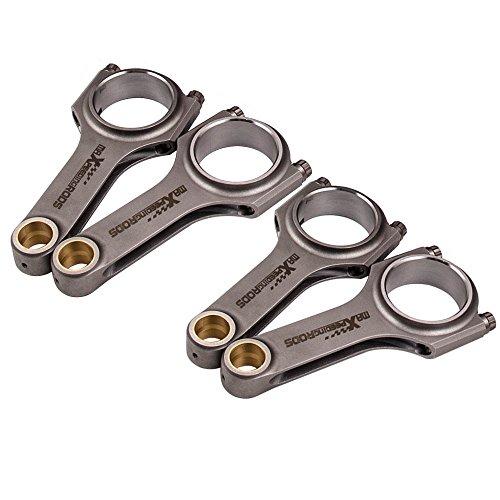
Designed for LS engines, these H-beam rods use high-strength materials and ARP bolts to withstand boosted power levels. The 6.125″ center-to-center length aligns with common Gen III/IV LS engine piston strokes, helping maintain proper rod-to-piston geometry under high boost. The kit emphasizes fatigue resistance, precision machining, and a clamping setup that remains secure through harsh launches. This is a strong choice for enthusiasts building forced-induction LS builds, including street machines and track-ready setups.
SHLPDFM Eight-Piece I-Beam Rod Set
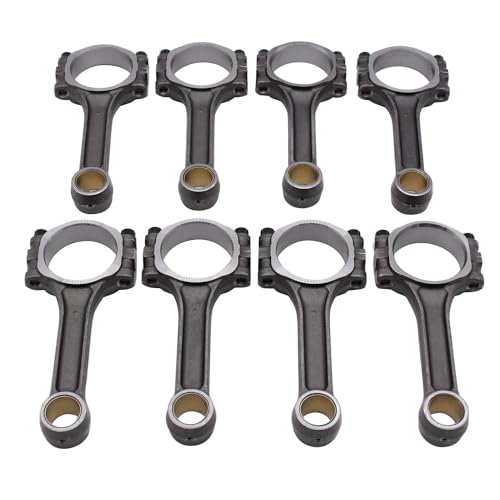
This 8-piece I-beam rod set is crafted for Chevy SBC 350 platforms, a common choice in boosted small-block builds. Key specs include a 5.700″ length, 2.100″ big end diameter, and a 0.927″ wrist pin diameter, paired with 3/8″ bolts. Constructed from forged 5140 steel, with chromoly bolts and a 12-point head, these rods offer a balance of strength and weight. The advertised horsepower tolerance around 500 hp makes them suitable for moderate boost levels in hot rod applications.
BTR 4340 Forged LS Connecting Rods
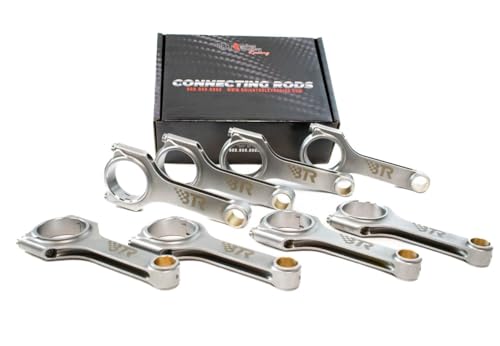
Brian Tooley Racing (BTR) offers 4340 forged H-beam LS rods that are engineered for high-horsepower LS builds. These rods are heat-treated, stress-relieved, and shot-peened to maximize fatigue resistance, an important factor when boosting horsepower and RPM. The kit includes precision ARP hardware and features a consistent 6.125″ center-to-center length for Gen III/IV LS engines. This option is tailored toward high-performance street and track LS setups where reliability under boost is critical.
MOTOKU Engine Connecting Rod for Toyota / Lexus Boost

The MOTOKU line targets multiple Toyota-based boosted builds, including Camry, Highlander, and RAV4 variants with 2.4L and 2.0-2.4L engines. While not a one-size-fits-all for every boosted platform, MOTOKU rods provide a balanced option for four-cylinder applications upgraded with boosted setups. These rods aim to deliver reliable performance in mid-range boost environments and are compatible with several 2.4L powertrains across Toyota and Lexus models.
Buying Guide: Key Considerations For Boosted Applications
- Material strength: Forged 4340 steel and chromoly (5140) are common choices for boosted builds due to high fatigue resistance and improved load capacity. Consider rods with heat treatment and surface finish that resist micro-cracking under high horsepower.
- Beam style and weight: H-beam rods tend to offer higher strength-to-weight ratios suitable for boost, while I-beam rods may be lighter and adequate at moderate boost. Choose based on your power goals, RPM range, and balance needs.
- Center-to-center length accuracy: Proper rod length ensures correct piston timing and compression. Verify manufacturer specs align with your engine’s stroke and piston geometry.
- Bolts and hardware: ARP bolts and proper torque specs are critical under boost. Pre-torqued hardware helps maintain cap retention during high-load events.
- Compatibility scope: Some rods are designed for broad vehicle families (GM platforms, for example). If you’re building across multiple platforms, broad compatibility can simplify sourcing but confirm fitment for your exact model year and engine code.
- Intended power band: Check the advertised horsepower rating and the boost environment it’s designed to handle. Avoid undersized rods on engines planned for aggressive boost or frequent high-RPM runs.
- Maintenance and inspection: Boosted engines demand regular inspection for wear, especially on journals and rod bolts. Plan for periodic torque checks and potential re-sizing if you rebuild.
When selecting connecting rods for a boosted build, prioritize reliability, compatibility, and the intended horsepower range. The options listed provide a spread across GM, LS, Chevy small-block, Honda/Acura, and Subaru platforms, helping you tailor your choice to your specific engine and boost goals. Always verify fitment with your exact VIN, engine code, and build specifications before purchasing.