Best Cylinder Head Gasket Sealer Options for American Drivers
Choosing the right cylinder head gasket sealer can help address coolant and compression leaks without major engine work. This guide reviews five proven products, outlining how they seal head gaskets, blocks, and related components. It highlights compatibility, ease of use, and potential limitations to help readers compare options quickly and make an informed choice.
| Product | Brand | Key Benefit |
|---|---|---|
| HG-1 Head Seal | Bar’s Leaks | Fastest fix for blown head/gasket leaks; antifreeze compatible |
| K-Seal ST3501 | K-Seal | Permanent repair with ceramic micro-fibres; no draining |
| Head Gasket Sealer | BlueDevil Products | Permanent seal; works on head gaskets, warped/cracked heads |
| Block Seal Head Gasket Fix | Bar’s Leaks | One-step, heavy-duty seal for leaks in heads, blocks, plugs |
| Steel Seal 6-Cylinder | STEEL SEAL | Permanently seals head gasket leaks; DIY pour-in |
Bar’s Leaks HG-1 Head Seal

Bar’s Leaks HG-1 Head Seal is designed to repair blown head and intake gasket leaks quickly. The product promotes a fast, safe solution for coolant-related head gasket issues and is compatible with all 50/50 coolant mixes. It is intended for engines that can idle for about 15 minutes without overheating and without coolant loss, making it suitable for emergencies and short-term fixes. The formula claims compatibility with yellow, orange, pink, red, blue, and green silicate-based and non-silicate-based antifreezes, including OAT/HOAT types, with no draining or thermostat removal required.
Application considerations include the need for proper cooling system operation during use and mild engine warm-up to promote sealing. While effective for certain head gasket problems, it may not resolve all cracked heads or severely warped blocks in every scenario. As with any sealer, follow the label instructions precisely and monitor cooling system performance after application.
K-Seal ST3501 Head Gasket Sealer
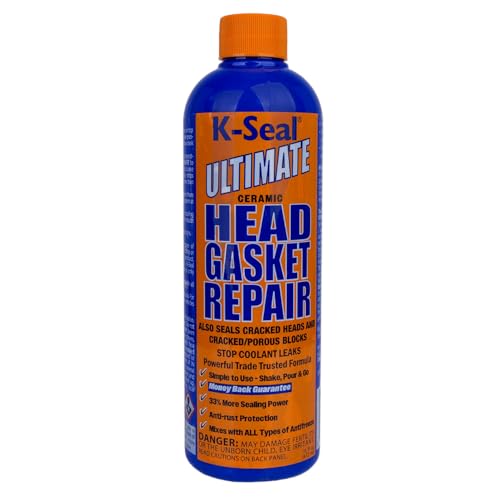
K-Seal ST3501 Pour and Go Head Gasket Sealer offers a permanent repair approach. The container claims 33% more sealing power than standard formulas and uses a ceramic micro-fibre-based composition to seal leaks up to 0.64 mm. Its self-contained design requires no draining or flushing; simply shake, pour, and run the engine as normal. For larger engines, the manufacturer suggests using two bottles. This makes K-Seal suitable for a wide range of cars, trucks, and heavier machinery, with a focus on permanence rather than temporary sealing.
Limitations to consider include engine type compatibility and the potential need for multiple bottles on larger engines. Effectiveness depends on the severity and location of the leak. As with all sealants, performance is influenced by engine temperature management and cooling system integrity, so address any underlying cooling issues if leaks reappear after treatment.
BlueDevil Head Gasket Sealer

BlueDevil’s Head Gasket Sealer emphasizes ease of use and a permanent seal. It is described as a universal solution that can seal leaks in blown head gaskets, warped or cracked heads, heater cores, and freeze plugs. The product is designed to work with gasoline and diesel engines and aims to provide a durable, long-lasting fix without extensive disassembly. The emphasis is on a straightforward pour-in application that avoids professional intervention for many common head gasket symptoms.
Users should consider engine type, cooling system condition, and timing. While the sealant offers broad applicability, not all leaks respond equally, and persistent overheating or recurring leaks may indicate deeper engine damage requiring diagnostic assessment or professional service.
Bar’s Leaks Block Seal Head Gasket Fix
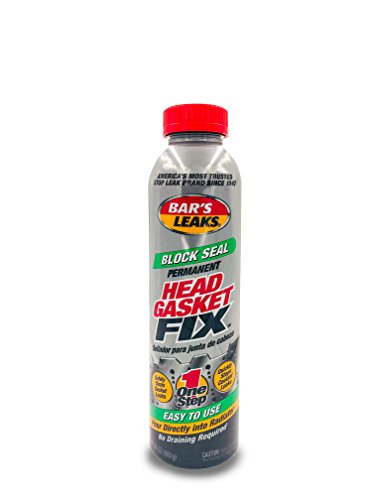
Bar’s Leaks Block Seal Head Gasket Fix combines antifreeze-compatible sealing liquid with gasket sealing particles. The formula is designed to penetrate gaps and cracks in a range of areas, including head gaskets, cylinder heads, and blocks, as well as freeze plugs. It claims to endure high engine temperatures as a catalyst to harden the seal, creating a permanent fix. A one-step application style is promoted, with no draining required for engines that can idle without overheating for about 20 minutes.
Considerations include compatibility with engine materials (aluminum vs. cast iron) and the size of the leak. While it can address multiple leak paths in a single treatment, very large or complex cracks might necessitate mechanical repair. Always ensure the cooling system is functioning correctly after any sealant use and monitor performance closely.
Steel Seal Blown Head Gasket Fix Repair Sealer — 8 Cylinder

Steel Seal Blown Head Gasket Fix is a do-it-yourself pour-in solution claimed to permanently seal cracks in the head gasket. The product emphasizes widespread use among repair shops and a strong track record nationwide. It is positioned as a robust option for a range of engines and leak severities, with a focus on durability and a straightforward application process that does not require professional tools or drains in many cases.
Users should assess engine displacement and the specific leak pattern before applying. While Steel Seal markets a durable, permanent fix, it may not address every engine design, especially in high-performance or heavily damaged units. Post-application monitoring and cooling system checks are advised to gauge long-term success.
Steel Seal Blown Head Gasket Fix — 4 Cylinder
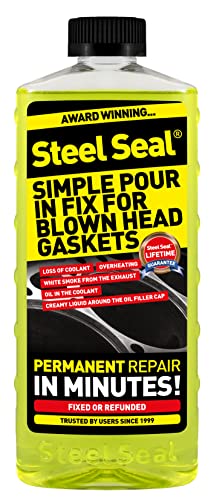
Steel Seal for 4-cylinder engines presents a similar approach to the 6- and 8-cylinder variants, promising a permanent fix for head gasket leaks with a DIY pour-in method. The product lineup highlights triple-patented formulas and a focus on sealing leaks permanently, appealing to readers seeking a one-step emergency repair solution for smaller engines as well as light commercial applications.
Buying Guide: Key Purchase Considerations
- Leak type and location: Sealers vary in effectiveness depending on whether leaks are in the head gasket, intake gasket, or coolant passages. Identify leak symptoms before choosing a product.
- Engine type and size: Some formulas advertise compatibility across gasoline and diesel engines or specific cylinder counts. Larger engines may require more product or multiple bottles.
- Thermal condition: Sealing relies on engine heat and coolant circulation. Avoid using sealants on engines with ongoing overheating or poor cooling system performance.
- Material compatibility: Consider aluminum vs. cast iron heads and the type of coolant already in use (OAT/HOAT vs. conventional silicate-based antifreeze).
- Ease of use: Look for one-step pour-in formulas with minimal disassembly and no draining, if possible.
- Longevity: Permanent sealers aim for lasting fixes, but some products are designed as interim solutions. Plan for diagnostic follow-up if leaks recur.
- Warranty and professional support: Some brands offer guidance or guarantees for their sealing products; review any terms that apply to your vehicle’s warranty.