Best Disc Brakes for Mountain Bikes: Top Hydraulic and Mechanical Sets in 2026
Choosing the right disc brake system can dramatically improve control, stopping power, and durability on mountain trails. This guide highlights five widely compatible disc brake kits that fit a range of MTB, E-bike, fat bike, and road-like setups. Each option includes rotor size, mounting type, and pad material to help you compare performance and maintenance needs. Whether you seek hydraulic power for long descents or a reliable mechanical setup for cross-country riding, the selections below cover common configurations and installation notes to support informed purchasing decisions.
| Product | Brand | Rotor Size | Brake Type | Notes |
|---|---|---|---|---|
| TOBWOLF 1 Pair MTB Disc Brake Set | TOBWOLF | 160 mm | Hydraulic | Left Front, Right Rear, aluminum calipers |
| Bike Disc Brake Kit (Fat-Cattie) | Fat-Cattie | 160 mm | Mechanical | Front and rear calipers, complete hardware |
| TOBWOLF 1 Pair MTB Front & Rear Cable Disc Brake | TOBWOLF | 160 mm | Mechanical | Post mount, 2 rotors included |
| TOBWOLF Upgrade Four-Piston MTB Disc Brake Set | TOBWOLF | 160 mm | Hydraulic | Four-piston, ceramic pads |
| RUJOI Bike Disc Brake Kit | RUJOI | 160 mm | Mechanical | Full aluminum calipers, pad adjuster |
TOBWOLF 1 Pair MTB Disc Brake Set

This hydraulic disc brake kit integrates left-front and right-rear control with 160 mm rotors and aluminum oil-pressure calipers. The setup emphasizes reliability in varying weather with corrosion-resistant components and upgraded ceramic brake pads designed to resist rotor wear. It is suitable for mountain bikes and E-bikes, including fat bikes, and can be adapted if brake cable positioning needs adjustment. Installation involves caliper alignment to the hub and disc, with proper pad clearance and air bleeding for peak performance.
Key points include: left lever for front, right lever for rear (positioning may vary by region); easy alignment and fine-tuning screws; and compatibility with extended riding sessions through heat-resistant materials. A user manual and video support are available on the product page for detailed steps.
Ideal for riders seeking strong stopping power with a lighter aluminum caliper body, this kit prioritizes steady performance in wet and dry conditions. Pros include reduced squeak when properly aligned and fewer heat-induced power drops during long descents. Potential considerations involve proper bleeding and oil management during initial installation and occasional re-bleeding after air intake events.
Bike Disc Brake Kit by Fat-Cattie

This mechanical disc brake kit includes two 160 mm rotors, front and rear calipers, cables, and a complete hardware set including screws. It is designed to support multiple rotor sizes and provides a cost-effective option for riders preferring mechanical braking. The kit emphasizes compatibility with standard MTB frames and broad adaptability for front and rear caliper mounting. The high-quality materials aim to deliver quiet braking with reduced heat buildup, supported by a reinforced disc brake base design for improved durability.
Considerations for this option include ease of maintenance with mechanical versus hydraulic systems and the necessity of correct cable tension and housing compatibility. It pairs well with budget-minded builds or bicycles that require straightforward, replaceable components without hydraulic lines. It may not deliver the same modulation and bite at low temperatures as high-end hydraulic systems, but it offers solid stopping power and predictable feel in everyday use.
TOBWOLF 1 Pair MTB Front & Rear Cable Disc Brake
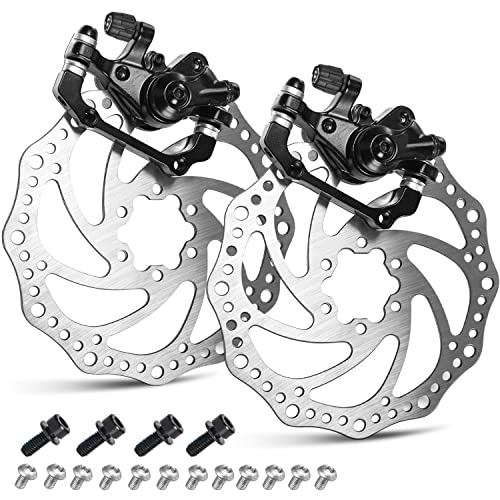
This post-mount mechanical disc brake kit provides a 2×160 mm rotor setup with 160 mm rotors and additional mounting bolts included for straightforward installation. The set includes calipers with front 0 mm and rear 20 mm spacing, ensuring a robust braking platform for a variety of mountain and road-adjacent frames. It emphasizes easy serviceability through standard tools and includes the necessary hardware to secure rotors and calipers, with lightweight aluminum calipers designed to resist deformation under heavy braking.
Key advantages include the practical assembly notes and the broad compatibility with 74 mm and 51 mm mounting spacing, plus the included bolts and hardware. For riders seeking a budget-friendly upgrade with reliable, predictable braking on mixed terrain, this option offers straightforward maintenance and a familiar mechanical feel. Users should confirm compatibility with their frame’s bolt spacing and rotor fit before purchase.
TOBWOLF Upgrade Four-Piston MTB Disc Brake Set

This hydraulic system features a four-piston dual-sided design and CNC-machined aluminum calipers to deliver strong, linear braking. The kit includes 160 mm rotors and ceramic brake pads for heat resistance and consistent stopping power during long downhill sections. An upgraded pad retraction system and tool-free pad replacement design simplify maintenance, while a left-front/right-rear configuration requires attention to lever positioning during setup. The kit supports high-demand rides including e-bikes and technical trails.
Considerations include ensuring proper alignment to avoid rotor warp, routine pad replacement, and ensuring compatible hose lengths for your frame. The use of ceramic pads helps reduce rotor wear and quenching, but riders should watch for pad bed-in and oil contamination if the system is not bled properly. This setup is suitable for riders who prioritize power and fade resistance in challenging conditions.
RUJOI Bike Disc Brake Kit
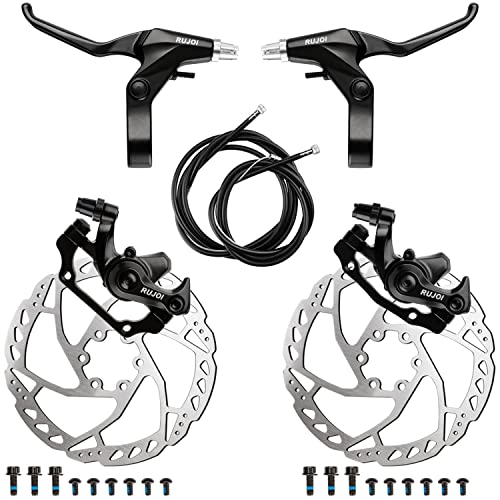
This kit combines full aluminum front and rear calipers with 160 mm rotors and a full set of levers. It emphasizes tool-free pad adjuster for quick realignment after a ride or a crash, along with compatibility with standard 22 mm handlebars. The assembly includes multiple bolts and cables, designed for straightforward installation on a range of mountain and road-oriented frames. The two-lever setup supports reliable daily braking with easy maintenance and replacement parts availability.
Performance considerations include ensuring proper lever reach and pad alignment for consistent bite, as well as confirming rotor compatibility with your current wheel hubs. Again, this mechanical system provides dependable stopping power with cost efficiency, making it a practical choice for riders who want a solid mechanical alternative to hydraulic options without the added complexity of fluid systems.
Buying Guide: Disc Brakes For Mountain Bikes
Key purchase considerations help compare hydraulic versus mechanical disc brakes and the specific needs of different riders and bikes. Below are important factors and how they affect choice:
- Braking power and modulation: Hydraulic brakes typically offer smoother, more controllable stopping power and better modulation, which matters on steep descents or loose terrain. Mechanical brakes are dependable and easier to service, often at a lower upfront cost.
- Rotor size and compatibility: 160 mm rotors are common for cross-country and trail bikes, but some riders prefer 180 mm for more braking leverage. Verify rotor compatibility with your frame, fork, and hub design, including post-mount or IS mount standards.
- Caliper design and pad material: Four-piston calipers provide strong bite and even pad wear across the rotor, while two-piston designs are often lighter and suitable for most riding styles. Ceramic pads tend to endure heat better but can be more expensive and noisier initially until bedded in.
- Maintenance and bleeding: Hydraulic systems require regular bleeding and oil management to maintain braking power, especially after long descents or exposure to mud and water. Mechanical systems need cable tension adjustments and occasional pad and rotor checks.
- Installation and compatibility: Some kits are sold as complete sets with levers, calipers, rotors, and cables, while others require sourcing individual components. Check mounting standards (post-mount vs IS), lever reach, and compatibility with your bike’s handlebar diameter and frame clearances.
- Weight and durability: Aluminum calipers reduce weight, while larger pistons or four-piston designs add mass but can improve performance in demanding conditions. Consider the balance between weight, stiffness, and longevity given your typical riding environment.
- Noise and feel: Proper alignment, pad seating, and rotor cleanliness affect braking quietness. Squeaking often signals misalignment, rotor contamination, or worn pads that need replacement.
In summary, riders seeking high-end braking performance and fade resistance will typically lean toward hydraulic systems with larger rotors and multi-piston calipers. Those prioritizing ease of installation, lower maintenance, or budget-friendly upgrades may prefer mechanical kits with straightforward serviceability. Always confirm compatibility with your specific frame, fork, and wheel setup before purchasing to ensure optimal performance and safety on the trail.