Best Car Audio DSPs for 2026: Top Digital Signal Processors
Choosing the right digital signal processor (DSP) can dramatically improve your car audio by delivering precise tuning, cleaner signal paths, and customizable crossovers. The following selections represent practical, feature-rich DSPs that suit a range of setups—from basic two-channel systems to multi-channel configurations. Each option is evaluated on ease of use, flexibility, and sound shaping capabilities to help you decide which model best fits your vehicle and listening preferences.
Product Overview
The table below summarizes five top DSP choices for car audio, highlighting channel count, key features, and compatibility to help you compare at a glance.
| Product | Brand | Key Features | Channels | Notes |
|---|---|---|---|---|
| PRV AUDIO Car Audio DSP 2.8X | PRV AUDIO | 2 inputs, 8 outputs, 15-band EQ, 12 presets | 2in / 8out | LCD interface for real-time adjustments |
| PRV AUDIO Car Audio DSP 2.4X | PRV AUDIO | 2 inputs, 4 outputs, 15-band EQ, 12 presets | 2in / 4out | Compact 4-channel option |
| Taramp’s Pro 2.4S DSP | Taramp’s | 15-band EQ, multiple crossover options, expansive filters | 2in / multiple out | Flexible crossover slopes |
| B2 Audio 4v 10 Channel DSP | B2 Audio | 96 kHz, 32-bit, Bluetooth control, 10 outputs | 4in / 10out | Smartphone app control |
| Stetsom STX 2436 | Stetsom | Bluetooth app, 12-band graphic EQ, multiple crossovers | 2in / 4out (approx.) | Android/iOS app ready |
Note: The page features five robust choices, each offering distinct strengths in tuning depth, connectivity, and control methods. These options are suitable for enthusiasts seeking precise sound shaping without needing factory-grade amplification alone.
PRV Audio 2.8X Digital Crossover and Equalizer
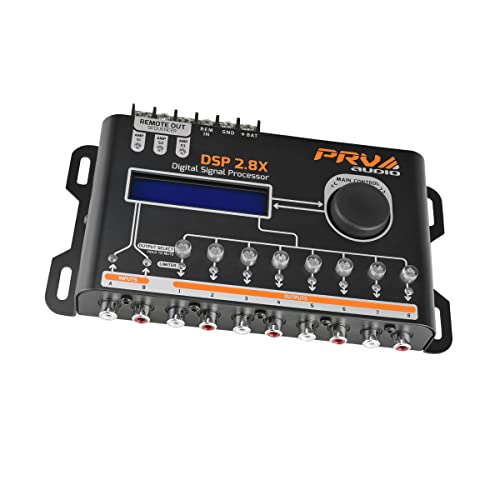
The PRV AUDIO 2.8X DSP handles complex tuning with two audio inputs and eight channel outputs. It supports selecting the source for each output (A, B, or A + B) and integrates a 15-band graphic EQ with manual tuning and 12 presets, including Flat, Bass Boost, and Pancadão. Intuitive LCD navigation enables real-time adjustments, making it suitable for enthusiasts who want hands-on control without software dependency. A compact, full-digital signal path ensures low latency and precise crossovers for upgraded car audio systems.
PRV Audio 2.4X Digital Crossover and Equalizer

The PRV 2.4X DSP provides two inputs and four crossover outputs with an identical 15-band graphic EQ and 12 presets. The compact design makes it a practical upgrade for smaller installations while preserving the same intuitive interface and preset-driven tuning as the 2.8X model. This DSP emphasizes streamlined control with reliable processing for mid-range setups, offering a balance between features and install footprint.
Taramp’s Pro 2.4S DSP Crossover

Taramp’s Pro 2.4S is a versatile, full digital signal processor with 15-band graphic_EQ and selectable high-pass and low-pass filters. It supports multiple slope options (-6 to -48 dB/Octave) and a wide cutoff range (10 Hz to 22 kHz). The device also offers an input parametric EQ with adjustable parameters and the ability to affect multiple inputs (A and B) simultaneously. Its robust set of crossover tools makes it ideal for altering sound stage, imaging, and tonal balance across complex multi-amp systems.
B2 Audio White 4v 12 Channel DSP
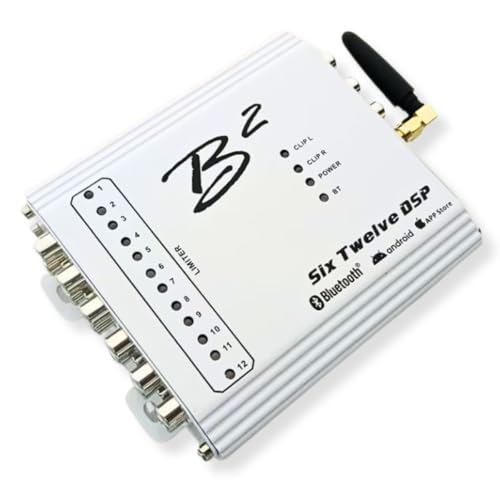
With 12 outputs and 6-inputs, the B2 Audio White 4v DSP supports 96 kHz, 32-bit processing and Bluetooth control via iOS and Android apps. This combination enables high-resolution tuning and wireless adjustments from a smartphone, simplifying the tuning workflow. The high-voltage 4-volt output per channel helps maintain signal integrity across longer cable runs, making it a practical choice for larger installations where precise channel control and remote configuration matter most.
Stetsom STX 2436 Bluetooth DSP PRO

Stetsom STX 2436 brings Bluetooth-enabled DSP with a broad range of sound adjustments and a graphic EQ platform. It’s designed for mobile tuning with Android and iOS compatibility, allowing control through dedicated apps. The device supports a comprehensive set of filters and time-domain adjustments, enabling the tuning of crossovers and phase alignment to optimize stage imaging and tonal balance in varied listening environments.
Recoil R4-6 Car Audio DSP
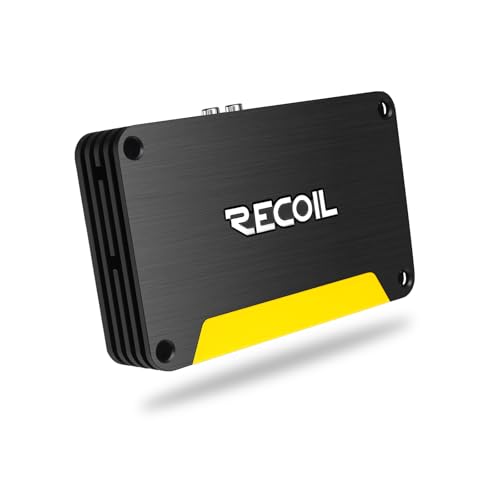
The Recoil R4-6 combines a DSP with a built-in 4-channel input and 6-channel outputs. It features 31-band EQ, full gain, phase, and time delay controls for each output, plus multiple slope crossovers and six preset tuning options. This setup is well-suited for advanced users who want extensive time alignment and channel-specific tuning to achieve precise imaging and dynamics across a multi-amp system.
Timpano TPT-SP4BT Bluetooth DSP

The TPT-SP4BT is a compact Bluetooth-enabled DSP with a built-in voltmeter and remote relay. The sequencer feature supports programmable startup and shutdown of up to three devices from remote connections. The app-based control enables on-the-fly tuning directly from a smartphone, aiding in stage arrangement and automatic system startup scenarios for a seamless listening experience.
B2 Audio White 4v 12 Channel DSP (Second Model)
This variant of the B2 Audio DSP emphasizes the same high-resolution processing and Bluetooth app control, maintaining a similar 96 kHz/32-bit architecture with 12-channel expansion. It serves as a flexible option for larger installations seeking wireless tuning capabilities and expansive channel routing within a single DSP unit.
Buying Guide: Key Purchase Considerations
When choosing a car audio DSP, consider the following factors to align with your system goals.
- Channel count and outputs: Match the number of inputs and outputs to your amplifier configuration and speaker layout. More channels provide greater expansion for multi-amp setups.
- Resolution and processing quality: Look for DSPs offering high sample rates (e.g., 96 kHz) and 32-bit processing for more precise filtering and dynamic range.
- Equalization options: A robust 10–31 band graphic EQ and optional parametric EQ per channel enable nuanced tonal shaping and crossovers.
- Crossovers and filters: Verify available crossover types (HPF/LPF, Butterworth, Linkwitz-Riley) and slope options (-6 to -48 dB/Octave) to tailor high-frequency and low-frequency paths.
- Control method: Consider whether you prefer physical interfaces, smartphone apps, or PC/Mac software for real-time tuning and remote control.
- Latency and sequencing: Low-latency processing helps preserve imaging, while sequencer features enable automated startup/shutdown of connected devices for convenience.
- Compatibility and updates: Check Bluetooth/APP compatibility with iOS and Android, plus firmware update support to keep features current.
- Installation footprint: Some models are compact and easy to install in limited spaces; others offer more expansive control panels and wiring options.
- Warranty and support: Favor brands with solid support, thorough manuals, and accessible customer service for troubleshooting and tuning guidance.
In summary, the best DSP choice depends on your system size, preferred control method, and how deep you want to tune the sound. For straightforward upgrades with solid presets, the PRV AUDIO 2.8X or 2.4X offer robust performance. For extensive customization and multi-channel setups, models like Taramp’s Pro 2.4S, Stetsom STX 2436, or Recoil R4-6 provide deeper control. Bluetooth-enabled options from Stetsom or B2 Audio are ideal for wireless tuning, while Timpano’s SP4BT adds sequencing for automated startup routines.