Best Engine Diagnostic Code Reader for Quick, Accurate Car Troubleshooting
Finding a reliable engine diagnostic code reader is essential for car DIYers and everyday drivers who want fast, accurate insights into why the check engine light is on. This guide covers five top-performing OBD2 scanners that read and clear codes, monitor emissions readiness, and provide live data. Each option supports most 1996+ vehicles and offers varying levels of data detail, ease of use, and expansion potential. Use the buying guide at the end to narrow down choices based on your needs and vehicle type.
| Product | Brand | Top Benefit |
|---|---|---|
| ANCEL AD310 Classic Enhanced Universal OBD II Scanner | ANCEL | Fast, accurate trouble code reading and clearing |
| VDIAGTOOL VD10 OBD2 Scanner | VDIAGTOOL | Extremely user-friendly for DIYers with built-in database |
| MOTOPOWER MP69033 Car OBD2 Scanner | MOTOPOWER | Wide protocol support and a large 2.8″ display |
| ANCEL AD410 Enhanced OBD2 Scanner | ANCEL | Extensive DTC lookups and EVAP/O2 tests for deeper diagnostics |
| BlueDriver Bluetooth Pro OBDII Scan Tool | BlueDriver | Wireless, professional-grade reports and repairs guidance |
ANCEL AD310 Classic Enhanced Universal OBD II Scanner
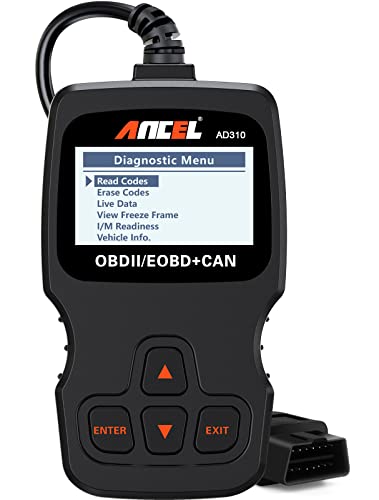
The ANCEL AD310 is positioned as a bestselling OBD II scanner commonly recommended by automotive professionals for its balance of simplicity and reliability. It reads and clears diagnostic trouble codes related to the emission system, provides live data and memory data, and shows freeze frames and I/M readiness status. Its compact build reduces fatigue during use, and it’s designed to draw power directly from the vehicle’s OBDII port—no separate battery or charger is required. The device’s 2.5-foot cable remains flexible and durable, helping technicians work in tight engine bays.
In practice, the AD310 delivers quick, interpretable results that help users determine whether a repair is needed before visiting a shop. For those who want a straightforward tool for routine maintenance, this scanner combines ease of use with dependable performance, making it a solid entry point into OBD2 diagnostics.
VDIAGTOOL VD10 OBD2 Scanner
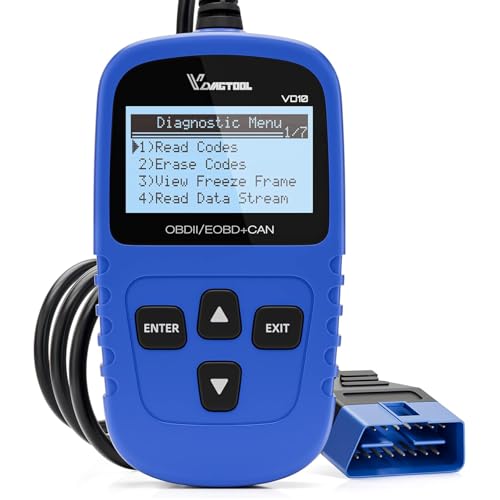
The VD10 is designed for a broad DIY audience, offering a simple plug-and-scan workflow. It reads and clears codes, displays live data, and provides I/M readiness status. The built-in DTC library displays definitions on screen, saving time from looking up codes online. The device emphasizes speed and clarity, presenting fault codes with straightforward explanations. With broad compatibility across OBDII vehicles and a focus on user-friendliness, the VD10 is a practical choice for homeowners who want quick diagnostics without advanced features they may never use.
Key strengths include time-saving code lookups, an intuitive interface, and the ability to erase fault codes after repairs. This scanner’s value proposition centers on getting you back on the road quickly while providing enough data to understand typical engine issues and their likely causes.
MOTOPOWER MP69033 Car OBD2 Scanner

The MP69033 from MOTOPOWER emphasizes broad protocol support across 1996 US-based, European, and Asian vehicles, including newer OBD II and CAN models. Its 2.8-inch LCD display provides clear visibility of live data, freeze-frame data, and DTCs. The device powers directly from the vehicle, eliminating the need for external power sources. Features include data flow, real-time graphs, and engine parameter readouts like engine speed and coolant temperature, enabling users to gauge engine health during diagnostics. The MP69033 is a versatile option for users who want a well-rounded tool without extra bells and whistles.
ANCEL AD410 Enhanced OBD2 Scanner

The AD410 expands on basic code reading with enhanced OBDII diagnostics, including testing of O2 sensors and EVAP systems. It provides rapid read and clear of fault codes, retrieves a large database of DTC lookups (over 42,000 entries), and supports monitor readiness checks to help pre-smog assessments. While it focuses on engine diagnostics and emissions-related systems, it does not claim to reset all vehicle modules beyond standard MIL clearing. It is suitable for users who want deeper diagnostic coverage without jumping to an expensive professional tool.
BlueDriver Bluetooth Pro OBDII Scan Tool
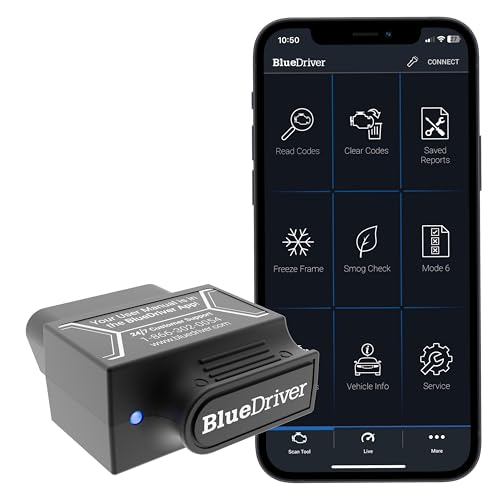
BlueDriver blends wireless convenience with professional-grade diagnostics. It connects to iPhone or Android devices via Bluetooth and provides extensive code reading, clearing capabilities, and real-time data. Beyond basic codes, BlueDriver offers repair reports with possible causes and fixes, the ability to monitor vehicle health continuously, and coverage for thousands of issues across vehicles manufactured since 1996. This tool is ideal for users who prefer a mobile-first experience and who want ongoing, in-depth diagnostic insight without a PC-based interface. BlueDriver’s ecosystem supports ongoing updates and a subscription-free model for core functionality.
FOXWELL NT201 OBD2 Scanner

The FOXWELL NT201 focuses on essential emissions testing along with standard fault code reading and clearing. It offers live data displays for parameters like ETC, MAP, and RPM, with a built-in code library that provides instant definitions. An intuitive I/M readiness feature guides users through emissions checks with visual indicators. This scanner is well-suited for drivers who want a compact, no-fuss device for ongoing vehicle maintenance and quick pre-inspection checks, without the complexity of higher-end models.
Buying Guide: Key Purchase Considerations
- Vehicle compatibility: Ensure the device supports your make, model year, and engine type. Most models in this guide cover 1996+ US-based, EU-based, and Asian vehicles, but always verify 16-pin OBD2 compatibility.
- Code reading vs. advanced diagnostics: If you only need to read/clear codes, a basic model is sufficient. If you require live data, DTC definitions, and EVAP/O2 testing, choose a device with expanded diagnostics.
- Live data and graphs: For diagnosing intermittent issues, a unit with real-time data streaming and graphing helps identify patterns in sensor behavior.
- Ease of use: For DIYers, an intuitive interface, readable display, and quick power from the OBDII port simplify troubleshooting, especially in tight engine bays.
- Display and readability: A larger LCD or mobile app interface can make complex data easier to interpret during roadside checks or garage sessions.
- Data definitions: A robust DTC library (thousands of codes and definitions) reduces the need to search the internet for code meanings, speeding up repairs.
- Wireless options: Bluetooth or Wi-Fi-enabled tools (like BlueDriver) offer convenient use with smartphones, but ensure you’re comfortable with pairing and latency considerations.
- Power source: Most scanners draw power from the vehicle’s OBDII port. Check if your vehicle’s port provides sufficient power, especially for longer diagnostic sessions.
- Future-proofing: If you expect to work on a wide range of vehicles, a tool with multi-language support and broad protocol coverage offers greater long-term value.
- Price vs. feature balance: Entry-level devices provide essential functionality, while higher-end models add features like deeper EVAP testing, enhanced O2 sensor tests, and broader DTC libraries.
Choosing the right engine diagnostic code reader requires aligning your needs with the tool’s capabilities. For quick checks and emergency road calls, a compact, easy-to-use scanner is ideal. For ongoing maintenance, a device with a large DTC library and live data features provides deeper insight. Wireless tools offer convenience, but may require a compatible mobile device and app. By evaluating compatibility, data depth, and usability, you can select a scanner that fits both your vehicle fleet and diagnostic workflow.