Best Engine Leak Sealer and Stop-Leak Solutions for Modern Motors
Engine leaks can affect performance, oil pressure, and fuel efficiency. This article reviews select engine leak sealer products designed to seal gaskets, seals, and leaks without major disassembly. Learn how these additives work, what to expect, and how to choose the right product for your vehicle’s needs. The following five options balance broad compatibility, user feedback, and practical application for American drivers concered about oil leaks and related issues.
Summary Table Of Chosen Products
| Product | Brand | Key Use | Volume |
|---|---|---|---|
| Lucas Oil 10278 Engine Oil Stop Leak | Lucas Oil | Stops minor oil leaks; improves sealing | 1 Quart |
| ATP Automotive AT-205 Re-Seal Stops Leaks | ATP Automotive | Re-Seal for multiple seals and gaskets | 8 Ounce Bottle |
| Bar’s Leaks OS-1 Oil Seal Engine Oil Burning and Leak Repair | Bar’s Leaks | Engine oil burning and leak repair | 16.9 oz |
| Bar’s Leaks 1000 High Mileage Engine Repair | Bar’s Leaks | High-mileage seal and gasket restoration | 16.9 oz |
| Bar’s Leaks Rear Main Seal Repair | Bar’s Leaks | Rear main seal and hard-to-stop leaks | 16.9 oz |
Lucas Oil 10278 Engine Oil Stop Leak

Lucas Oil 10278 is a versatile engine oil stop-leak additive designed to seal minor leaks while maintaining compatibility with conventional and synthetic oils. It is marketed as a maintenance product for reducing oil consumption and engine noise. The packaging indicates lightweight packaging and a quarter-gallon equivalent, making it suitable for regular maintenance routines. Users should follow dosing recommendations and monitor oil levels after application. This product focuses on broad oil compatibility and leak resistance rather than dramatic seal restoration.
ATP Automotive AT-205 Re-Seal Stops Leaks, 8 Ounce Bottle

ATP Automotive AT-205 Re-Seal is a professional-strength resealer formulated to rejuvenate rubber seals and gaskets in engines, transmissions, power steering, differentials, and hydraulic systems. It is designed to be compatible with conventional and synthetic oils, ATF, gear oil, and other fluids. The product emphasizes fast action and broad seal compatibility, making it a popular choice for multiple-seal leak concerns. Expect improvements in leak control when used as directed, with attention to vehicle type and oil system configuration.
Bar’s Leaks OS-1 Oil Seal Engine Oil Burning and Leak Repair

Bar’s Leaks OS-1 focuses on repairing worn seals and preventing oil burning and blue exhaust smoke. It is designed for gasoline and diesel engines, including turbocharged and EcoBoost configurations, and is suitable for various vehicle types. The OS-1 formulation targets valve seals, guides, and general seal aging, aiming to reduce oil consumption while restoring engine quietness. It can be used in engines with multiple cylinder configurations, with dosage based on engine condition and oil capacity.
Bar’s Leaks 1000 High Mileage Engine Repair
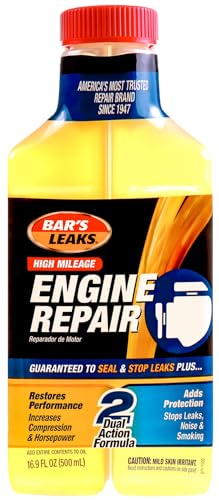
Bar’s Leaks 1000 High Mileage Engine Repair is tailored for engines with over 75,000 miles. It combines performance additives to repair common oil-related problems, increases compression and horsepower, and helps reduce noise and oil consumption. This product is positioned as a comprehensive high-mileage solution, aiming to restore sealing performance, fortify wear protection, and stabilize engine operation in aging engines. It is intended for cars, light trucks, and SUVs with higher mileage histories.
Bar’s Leaks Rear Main Seal Repair
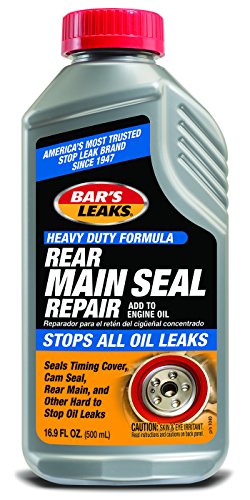
Bar’s Leaks Rear Main Seal Repair is specifically designed to address rear main seal leaks, a common hard-to-stop issue. While marketed for rear main seals, the formula can also assist with other engine oil leaks by improving seal pliability and sealing capability. It is added directly to the engine oil and is compatible with standard automotive engines. This option is commonly used when rear main seal leakage is suspected or confirmed and users seek a targeted solution alongside routine maintenance.
Buying Guide: Key Purchase Considerations And Comparisons
Choosing the right engine leak sealer involves evaluating seal type, engine age, and maintenance goals. Consider the following factors to make an informed choice:
- Engine type and oil system: Confirm compatibility with conventional, synthetic, and synthetic-blend oils. Some products target rubber seals and gaskets, while others emphasize broad seal rejuvenation across various subsystems.
- Leak severity and location: For modest drips, a cautious approach with a single-application product may suffice. For suspected rear main seals or widespread seal wear, a more comprehensive formulation may be required.
- Engine mileage and age: High-mileage engines often benefit from treatments designed to restore seal pliability and reduce oil consumption, though results vary by vehicle.
- Application guidance: Follow label directions for dosage, oil change timing, and monitoring. Abrupt leaks or overheating require professional assessment.
- Expected outcomes: Many products promise reduced leaks, less smoke or burning, and quieter operation. Do not expect a miraculous fix in all cases; some leaks may require mechanical repair.
- Vehicle type and usage: Heavy-duty or turbocharged engines may respond differently. Choose products with explicit guidance for your engine configuration.
- Customer feedback and safety: Check user reviews for compatibility with your engine model and any potential long-term effects on oil viscosity or filter life.
In comparing options, consider whether you prefer a single-seal focus (such as rear main seals) or a broad, all-in-one solution that targets multiple seals and gaskets. Price, volume, and ease of use should align with your maintenance plan. For many drivers, starting with a well-rated, widely compatible product and monitoring oil levels and engine behavior is a prudent approach.