Best Engine Paint for Cast Iron: Top Coatings for Durability and Heat Resistance
The right engine paint for cast iron protects against heat, chemicals, and exposure while delivering a professional finish. Below are five top-rated coatings selected for durability, heat resistance, and ease of use on cast iron components such as engine blocks, headers, and housings. Each product includes a concise look at its performance and ideal applications to help you choose the best match for your project.
| Product | Brand | Key Benefit |
|---|---|---|
| VHT SP997 550° Engine Enamel | VHT | High heat resistance to 550°F, durable urethane-ceramic blend |
| VHT SP998 Flameproof Coating | VHT | Very high heat with matte ceramic silicone base |
| Rust-Oleum 248932 Engine Enamel | Rust-Oleum | Gloss black finish, good heat tolerance |
| Seymour CA16-48 Cast Blast | Seymour Paint | Professional-grade cast iron restoration, fast drying |
| Rust-Oleum 363567 Engine Enamel | Rust-Oleum | Up to 600°F intermittent, oil/gas resistant |
VHT SP997 550° Engine Enamel High Heat
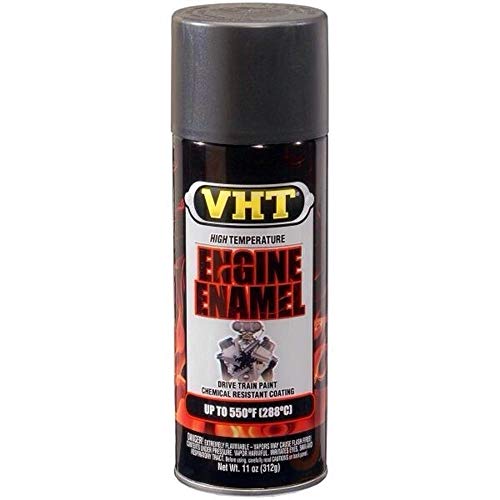
VHT SP997 is a high heat engine enamel designed for parts subjected to intense heat and harsh chemicals. Its formula blends urethane and ceramic resins to deliver a long-lasting finish that resists corrosion, rust, salt spray, and automotive fluids. Typical applications include engine blocks, headers, valve covers, water pumps, and differential covers. It dries to the touch in about one hour and cures thoroughly overnight, facilitating efficient workflow on projects involving cast iron components.
VHT SP998 Flameproof Coating For Cast Iron

This flameproof coating provides extra protection for very high heat surfaces, offering a durable matte finish suitable for automotive exhaust components. The ceramic silicone base extends life by resisting heat and environmental exposure. It performs best when used with a primer color paint and a clear coat process to maximize longevity on cast iron parts exposed to extreme temperatures.
Rust-Oleum 248932 Engine Enamel Spray Paint

Rust-Oleum 248932 Engine Enamel offers a glossy black finish designed for gauge, engine parts, and other cast iron components. It provides a robust protective layer against heat and exposure while maintaining a smooth, attractive appearance. The paint targets general automotive applications and is noted for its United States manufacturing and consistent coverage, making it a reliable choice for everyday restorations and maintenance projects.
Seymour CA16-48 Cast Blast Spray Paint

Seymour CA16-48 Cast Blast Spray Paint is designed to restore cast iron and cast aluminum engine parts. It offers professional-grade coatings with fast drying times and heat resistance up to 250°F, suitable for components that experience moderate heat and exposure. This option is well-regarded for restoring OEM-like color and durability while maintaining flexibility to accommodate various mechanical applications on cast iron surfaces.
Rust-Oleum 363567 Engine Enamel Spray Paint

This Rust-Oleum enamel is designed for automotive parts exposed to intermittent temperatures up to 600°F. It emphasizes oil, gas, and rust resistance, providing a durable coating that stands up to challenging environments. The formula dries to touch in minutes and covers substantial areas, with full curing recommended per label instructions to achieve optimal performance on cast iron engine components.
Buying Guide: Key Purchase Considerations And Comparisons
- Heat tolerance: Cast iron components in engines require coatings that endure high temperatures. Select products with explicit high-heat ratings (ranging from 250°F to 550°F or higher) to prevent blistering or peeling under heat exposure.
- Chemical and fuel resistance: Engine environments involve oil, gasoline, degreasers, and road salts. Look for coatings formulated to resist chemicals, salt spray, and oils to extend service life on cast iron parts.
- Finish and appearance: For visible parts, choose finishes (gloss or matte) that match your aesthetic goals while maintaining durability. Gloss finishes often resist grime and are easier to wipe clean, whereas matte finishes highlight rugged textures.
- Application and cure time: Evaluate dry-to-touch times and cure durations. Fast-drying formulas can speed up projects but ensure full cure as per label instructions to maximize adhesion and longevity.
- Surface compatibility: Some coatings require primers or surface prep; others are suitable for direct application on clean, corrosion-free cast iron. Verify compatibility with your specific part and any existing coatings.
- Durability under vibration and heat cycling: Engine components experience thermal cycling and vibration. Durable coatings with ceramic or urethane resins often perform better under repeated stress.
- Availability and ease of use: Aerosol spray cans offer convenient, uniform coverage for tight spaces, while brush-on or dip coatings may be preferred for larger parts or specific workflows.
- Safety and cleanup: Adhere to ventilation, inhalation safety, and proper disposal guidelines. Most engine paints require proper curing and may emit fumes during application and cure.
When selecting a coating, consider the specific component and operating conditions of your project. For high-heat applications such as exhaust manifolds or headers, flameproof or ultra-high-temperature enamel may provide superior performance. For general engine blocks and housings, a durable enamel with strong chemical resistance often suffices. Cross-reference part compatibility, required curing times, and the expected service environment to choose the best option for your cast iron surfaces.