Best Engine Support Bar for Safe Transmission Work
Engine support bars are essential for stabilizing and lifting engines during repairs. This guide highlights top options that balance heavy-duty capacity with ease of use, helping you choose a reliable tool for home garages and professional shops. Each product below is evaluated for load capacity, adjustability, build quality, and versatility across different vehicle types.
| Product | Capacity | Best For |
|---|---|---|
| SPECSTAR 1100 Lbs Engine Support Bar | 1100 lbs | General engine lifts and precise positioning |
| VEVOR Engine Support Bar 1100 Lbs | 1100 lbs | Home garages and auto repair shops |
| Omega 44700 Engine Transverse Bar | 700 lbs | Smaller engine work, adjustable width |
| OTC Tools 1725 Three Point Bar | High capacity (industrial) | Professional shop use |
| K Tool International Engine Support Bar 1000 lb | 1000 lbs | Front-wheel-drive engines and mounts |
The following sections present five top picks with key features, performance notes, and practical considerations. Each entry includes a direct link to the product page for quick reference and a brief summary of how it helps with engine removal, installation, and maintenance tasks.
SPECSTAR Engine Support Bar 1100 Lbs
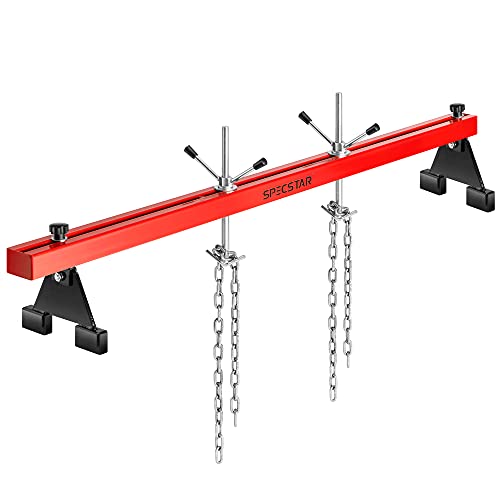
The SPECSTAR engine support bar is built from high-quality steel with a protective powder-coated finish, delivering high rigidity and wear resistance. Its 1100 lb load capacity makes it suitable for lifting various engines, including those found in sports cars, SUVs, and sedans. The unit provides accurate engine positioning to simplify repairs and cleaning. Two rotating hoists allow height adjustment from 0 to 7.9 inches, while the adjustable distance between bases (21 to 59.1 inches) accommodates engines in narrower or wider bays. A stable triangular base on each side adds balance during operation.
VEVOR Engine Support Bar 1100 Lbs

VEVOR’s engine support bar offers a robust 1100 lb capacity with precise engine positioning during transmission work or engine removal. The two rotating hoists provide 0 to 7.87 inches of lift, adjustable via a hand crank to match the engine height required for the task. The included engine binding chains are strong and reliably secure the motor during handling, reducing the risk of slips or misalignment. This setup is well-suited for both home garages and professional repair environments that require steady engine support.
Omega 44700 Engine Transverse Bar

The Omega 44700 transverse bar offers a 700 lb capacity and adjustable width from 38 inches to 61 inches. With two 14-inch adjustable hook screws, this bar supports engine placement for typical mid-size vehicles and various engine bays. Its lighter capacity makes it ideal for smaller engines or shops that do not require maximum load handling. The design focuses on stability and straightforward setup, aiding accurate engine positioning during maintenance tasks.
OTC Tools 1725 Three Point Engine Support Bar
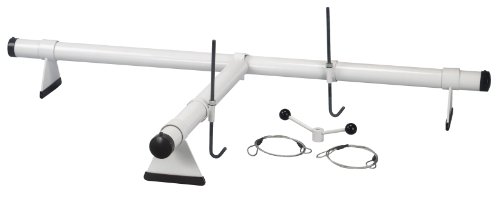
OTC’s 1725 three-point engine support bar is designed for professional maintenance environments, focusing on stability and multi-point support. The product listing notes its applicability to auto and truck maintenance, with the unit manufactured in China under OTC’s branding. This option emphasizes robust construction and compatibility with a variety of service tasks, such as engine suspension during removal and reinstallation, making it suitable for shop workflows that demand reliable performance.
K Tool International Engine Support Bar 1000 Lb

The K Tool International engine support bar offers a 1000 lb capacity and is designed to support front-wheel-drive engines for repairs or servicing of engine mounts. It extends to a total length of 64 inches, providing ample reach for diverse engine bays. The thickened steel frame and powder-coated surface enhance durability and rust resistance, ensuring long-term use in busy repair environments. Its universal design supports a wide range of vehicles and servicing scenarios.
Buying Guide: Engine Support Bars — Key Considerations
When selecting an engine support bar, consider the following factors to ensure you pick a model that matches your vehicle fleet, repair tasks, and workspace:
- Load Capacity: Choose a bar with a capacity that exceeds the heaviest engine you service. Most residential and many professional jobs fall between 700 and 1100 lbs; larger shops may require higher capacities or multi-point support options.
- Adjustability: Look for adjustable widths and lift heights. A broader width range accommodates different engine bays, while adjustable lift height helps align engines with hoists or mounts without overextending.
- Construction and Finish: A steel frame with powder coating provides durability and rust resistance in workshop environments. Consider corrosion resistance if you work in humid or salty road conditions.
- Number of Lift Points: Single-point vs. two-point vs. three-point designs affect stability. Multi-point supports can reduce engine sway during removal and installation.
- Compatibility: Confirm the bar fits the types of engines you service most often, including front-wheel-drive configurations and larger V-type engines.
- Ease of Use: Quick setup, smooth height adjustment, and secure binding chains contribute to safer, faster repairs. Look for included binding hardware and reliable hooks.
- Portability and Storage: If space is limited, weigh the weight of the unit and whether it folds or disassembles for easier storage.
- Warranty and Support: A solid warranty reflects product confidence and offers protection against manufacturing defects during routine use.
For buyers evaluating options, align your choice with typical tasks: engine removal for transmission work, engine swaps, or routine maintenance that requires stable engine positioning. Consider whether you need a heavier-duty bar for large SUVs or a narrower, lighter model for compact cars. Cross-check the included hardware, warranty terms, and any mounting requirements to ensure compatibility with your existing tools and hoists.