Best Epoxy for Fiberglass Repair: Top Marine Repair Kits and Resins
Finding the right epoxy system for fiberglass repairs helps restore boats, pontoons, and watercraft to peak condition. The following five products are selected for reliability, versatile adhesion, and marine-ready performance. Each option targets holes, cracks, chips, and gel coat damage on fiberglass surfaces, while offering durable finishes that resist UV light, water exposure, and temperature swings. The picks span repair kits, single-resin systems, and gel coat compatible solutions to cover a range of repair scenarios.
| Product | Brand | Best For |
|---|---|---|
| Marine Fiberglass Repair Kit | Mallbaola | Gel coat and fiberglass above waterline |
| TotalBoat 5:1 Marine Epoxy Resin Kit | TotalBoat | Bonding, filleting, coating, laminating |
| Ankita Marine Fiberglass Repair Kit | Ankita | Gel coat repair and fiberglass holes |
| Bondo Fiberglass Resin Repair Kit | 3M | Multi-surface repairs including fiberglass |
| TotalBoat 5:1 Marine Epoxy Resin Kit (Fast Hardener) | TotalBoat | Faster cure for quick repairs |
Marine Fiberglass Repair Kit for Boats

Brand: Mallbaola
Overview: This all-in-one epoxy filler is designed for fiberglass boat damage, including deep scratches, cracks, chips, and holes on boats, jet skis, and other watercraft. It emphasizes strong adhesion for seamless repairs and helps restore gel coat to a like-new appearance. The kit claims UV resistance and waterproof protection, aiming for durable marine repairs that endure harsh conditions.
Applications: Suitable for vertical surfaces and various hard substrates such as carbon fiber, aluminum, PVC, acrylic, and wood. Primarily intended for parts above the waterline, making it a versatile choice for hull patches, deck repairs, and gel coat restoration.
Key considerations: Check cure time, surface prep requirements, and whether the kit includes all accessories needed for gel coat matching. Evaluate UV resistance and environmental safety claims when selecting a marine-grade epoxy filler for hull applications.
TotalBoat 5:1 Marine Epoxy Resin Kit

Brand: TotalBoat
Overview: A high-strength epoxy system designed for bonding, coating, and laminating. It’s versatile for repairing boats, canoes, kayaks, SUPs, surfboards, RVs, trailers, and various composites. It’s compatible with fiberglass and wood, offering self-leveling properties ideal for wet-out of fiberglass cloth.
Contents: Available in quart, gallon, and larger kits with resin, slow or fast hardener, color-coded pumps, and mixing supplies. Typical pot life depends on hardener choice (e.g., 20 minutes at 75°F for slow; 12 minutes for fast).
Key considerations: Assess bonding strength, viscosity for wetting out fabric, cure times, and whether the included accessories meet your project scale. Consider matching with fiberglass cloth weights and the required UV protection for marine use.
Ankita Marine Fiberglass Repair Kit
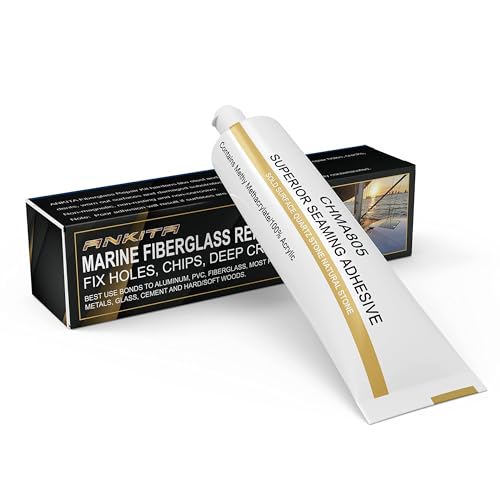
Brand: Ankita
Overview: This white gel coat and epoxy repair kit focuses on permanent repairs for fiberglass boats, addressing nicks, gouges, and scratches above and below the waterline. It emphasizes a glass-hard, glossy, and smooth finish with high fill-rate and minimal slump for long-lasting hull repairs.
Performance: The kit is designed to resist sun exposure and maintain structural integrity under marine conditions. It’s marketed for fast-curing applications with durable, water-resistant results that stand up to temperature changes and impact.
Key considerations: Confirm cure time relative to ambient conditions, ensure compatibility with existing gel coat finishes, and verify color-matching options if restoration aesthetics matter for your hull.
Bondo Fiberglass Resin Repair Kit

Brand: 3M
Overview: This repair kit provides a straightforward, do-it-yourself option for repairing holes and scratches on automobiles, boats, and more. It features a 100% waterproof seal and a strong, versatile formula compatible with concrete, wood, fiberglass, and metal.
Application: Useful for quick, on-site fiberglass repairs and transitions to long-term protection. The waterproof seam and durability support lasting hull repairs, though it’s advisable to follow curing and layering guidelines for complex repairs.
Key considerations: Evaluate setting time, waterproofing claims, and whether multiple surface types are expected to be repaired with the same system. For hull repairs, ensure compatibility with marine coatings and gel coats.
TotalBoat 5:1 Marine Epoxy Resin Kit (Fast Hardener)

Brand: TotalBoat
Overview: This variant offers a fast-curing epoxy system similar to the standard 5:1 kit but with a fast-hardener option for quicker project turnaround. It supports bonding, filleting, coating, and laminating across fiberglass, wood, carbon fiber, and other composites.
Contents: Includes resin, fast hardener, pumps, and mixing tools. The fast-hardener option reduces pot life and cure time, enabling faster repairs on a busy schedule.
Key considerations: Weigh the trade-off between faster cure times and work time, ensure proper ventilation, and plan for adequate curing environments to prevent heat build-up or premature curing in humid or hot conditions.
Buying Guide
- Project type and surface: Different products target above-waterline gel coats, general fiberglass repair, or multi-surface applications. Match the product to your hull location and material stack.
- Bond strength and durability: For a lasting repair, prioritize epoxy systems with proven adhesion to fiberglass, UV resistance, and water exposure protection. Consider gel coat compatibility for aesthetic repairs.
- Cure times and workability: Assess pot life, cure duration, and whether a fast-hardener option suits your schedule. Plan for proper ventilation and temperature considerations to ensure proper curing.
- Viscosity and application method: Self-leveling, film thickness, and wet-out characteristics affect how easily epoxy penetrates fiberglass cloth and fills voids.
- UV protection and weathering: Marine environments demand UV-stable formulations or post-repair coating recommendations to minimize yellowing and material degradation.
- Safety and environmental impact: Review safety data, skin/contact precautions, and whether components are marine-rated or environmentally friendly.
- Compatibility with gel coats: When restoring cosmetic gel coat, select products designed for gel coat repair or plan a compatible gel coat repair step to achieve a seamless finish.
- Tooling and accessories: Check if pumps, mixing cups, gloves, and applicators are included. A complete kit reduces the number of separate purchases.
These considerations help compare repair options for fiberglass surfaces, balancing repair speed, strength, and finish quality. For above-waterline repairs, prioritizing adhesion, UV stability, and gel coat compatibility yields durable, visually appealing results.