Best ESC Options for Drag Racing Drones and RC Vehicles
Choosing the right electronic speed controller (ESC) is crucial for drag racing enthusiasts seeking precise throttle control, high current capacity, and reliable performance under load. The following selections are among the top-performing 4-in-1 and single ESCs suitable for FPV freestyle drones, drag racing cars, and other high-speed RC platforms. Each product is evaluated for current handling, voltage range, and advanced firmware features that support fast, responsive acceleration and stable bursts on demanding tracks.
Summary of chosen products:
| Product | Brand | Type | Rated Current | Voltage Range |
|---|---|---|---|---|
| Radiolink FLYCOLOR 55A 4in1 ESC | Radiolink | 4-in-1 ESC | 55A cont / 65A peak | 3S–6S |
| AERO SELFIE 45A 4in1 ESC | AERO SELFIE | 4-in-1 ESC | 45A cont / 55A burst | 2S–6S |
| SEQURE 65A 4in1 ESC | SEQURE | 4-in-1 ESC | 65A cont / 120A peak | 2S–6S |
| HOBBYWING Xerun XR10 Pro G3X | HOBBYWING | Multi-page ESC family | 160A cont / 1200A peak | Not specified in snippet |
| DYS Brushless ESC 65A 4in1 AM32 | DYSRC | 4-in-1 ESC | 65A cont | 2S–8S |
Radiolink FLYCOLOR 55A 4in1 ESC
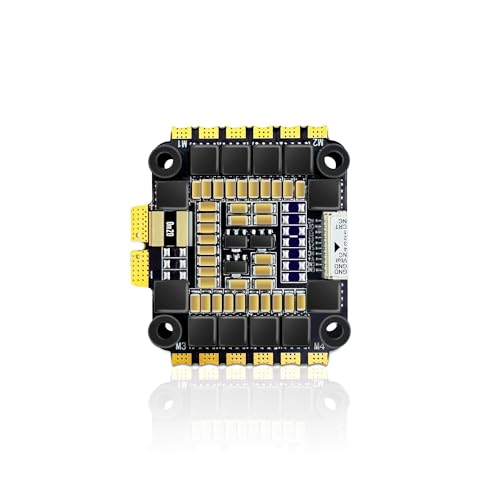
The Radiolink FLYCOLOR 55A 4-in-1 ESC is built to handle demanding freestyle FPV racing and drag-oriented setups. It offers 55A continuous current and a 65A peak, suitable for 3S to 6S battery configurations. The Bluejay firmware supports Dshot300 and Dshot600, while BLHeli-S supports Oneshot125, Oneshot42, and Multishot, providing flexible throttle modes for different flight characteristics. A dedicated 3-in-1 driver IC supports smoother starting, improving throttle predictability during aggressive bursts. The on-board MCU, EFM8BB21, runs at up to 50 MHz for responsive control. This ESC is a compact choice for tight airframes or drag-racing frames with high throttle demands.
AERO SELFIE 45A 4in1 ESC

The AERO SELFIE 45A 4-in-1 ESC targets lightweight FPV freestyle and drag-oriented drones, delivering a continuous 45A per channel with bursts up to 55A for short bursts. It supports a broad 2S to 6S input range (6V–28V), making it versatile for various small aerial platforms as well as cross-country drones. The 4-in-1 integration simplifies arm construction, and the unit weighs a mere 12.5g, aiding weight-sensitive builds. It uses an 8-bit high-speed MCU for fast response and efficient power conversion, contributing to smoother throttle transitions and reliable performance under track-like acceleration scenarios.
SEQURE 65A 4in1 ESC

The SEQURE 65A 4in1 ESC uses an AT32F421 32-bit processor and supports a wide PWM range from 8 KHz to 96 KHz. It delivers 65A continuous current with up to 120A peak, supported by high-power MOSFETs for efficient energy use and longer flight time. Its 30.5mm installation hole spacing fits larger or heavier drag racing frames, making installation straightforward while maintaining strong performance under heavy loads. This ESC targets demanding FPV racing drones where precise, high-current handling is critical for fast, linear throttle response.
HOBBYWING Xerun XR10 Pro G3X

The Hobbywing Xerun XR10 Pro G3X ESC focuses on high-performance stock and eventual drag-like acceleration. It features a high current rating with a peak up to 1200A and a continuous current around 160A, designed for serious racing scenarios with heavy load. The system includes built-in data logging for operational monitoring without the need for an external Bluetooth module, plus a freewheeling function to improve deceleration and stability. Its temperature management is optimized to reduce heat buildup, aiding consistent performance during sustained bursts and aggressive braking on straight tracks.
DYS Brushless ESC 65A 4in1 AM32
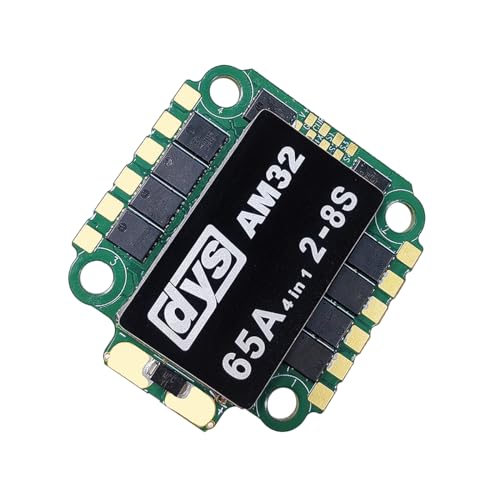
The DYSRC 65A 4-in-1 ESC uses AM32 firmware for FPV freestyle racing drones and supports 2S–8S LiPo inputs. It claims 65A continuous current with robust MOSFETs and improved performance over prior generations. The wide voltage tolerance makes it suitable for drag-oriented setups that may push a wider battery range, while its compact AM32 architecture emphasizes efficient throttle response and reliable operation under high-load racing conditions.
SEQURE 4in1 ESC 70A

The SEQURE 4in1 ESC 70A is designed for larger drag racing drones and FPV rigs, featuring a 70A continuous current and up to 150A peak. It uses a 32-bit AT32F421 processor with PWM in the 8 KHz–96 KHz range, delivering strong performance with high efficiency. The 30.5mm hole spacing aligns with bigger frames, ensuring easy installation and robust support for heavy payloads and sustained high-throttle runs on drag tracks.
furitek SlideTech 1/10 ESC with OLED

The Furitek SlideTech 1/10 Sensored ESC targets RC drift and stock racing with a 160A power rating and adjustable PWM up to 64 KHz. It includes an OLED display for real-time monitoring and supports wireless configuration via built-in WiFi and a mobile app. This ESC enables precise throttle tuning for drift-car performance and stock racing setups, delivering sharp throttle response and robust control on straightaways and tight corners alike.
Note: Additional product options in the list cover diverse drag racing and FPV racing needs, including weight-conscious designs and larger-capacity ESCs for heavier rigs. When selecting an ESC for drag racing, consider current rating, voltage range, thermal management, firmware support, and ease of tuning to ensure consistent acceleration and controllable power delivery on high-speed tracks.
Buying Guide
- Current rating and peak bursts: Drag racing demands high peak power for rapid acceleration. Compare continuous current (A) and peak current to match your motor and battery setup.
- Voltage range: Ensure the ESC supports the battery voltage you plan to use (2S–6S, 2S–8S, etc.). A wider range provides flexibility for different drag configurations.
- Firmware and throttle modes: Dshot, Oneshot, and Multishot compatibility offer different response characteristics. Bluejay firmware variants may provide smoother starts in some setups.
- Thermal performance: ESCs with good heat dissipation or built-in cooling features help prevent throttle creep and performance loss during long pulls on straight tracks.
- Size and mounting: For drag-focused builds, 30.5mm or 35mm mounting holes are common. Confirm compatibility with your frame and arm spacing.
- Diagnostics and data logging: Built-in logging and real-time telemetry help diagnose throttle behavior, temperature, and current draw, aiding tuning and consistency during a race.
- Weight: Lighter ESCs contribute to better acceleration and handling in drag scenarios. Balance weight against current capacity for optimal setup.
- Suitability for platforms: Some ESCs are optimized for FPV drones, while others target RC cars or drift applications. Choose based on your specific drag racing platform.
For competitive drag setups, engineers often blend high-current ESCs with precise firmware control and robust thermal design. Evaluating the combination of continuous current, peak capacity, voltage tolerance, and tuning flexibility helps achieve repeatable, fast launches and controlled acceleration through the track’s straight segments.