Best Floor Jack for Truck Litting: Durable, Low-Profile Options
Choosing the right floor jack for trucks involves focusing on weight capacity, lift height, reliability, and ease of use. This guide highlights five top options that balance strength with low-profile design, making it easier to service trucks with higher ground clearance or lower chassis. Each product section includes key specs, practical benefits, and safety considerations to help you pick a jack that fits your shop or garage setup.
Product Summary
| Product | Brand | Capacity | Lift Range | Notes |
|---|---|---|---|---|
| Maxority 5-Ton Low Profile | Maxority | 11,000 lbs | Low profile with dual pistons | |
| VEVOR 3 Ton Low Profile | VEVOR | 6,600 lbs | 3.35″ to 19.69″ | |
| Jack Boss 3 Ton Low Profile | Jack Boss | 6,600 lbs | 3-15/16″ to 18-5/16″ | |
| YELLOW JACKET 4 Ton | YELLOW JACKET | 8,800 lbs | 4 5/16″ to 19 7/8″ | |
| AV Steel 3 Ton Floor Jack | AV Steel | 6,600 lbs | 5.5″ to 18.5″ |
Maxority 5-Ton Low Profile Floor Jack

Maxority’s 5-ton low-profile hydraulic floor jack is built to lift heavy trucks with ease, offering a robust 11,000-pound capacity. The dual-piston quick-lift system accelerates elevation, reducing pumping effort. Its low-profile design helps you slide under vehicles with limited ground clearance, while the extra-long handle provides leverage to minimize strain during lifting. This jack is suited for garage upgrades where heavy lifting is routine, from light trucks to larger SUVs. When used on smooth, level surfaces, it delivers stable, controlled lifts with minimal tilt. Safety features include overload protection and a sturdy saddle interface to protect the vehicle’s frame.
Key considerations: ensure you use jack stands on a flat surface, avoid dynamic lifts on unstable ground, and verify fitment for specific truck models that may require taller lift heights or different saddle shapes. The included saddle and handle optimize setup, but consider upgrading wheels or pads for uneven shop floors.
VEVOR 3 Ton Low Profile Floor Jack
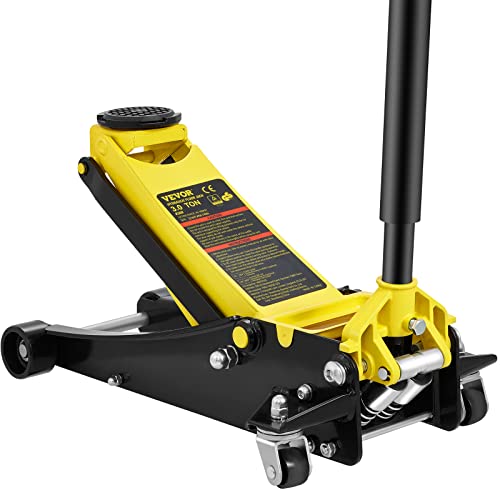
VEVOR’s 3-ton floor jack is designed for versatile lifting of cars, trucks, and SUVs. It features a min height of 3.35 inches and a max height of 19.69 inches, delivering a broad range to accommodate varying vehicle chassis. The dual-pump system speeds up lifting, and the rigid steel construction ensures durability under frequent use. Front wheels enable easy positioning, while the universal rear wheels simplify maneuvering around a workshop. This jack targets DIYers and professionals who need a reliable, mid-capacity option with good reach for low-clearance trucks and SUVs.
Considerations: verify compatibility with heavier pickup trucks that push toward 7,000–8,000 lbs; while the 3-ton rating suits most mid-sized pickups, extreme heavy-duty trucks may require higher capacity. Regular maintenance of hydraulic oil and seals is recommended to preserve smooth operation.
Jack Boss Floor Jack 3 Ton

This Jack Boss 3-ton floor jack combines robust steel construction with a low-profile design that accommodates lower ground clearance trucks. It offers a lifting range from 5.15″ to 18.3″ and includes a rugged universal joint for precise load control. The jack features two 2.5″ steel front casters and two 2.36″ 360-degree swivel casters for improved maneuverability on shop floors. It meets ANSI/ASME PASE safety standards, providing a credible safety framework for daily maintenance tasks, tire changes, and brake work on medium-size trucks and SUVs.
Tips: maintain a steady pumping rhythm to reach desired height, use wheel chocks, and never exceed stated capacity. The saddle diameter supports stable contact with the jack’s lifting point, reducing the risk of side load on the vehicle frame during lifting.
AV Steel 3 Ton Floor Jack

AV Steel offers a 3-ton hydraulic floor jack with a minimum height of 5.5 inches and a maximum of 18.5 inches, making it a solid choice for mid-size trucks requiring moderate clearance. The saddle provides 360-degree load contact, and the jack includes rotating rear wheels to simplify steering and positioning. Built to meet ANSI/ASME safety standards, this jack emphasizes reliability and steady performance during maintenance tasks, including tire rotation and brake service. The robust steel frame and portable design make it a practical option for both home garages and professional shops.
Usage notes: ensure a level surface and use proper jack stands after lifting. If your truck has a notably tall undercarriage, pair this jack with a taller support system or additional lifting equipment to achieve safe access to critical components.
Buying Guide: Key Purchase Considerations And Comparisons
- Capacity vs. vehicle type: For trucks, a 3–5 ton range covers most pickups and light commercial trucks. If you regularly lift heavier vehicles or perform chassis work on full-size trucks, a 5-ton model may offer better margin and quicker lifting with dual pistons.
- Lift range and floor clearance: Look for a compact minimum height (3–4 inches) for low-clearance trucks and a maximum height that allows full access to wheel hubs and brake assemblies. Dual-piston systems often provide faster raises with fewer strokes.
- Construction materials: Steel frames offer durability; aluminum components reduce weight but may have higher cost. For heavy-use environments, steel or reinforced steel frames are common.
- Wheels and maneuverability: Swivel casters and larger front wheels help position the jack on uneven shop floors and around vehicles with large wheelbases.
- Safety features: Check for overload protection, a wide saddle contact area, and compliance with ANSI/ASME safety standards. Always use jack stands and wheel chocks on stable, flat surfaces.
- Maintenance and service life: Regularly check hydraulic oil levels, seals, and fittings. Clean dirt from contact points to prevent corrosion and ensure smooth operation over time.
- Compatibility with trucks: Consider saddle type and contact footprint to avoid damage to the frame or saddle area. A low-profile design assists with low-sill trucks, while higher lift models suit larger rigs.
All five selections prioritize a balance of low-profile design, solid lifting capacity, and practical features for truck maintenance. Depending on your typical vehicles, you might prefer a higher-capacity jack for heavier trucks, or a lighter, more compact option for a smaller garage space. Always pair your floor jack with appropriate stands and follow safety practices for a secure and efficient lifting process.