Best Fuel Stabilizers for Storage: Keep Fuel Fresh and Protected
When preparing for off-season storage of vehicles, boats, or power equipment, choosing a reliable fuel stabilizer is essential. The right additive can extend gasoline life, protect against corrosion, and keep engines ready to start when you need them. Below, five top options are reviewed with practical considerations to help you pick the best stabilizer for long-term storage and seasonal use.
| Product | Storage Benefit | Vehicle Types |
|---|---|---|
| STA-BIL Storage Fuel Stabilizer, 32 oz | Keeps fuel fresh up to 24 months; corrosion protection | Gasoline engines, storage applications |
| STA-BIL Storage Fuel Stabilizer, 8 oz | Preserves fuel for up to 24 months; protects against ethanol damage | Small engines, seasonal storage |
| STA-BIL 360 Marine Ethanol Treatment & Stabilizer, 32 oz | Cleans fuel system; prevents rust and corrosion; treats up to 320 gallons | Marine engines, in-season protection and storage |
| Quicksilver Quickstor Fuel Treatment & Stabilizer, 12 oz | Prevents breakdown and oxidation; stabilizes fuel for long-term storage | Boats, generators, power equipment |
| Ethanol Shield Fuel Stabilizer, 24 oz (2 pack) | Antioxidants and anticorrosives; reduces phase separation risks | Gasoline storage for various engines |
Note: The selections focus on stability, corrosion protection, and compatibility with ethanol-containing fuels. Each product is tailored for different storage scenarios, from household seasonal gear to marine and industrial applications.
STA-BIL Storage Fuel Stabilizer, 32 oz
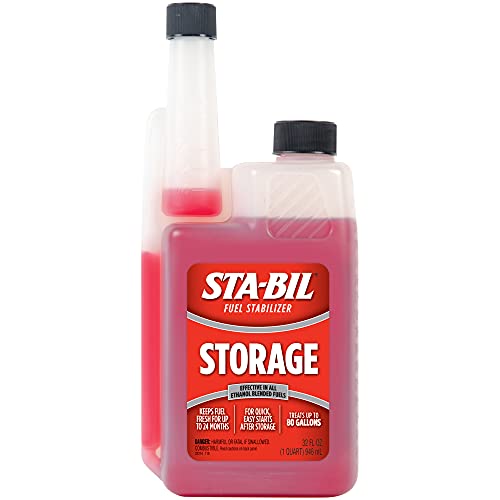
This STA-BIL Storage Fuel Stabilizer is designed for long-term fuel preservation and engine protection in storage scenarios. It helps keep gasoline fresh for up to 24 months and provides corrosion protection to defend fuel systems against ethanol-blend issues. The formula supports both 2-cycle and 4-cycle engines, making it versatile for lawn equipment, generators, boats, and older vehicles that sit idle for extended periods. A primary advantage is reduced risk of varnish, gum, and sediment forming in storage, which can complicate start-up after storage ends.
Key considerations include storage volume needs and compatibility with ethanol-blended fuels. For larger storage projects, the 32 oz bottle offers a straightforward application rate and a longer service window, while still delivering corrosion resistance. The product’s history with replacement compatibility (e.g., Cub Cadet engines) can be relevant if you use specific legacy power equipment. For best results, follow the manufacturer’s dosing guidelines based on the engine type and fuel quantity stored.
STA-BIL Storage Fuel Stabilizer, 8 oz
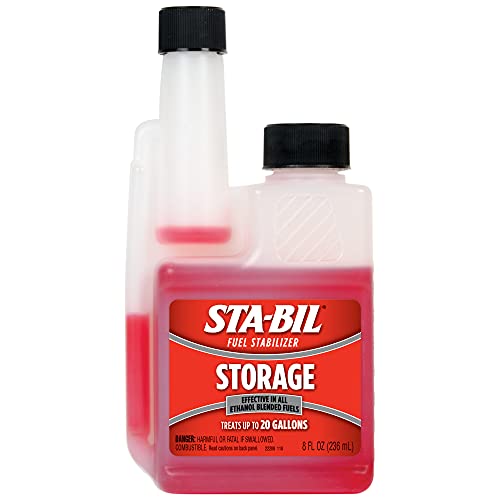
The 8 oz STA-BIL Storage Stabilizer offers the same core benefits as the larger bottle in a compact form, suited for small storage jobs or scenarios where volume is limited. It preserves fuel for up to 24 months and guards against corrosion caused by ethanol-blended fuels. The formulation is designed to maintain fuel system integrity, aiding in easier starts after storage. This size is convenient for a couple of seasonal vehicles or a single piece of equipment that is stored annually.
When selecting this option, consider the anticipated fuel volume you’ll store and how often you rotate storage stock. The smaller bottle makes it easier to manage multiple small containers without over-purchasing stabilizer, though it may require more frequent purchases if you have several engines or tanks to treat. Be sure to apply the correct ratio per the product instructions to avoid over- or under-dosing.
STA-BIL 360 Marine Ethanol Treatment & Stabilizer, 32 oz
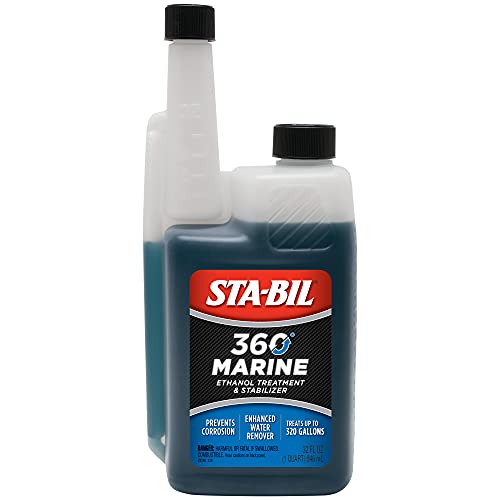
STA-BIL 360 Marine Ethanol Treatment & Stabilizer focuses on marine fuel systems, offering a blend that cleans and protects while stabilizing fuel for long-term storage. The formula uses PEA detergents to cleanse fuel injectors, lines, and pumps, removing water, gum, and varnish that can impair performance. It provides corrosion protection and is designed to support in-season cleaning, helping to maintain peak engine efficiency. The product is suitable for treating up to 320 gallons, making it a practical choice for boat owners with multiple tanks or seasonal vessels.
Operational considerations include compatibility with ethanol-free and ethanol-blended fuels commonly used in marine environments. The marine-focused formulation emphasizes protection against salt air and condensation-related corrosion, which can be more pronounced in coastal storage. If you store fuel for boats that sit unused during winter or between trips, this stabilizer offers both storage longevity and system cleanliness benefits.
Quicksilver Quickstor Fuel Treatment & Stabilizer, 12 oz

Quicksilver Quickstor is designed for long-term storage of various power sources, including boats, generators, and lawn equipment. The formula prevents fuel breakdown and oxidation, keeping fuel viable for extended periods. One ounce treats five gallons, offering a cost-effective approach for larger storage needs when you have substantial quantities of fuel to stabilize. The product can contribute to easier starts and steadier performance after extended shutdown periods.
Important considerations include the ratio for your storage volume and the overall inventory you’re stabilizing. Because it’s positioned for marine and outdoor equipment, Quickstor may be particularly well-suited for seasonal boats and trailerable crafts that see seasonal use. If you’re storing a mix of gasoline engines and older equipment, this additive’s broad compatibility can simplify stocking decisions.
Ethanol Shield Fuel Stabilizer, 24 oz (2 Pack)

Ethanol Shield combines antioxidants and anticorrosives in a 24 oz two-pack to address ethanol-related fuel degradation. The two-pack setup suits households with multiple stored engines or extended storage cycles, as it provides ample stabilizer to treat a larger volume of fuel. The product emphasizes phase separation inhibitors, which can be critical when ethanol-blended fuels sit unused in varying temperatures. The proprietary detergent components aim to reduce the need for higher octane over time as equipment ages, contributing to smoother starts after storage.
Choosing Ethanol Shield means weighing the benefits of a comprehensive antioxidant/anticorrosive approach against other stabilizers that may focus more on cleaning or performance boosting. If your storage plan involves high-ethanol-content fuels or extended idle periods, this option provides a balanced defensive stance against common storage challenges.
Buying Guide: Key Considerations for Fuel Stabilizers
Long-term fuel storage requires balancing stabilization duration, engine compatibility, and environmental conditions. When selecting a stabilizer, consider the following factors:
- Storage duration and volume: If you store large quantities for months to years, choose products advertised for multi-year shelf-life and larger treatable gallons per bottle.
- Fuel type and ethanol content: Some formulations target ethanol-blended fuels and offer corrosion and phase-separation protection; others focus on marine or diesel-specific needs.
- Engine compatibility: Confirm compatibility with the engines you store (2-cycle, 4-cycle, carbureted, or modern EFI systems) to avoid potential additive interactions.
- Detergency and fuel system cleaning: Some stabilizers include detergents to clean injectors and pumps, which can be beneficial if fuel has aged.
- Corrosion protection: Corrosion inhibitors help prevent rust in metal tanks, lines, and seals — especially relevant for marine and outdoor storage.
- Ease of use and dosing: Consider bottles with straightforward dosing recommendations and clear instructions to prevent under- or over-dosing.
- Cost per gallon treated: Compare the product’s volume and treated gallons to gauge long-term value for your storage plans.
- Environment and storage conditions: Temperature and humidity affect storage; some stabilizers offer better performance in varied climates, while others are optimized for marine environments.
In practice, the best choice depends on your storage context. For a household yard setup with several small engines and seasonal equipment, a compact 8 oz to 24 oz option with a straightforward dosing guide can be ideal. For boat owners and marine storage, a robust marine-stabilizer with fuel system cleaning and corrosion protection may offer superior long-term benefits. Across all options, always follow the specific dosing instructions and maintain proper storage practices to maximize fuel life and engine readiness.