Best Gasket Sealer for Motorcycle Engines: Top Choices for Leaks, Seals, and Repairs
Motorcycle engines demand reliable sealing solutions to prevent oil and coolant leaks while withstanding high temperatures and vibrations. The following selections cover silicone sealants, epoxy and gasket makers, and additive remedies designed for motorcycles and similar engines. This guide presents five strong options, detailing their materials, temperature ranges, and typical use cases to help you choose the right gasket sealer for your bike.
| Product | Type | Best For | Temp Range | Brand |
|---|---|---|---|---|
| Visbella High Temp RTV Silicone Gasket Maker | RTV Silicone | Oil and water resistant seals | -54°C to 343°C | Visbella |
| XADO Stop Leak (not selected for this list) | Engine additive | Stops leaks and rejuvenates seals | Various | XADO |
| K-Seal ST3501 Pour and Go | Sealant additive | Permanent head gasket repair | Engine range varies | K-Seal |
| HTJZWG Non-Asbestos Gasket Material | Gasket sheet material | Small engine gaskets and replacements | High temp endurance | HTJZWG |
| Three Bond Engine Silicone Gasket 1211 | Silicone gasket maker | Engine gaskets and joints | High temp resistant | Three Bond |
| Honda Hondabond 4 | Liquid gasket | Areas not requiring solid gaskets | Non-specified | Honda |
Note: For motorcycle engines, choose products that tolerate high temperatures, resist oil and coolant exposure, and accommodate the specific gasket type you’re dealing with—whether silicone sealant, gasket sheets, or liquid gaskets.
Visbella High Temperature RTV Silicone Gasket Maker

Visbella’s high-temperature RTV silicone gasket maker is designed for oil resistance and water sealing in internal combustion engines and other high-heat environments. The formula maintains flexibility, resists aging and corrosion, and does not shrink upon curing. It is able to withstand temperature swings from -54°C to 343°C, making it suitable for motorcycle engine gaskets, valve covers, oil pans, and partner components that demand reliable seals under demanding conditions. The product’s thixotropic nature helps it stay in place during assembly and curing, aiding consistent gaskets without slumping.
XADO ATOMEX Oil Additive Stop Leak Engine

XADO Atomex is an oil additive designed to restore elasticity to rubber gaskets and seals and to help stop engine oil leaks. It’s pitched as a multi-engine solution suitable for both cars and motorcycles, aiming to rejuvenate seals and prevent future leaks. In practice, it can be used as a preventive treatment or as a remedy for ongoing minor gasket leaks, offering a potential cost-effective approach for older engines or seals that have started to harden. It’s not a direct gasket sealant but complements sealing strategies by maintaining seal integrity.
K-Seal ST3501 Pour and Go Head Gasket Sealer
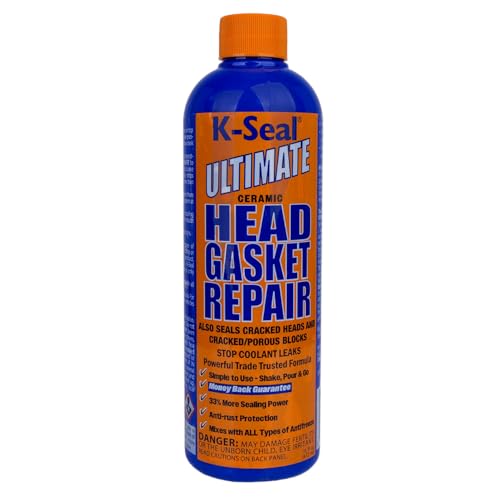
K-Seal ST3501 is a permanent repair solution designed to seal head gaskets, cracked heads, or porous engine blocks. The formula claims to seal leaks up to 0.64 mm in size with ceramic micro-fibers and requires no draining or flushing—just shake, pour, and run the engine. For larger engines, like those in trucks or industrial equipment, multiple bottles may be needed. While it promises a long-lasting seal, it’s best used when traditional gasket replacement isn’t feasible or as a temporary fix until proper maintenance can be performed.
HTJZWG Non-Asbestos Gasket Making Material

HTJZWG offers non-asbestos gasket sheets in multiple thicknesses (0.8mm, 1mm, 1.2mm) that are oil-resistant and high-temperature capable. The material is suitable for carburetor seals, oil pans, valve covers, and other vibration-prone areas in small engines like motorcycles, generators, and lawn equipment. Its properties emphasize uniform density, strong mechanical strength, and the ability to maintain tight compression under dynamic loading, supporting reliable leak-free sealing in compact engine compartments.
Three Bond Engine Silicone Gasket 1211

Three Bond 1211 is a tough, durable silicone gasket sealer intended for automotive engine joints. Silicone-based gasket makers are known for forming flexible, resilient seals that tolerate heat, oils, and vibration. This product is positioned as a reliable option for sealing gaskets in engine assemblies where silicone is preferred for its elasticity and long-term sealing performance. It’s typically used on valve covers, timing covers, and similar applications requiring dependable silicone bonding.
Bar’s Leaks HG-1 Head Seal

Bar’s Leaks HG-1 offers a head gasket repair approach focused on sealing head gasket leaks, warped or cracked heads, and related coolant issues. The product is compatible with antifreeze types and generally does not require a full coolant flush. It’s positioned as a quick, classroom-friendly fix that can help restore leak-free operation without immediate heavy disassembly, though long-term reliability depends on the underlying head condition and may vary by engine model.
170g RTV Silicone Gasket Maker

The 170g RTV silicone gasket maker from EIGTWEN emphasizes high-temperature resistance and broad applicability across engines, transmissions, and other mechanical assemblies. It forms a uniform, thin seal on joint surfaces to prevent oil and gas leakage and is touted for resistance to water, antifreeze, steam, and various lubricants. Suitable for both automotive and motorcycle applications requiring a reliable, non-corrosive seal, it supports static and some dynamic sealing tasks.
Genuine Honda Hondabond 4 Liquid Gasket

Honda Hondabond 4 is a genuine, semi-drying liquid gasket designed for use in areas not requiring solid gaskets. As a long-standing option from a trusted OEM, Hondabond 4 is commonly used in motorcycle and automotive applications where a consistent seal is required without a traditional gasket. It’s particularly compatible with Honda engines and other brands’ components that specify liquid gasket solutions as suitable replacements for solid gaskets.
Buying Guide: Key Purchase Considerations
- Engine type and area to seal: Determine if you need a silicone gasket maker, a gasket sheet, or an additive treatment based on the specific joint (valve cover, oil pan, head gasket, etc.).
- Temperature and chemical exposure: Choose products with high temperature ratings and resistance to oil, antifreeze, water, and solvents typical in motorcycle engines.
- Ease of use and curing: Consider products that cure quickly, resist slumping, and require minimal disassembly for application, especially for compact engine bays.
- Permanent vs. temporary solution: Permanent sealants (like some head gasket sealers) may be appropriate for certain leaks, while flexible silicone sealants are better for ongoing vibration and expansion fits.
- Compatibility with engine materials: Ensure compatibility with aluminum, cast iron, and gasket materials used in your motorcycle model.
- Application scope: If you’re dealing with multiple issues, a combination approach (sealant plus a gasket material) can be effective, but avoid using incompatible products in the same joint.
- OEM recommendations: For critical seals on motorcycles, follow the OEM guidance on approved products to avoid warranty and reliability concerns.
- Long-term maintenance: Some solutions are better suited for temporary relief, while others offer long-term sealing capabilities. Plan for inspection and possible reapplication as part of routine maintenance.