Best Generator for Food Truck: Reliable Portable Power Options for Mobile Kitchens
Food trucks demand dependable, portable power with clean output and solid runtime. This guide highlights five top generators that balance fuel flexibility, noise, and feature sets ideal for mobile kitchens, catering events, and on-site food prep. Each option supports transfer switches, multiple outlets, and safe operation around cooking equipment.
The following quick reference compares the chosen models, emphasizing fuel type, peak and running watts, runtime, and key safety features to help operators choose the right unit for their truck’s electrical needs.
| Product | Fuel Type(s) | Peak / Running Watts | Key Feature | Approximate Runtime |
|---|---|---|---|---|
| Westinghouse 12500 Watt Dual Fuel | Gasoline / Propane | 12500 / 9500 | Remote Start, Transfer Switch Ready | Up to 12 hours |
| Westinghouse 13500 Peak Watt Tri-Fuel | Gasoline / Propane / Natural Gas | 13500 / 10500 (Gas) • 12500 / 9500 (Propane) • 10000 / 8500 (Natural Gas) | Digital Hour Meter, CO Shutdown | Up to 19 hours |
| WEN 11,000-Watt 120/240V | Gasoline / Propane | 11000 / 8300 (Gas) • 9500 / 7500 (Propane) | Electric Start, 120/240V output | Not specified |
| Westinghouse 11000 Peak Dual Fuel Inverter | Gasoline / Propane | 9000 / 11000 (Gas) • 8100 / 10000 (Propane) | Low THD, USB/LED data display | Up to 17 hours |
| AIVOLT 11250 Dual Fuel Inverter | Gasoline / Propane | 11250 / 9000 (Gas) • 10570 / 8450 (Propane) | Quiet operation, ATS ready | Up to 19 hours |
Below are five selected models with detailed sections to help you compare capability, safety features, and maintenance needs for a food-truck setup.
Westinghouse 12500 Watt Dual Fuel: Power And Versatility

The Westinghouse 12500 Watt Dual Fuel generator offers substantial peak and running power for busy food trucks. Gasoline mode delivers 12500 peak and 9500 running watts, while propane mode provides lower but still capable output. Features include remote start via key fob, transfer switch readiness, and multiple outlets with weather-resistant covers. A large 6.6-gallon tank supports extended run times, and the engine incorporates a cast-iron sleeve with automatic low-oil shutdown and a digital hour meter for maintenance tracking. This model supports heavy loads typical of refrigeration compressors, warmers, and multiple cooking appliances during peak service periods.
Westinghouse 13500 Peak Watt Tri-Fuel: Maximum Flexibility

This tri-fuel model runs on gasoline, propane, or natural gas, offering versatile fuel options for on-the-move cooking. It delivers 13500 peak watts with 10500 running watts on gasoline, and supports long runtimes with a 9.5-gallon fuel tank and a fuel gauge. Features include two GFCI outlets, a transfer switch-ready outlet, RV-ready receptacle, and CO shutdown for safety. A digital hour meter complements the CO sensor and heavy-duty engine design, making it suitable for extended events, street fairs, or catering jobs that require sustained, reliable power.
WEN 11,000-Watt Dual Fuel: Easy Electric Start
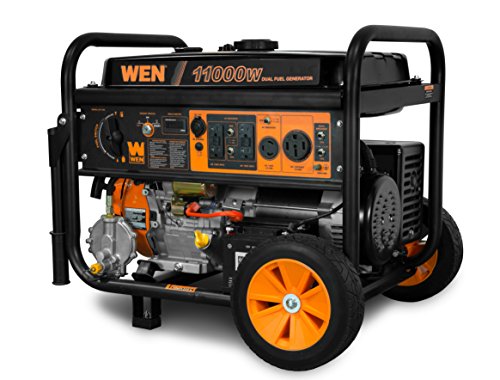
The WEN DF1100T provides a robust dual-fuel option with 11,000 surge watts and 8,300 running watts on gasoline, plus a propane alternative. The voltage switch supports 120V and 240V outputs, which is helpful for transfers to a food truck electrical system and for powering different equipment simultaneously. The electric start simplifies operation, reducing setup time between service windows. This unit is designed for portability with a wheel kit and offers a practical balance of power and convenience for mobile kitchens requiring quick start capability and reliable power delivery.
Generac 12,500 Starting Watt Tri-Fuel: Durable And Quiet

The Generac GP9500/GP8000E series provides 12,500 starting watts in a tri-fuel format, with gas, propane, and natural gas options. It emphasizes durability with a heavy-duty frame and rugged protection against harsh environments. Electric start is included for quick power on, and runtime is extended by a large-capacity fuel tank with a built-in gauge. This model is suitable for food trucks operating in challenging environments, where reliability and ease of use are critical, especially during peak service hours or multi-day events.
Westinghouse 12500 Peak Watt Tri-Fuel: High Output

This tri-fuel unit mirrors the dual-fuel option with additional peak wattage and similar safety features, including a durable engine, automatic low oil shutdown, CO monitoring, and a digital hour meter. With a long run-time capacity and various outlet configurations, it remains a strong choice for mobile kitchens that require high starting capacity for refrigeration equipment and cooking appliances during busy service hours.
AIVOLT 11250 Watt Dual Fuel: Quiet And Efficient

The AIVOLT 11250 dual-fuel inverter generator emphasizes quiet operation and cleaner output, with 11250 starting watts and 9000 running watts on gasoline, plus 10570 starting watts and 8450 running watts on propane. It’s designed for sensitive electronics with low total harmonic distortion and an ATS-ready option for seamless integration with a food truck’s power system. The dual-fuel capability and remote start add convenience for on-site catering along with energy efficiency for longer events.
Buying Guide: Key Purchase Considerations
- Power needs: Map your essential appliances (refrigeration, fryers, grills, lights) to running watts and surge requirements. Choose a model with enough headroom for brief startup spikes.
- Fuel flexibility: Dual- or tri-fuel options reduce downtime due to fuel supply issues. Consider propane availability near service locations.
- Transfer switch readiness: A transfer switch-ready unit simplifies connecting to a food truck electrical system, reducing manual rewiring during setup.
- Noise and emissions: In busy markets, quieter operation helps meet local noise ordinances and improves crew comfort. Inverter-based units often deliver cleaner power with less THD.
- Runtime and fuel capacity: Larger tanks extend operation between refuels, crucial for long events. Balance runtime with weight and portability for mobile use.
- Outlets and safety: Look for GFCI outlets, weather-resistant covers, and CO sensors. Rubber outlet covers add safety against splash or steam near cooking equipment.
- Maintenance and monitoring: Digital hour meters and maintenance reminders help manage oil changes and service intervals to prevent downtime.
- Portability and setup: Wheel kits and easy-start features reduce setup time between service windows and allow quick repositioning on-site.