Best Go Kart Racing Engine Options for Enthusiasts and Builders
For hobbyists and builders diving into go kart racing, selecting a reliable engine is key to performance and reliability. This guide highlights five notable go kart racing engines, covering power, cooling, starting methods, and durability. Each entry includes a quick product snapshot and essential features to help you compare options quickly. Whether you need raw horsepower, efficient cooling, or easy electric start, these selections offer solid performance for mid-range and entry-level builds.
| Product | Brand | Displacement | Key Benefit |
|---|---|---|---|
| YUASDUU 212CC Engine | YUASDUU | 212cc | High power, solid cooling |
| Knwigoe 212cc 7.5HP | Knwigoe | 212cc | Efficient fuel use, dual-start options |
| LIAPDG 420CC | LIAPDG | 420cc | Long endurance, strong torque |
| FUJAOPS 420CC 15HP | FUJAOPS | 420cc | High power, durable assembly |
| ZARKO 140cc | ZARKO | 140cc | Oil-cooled head, reliable start |
YUASDUU 212CC Engine

The YUASDUU 212CC go kart engine offers a robust 7.5 horsepower output at 3600 RPM, designed for reliable off-road performance. Built with a combination of iron, aluminum, and plastic components, the unit uses die-casting and stamping processes to achieve high hardness and corrosion resistance. A compact 0.8-gallon fuel tank supports extended operation, reducing refueling stops during long sessions. Care instructions emphasize checking engine oil levels (approximately 0.65 liters when the machine is level) to avoid starting issues. The engine features heat dissipation holes on the surface to help manage heat during prolonged use, which helps maintain performance and longevity. The crankshaft is 20 mm in diameter with a 50 mm length, noted to be slightly larger than standard sizes, so compatibility should be verified with your build. This engine is well-suited for go karts, lawn care tasks, compressors, and trenchers that need reliable horsepower in a compact package.
Pros: Strong power delivery, heat-dissipation design, relatively long-running fuel capacity. Cons: Uncommon crankshaft diameter may require adapter or a custom fit. Maintenance emphasis on oil level is important to prevent starting issues.
Knwigoe 212cc 7.5 HP Go Kart Engine

The Knwigoe 212cc engine delivers a solid 7.5 horsepower at a typical 3600 RPM, featuring low fuel consumption thanks to an OHV overhead valve design. The engine emphasizes fuel efficiency with an emphasis on reduced carbon buildup and wear via an optimized air filtration system and a forged crankshaft with a cast iron cylinder liner, which enhances lifespan and reliability. It supports manual or electric starting, providing flexibility for different rider preferences. The design targets stability during operation, ensuring smooth power delivery in mid-range go kart builds and applications like trenchers or lawn equipment when paired with appropriate mounts. This engine is well-suited for enthusiasts seeking dependable performance with modern design features.
Pros: Efficient fuel use, durable construction, flexible starting options. Cons: Complex fuel system setup may require careful wiring and maintenance for electric start components.
LIAPDG Gasoline Engine 420CC

The LIAPDG 420CC gas engine provides strong power at 9700W and a broad speed range of 3000-3600 RPM. Its large 1.43-gallon fuel tank supports longer operation with fewer refuels. An overhead valve design reduces carbon buildup and improves fuel efficiency, complemented by a high-precision carburetor to minimize consumption (≤374 g/kW·h). Efficient cooling is achieved through built-in air cooling and heat-dissipation features, ensuring reliability under demanding use. The engine is designed for multi-use applications, including go karts, ATVs, and track bikes, with broad compatibility and practical wiring for start triggers and grounding. Overall, this model targets endurance and strong torque for extended racing or utility sessions.
Pros: High fuel capacity and torque, efficient cooling and carburetion. Cons: Heavier and larger footprint may require more space and robust mounting hardware.
FUJAOPS 420CC 15HP Engine
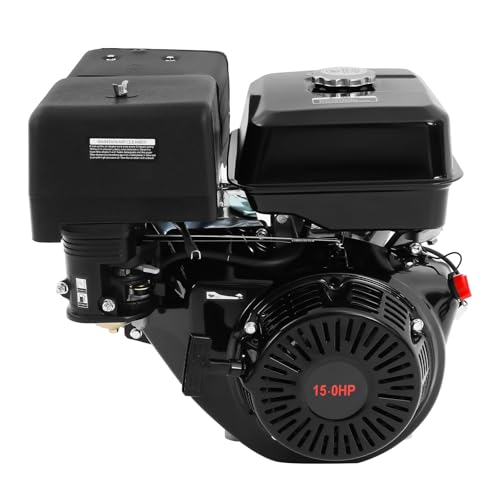
The FUJAOPS 420CC engine is a high-power option, delivering 15 horsepower with a 3600 RPM rating to handle heavy loads in go-karts, mini bikes, and related equipment. The engine uses a horizontal shaft design, with premium aluminum and iron components to improve durability and stability under sustained operation. A large 1.72-gallon fuel tank helps minimize refueling interruptions during races or long work sessions. The design prioritizes fuel efficiency through a high-precision carburetor and efficient fuel delivery, making it suitable for enthusiasts who require robust power without frequent stops for fuel. The engine’s construction aims to withstand demanding environments common in off-road and competitive settings.
Pros: Very high power, durable build, good fuel management. Cons: Higher weight and larger dimensions may complicate installation in smaller chassis.
ZARKO 140cc Racing Engine

The ZARKO 140cc race engine focuses on compact performance with an oil-cooled OHC head to help regulate temperature during extended runs. The semi-automatic 3 forward gears plus reverse provide excellent maneuverability for tight tracks and street-ready builds, making it suitable for go karts, ATVs, and quad builds used in recreational or competitive settings. Electric start with an automatic clutch simplifies operation for beginners and youth riders, providing a reliable backup start. This engine balances power and control in a smaller displacement package, ideal for lighter-weight builds or beginners seeking a responsive yet manageable racing experience.
Pros: Easy operation, good cooling, and reversing capability. Cons: Lower displacement means less peak torque compared to larger 420cc or 212cc units; best suited for lighter chassis or beginner courses.
Buying Guide: Key Purchase Considerations For Go Kart Racing Engines
- Displacement and power needs: Larger displacement engines (e.g., 420cc) provide more torque and sustained power, useful for heavier karts or more demanding terrains. Smaller units (around 140–212cc) suit lighter builds and beginners seeking quick handling.
- Starting method: Electric start is convenient for frequent use and beginners, while recoil start remains simple and reliable for field conditions or budget builds.
- Cooling system: Air-cooled vs oil-cooled heads impact heat management. Oil-cooled and well-ventilated designs improve longevity during longer sessions or high-load races.
- Durability and materials: Look for forged crankshafts, cast-iron cylinders, and robust housings (iron, aluminum) for longevity in rugged conditions. A heat-dissipation design reduces the risk of overheating during extended sessions.
- Fuel capacity and efficiency: Larger tanks reduce refueling stops, while high-efficiency carburetors and OHV designs cut fuel consumption and carbon buildup, important for practice days and long events.
- Footprint and compatibility: Verify engine mounts, shaft size (some models use non-standard crankshaft diameters), and overall dimensions to ensure proper fit with your go kart frame and drivetrain.
- Maintenance requirements: Engines with accessible oil ports, clear maintenance intervals, and straightforward wiring for electric start or ignition triggers simplify ongoing upkeep.
- Intended use: Choose based on whether you prioritize speed, acceleration, maneuverability, or endurance for off-road tracks, dunes, or hobbyist competitions.
- Warranty and support: Consider sellers offering clear documentation, troubleshooting guidance, and parts availability to support long-term use.
When evaluating options, align the engine’s characteristics with your kart’s weight, chassis, gearing, and track type. For beginner-friendly builds and yard-use karts, engines with electric start and reliable cooling are advantageous. For competitive builds where power and torque are paramount, 420cc-class engines paired with an appropriate clutch and transmission setup may offer better performance while requiring more careful tuning and maintenance. Always confirm compatibility with your frame, drive system, and carburetor configuration before purchase, and plan for proper installation hardware to ensure safe and efficient operation on the track.