Best Heaters for Golf Carts to Stay Warm on the Course
Cold mornings on the golf course don’t have to ruin your round. This guide spotlights five top-rated golf cart heaters, covering propane, electric, and hybrid options. Each choice is evaluated on heat output, ease of installation, safety features, and compatibility with common cart brands. Use the buying guide at the end to compare key factors and pick the right heater for your needs.
| Product | Brand | Power Type | Approximate Heat Output | Notes |
|---|---|---|---|---|
| Mr. Heater F242010 MH4GC | Mr. Heater | Propane | 4,000 BTU | Wind-resistant with ODS and tip-over safety; cup holder adapter included |
| Gociean Electric Golf Cart Heater | Gociean | Electric (Battery-Powered) | 400 W | Carbon fiber heating; silent operation; 3-second warm-up |
| KOMAN Golf Cart Heater | KOMAN | Propane | 4,100 BTU | Automatic ignition; adjustable heat; cup holder adapter |
| GASPOWOR Propane Golf Cart Heater | GASPOWOR | Propane | 6,200 BTU | Large heat output; compatible with most carts; cup holder adapter |
| UNIGT Golf Cart Electric Heater | UNIGT | Electric (Battery-Powered) | 400 W | Carbon fiber; 3-second heat; waterproof inline fuse |
Note: This table highlights key attributes to help you compare options quickly. Always verify compatibility with your specific golf cart model and local safety regulations before use.
Mr. Heater F242010 MH4GC 4000 BTU Golf Cart Heater

The Mr. Heater model delivers up to 4,000 BTU of radiant heat for golf carts, providing warmth for up to about 5.5 hours on a typical propane setup. It is designed to operate at elevations up to 7,000 feet and includes an oxygen depletion sensor (ODS) and a tip-over safety switch. A cup holder adapter is included to simplify installation on most carts. For on-the-go warmth, wind resistance and a stable pilot system help maintain steady heat even when the cart is moving along windy fairways.
Gociean Electric Golf Cart Heater

This electric heater eliminates propane entirely, powered by your golf cart battery for zero-emission warmth. It draws about 0.4 kWh per hour and promises rapid warming with a 3-second start. The unit is marketed as virtually silent, making it suitable for conversations on the course. Carbon-fiber heating elements support durability and heat efficiency, with features aimed at reducing battery draw while delivering consistent comfort.
KOMAN Golf Cart Heater

The KOMAN propane heater provides about 4,100 BTU of heat and features automatic ignition with an adjustable heat output. It is designed to fit most golf carts and includes a cup holder adapter for easy mounting. The model is positioned as a practical and portable heating option for cold rounds, enabling golfers to customize heat levels without manual lighting or complex setup.
GASPOWOR Propane Golf Cart Heater

With a heat output up to 6,200 BTU, the GASPOWOR propane heater aims to deliver robust warming for golf carts and small spaces up to 200 square feet. It’s designed to fit past the cup holder area and is compatible with most cart models, including EZGO, Club Car, and Yamaha. The product notes mention that propane tanks are not included, and a heat valve allows precise adjustment to match outdoor conditions.
UNIGT Golf Cart Electric Heater

The UNIGT electric heater uses carbon fiber heating elements to deliver warmth with no propane and no combustion byproducts. It requires a hard-wired connection to a 48V golf cart battery and features a waterproof inline fuse for safety. The unit promises a quiet operation and rapid 3-second warm-up, suited for users seeking an eco-friendly, low-noise heating solution on golf trips.
Golf Cart Heater With Cup Holder
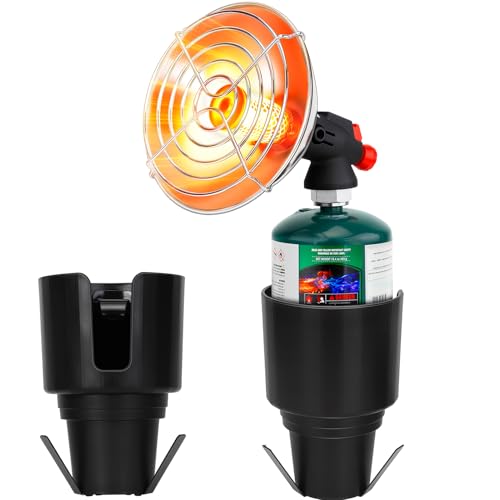
LOFUKI’s portable propane heater emphasizes cup holder compatibility and a compact design suitable for golf carts and camping scenarios. The heater is described as capable of warming areas up to 200 square feet, with a heat duration of 2–8 hours depending on conditions. It combines portability with a protective safety grid and a robust build designed for outdoor use, making it a versatile option for winter outings and cart trips.
Buying Guide: Key Purchase Considerations
- Power source and range: Propane heaters offer strong BTU outputs but require tank management and safety around flames. Electric options eliminate fuel handling and emissions but depend on battery capacity and electrical wiring. Choose propane for higher heat in extreme cold and electric for maintenance-free operation indoors or in well-insulated carts.
- Heat output versus cart size: Larger BTU ratings provide more warmth but may be excessive for small carts. Match heat output to your cart size and typical weather. For variable conditions, models with adjustable heat are advantageous.
- Safety features: Look for oxygen depletion sensors (ODS), tip-over switches, protective grills, and secure mounting options. Safety provisions reduce risk when driving on uneven paths or bumpy terrain.
- Installation and compatibility: Some heaters include cup holder adapters or are designed to fit EZGO, Club Car, or Yamaha carts. Verify that mounting hardware and adapters align with your cart’s cup holder and space constraints.
- Noise and emissions: Electric carbon-fiber heaters tend to produce minimal noise and zero emissions, while propane units emit heat with combustion byproducts. If noise or air quality matters on the course, weigh these factors accordingly.
- Operational considerations: Propane tanks require storage and replacement; electric units rely on battery health. Consider maintenance needs, replacement parts availability, and any warranty details when choosing a heater.
- Portability and versatility: Some heaters can double as camping or vehicle heaters, extending their use beyond the golf course. If you want multi-use capability, prioritize models with universal cup holder adapters or adaptable mounting.
- Safety and regulations: Always follow manufacturer instructions and local safety guidelines for propane handling, electrical wiring, and ventilation. Ensure the heater is used in a well-ventilated space when propane is in use.
Choosing the right golf cart heater involves balancing heat needs, safety, and cart compatibility. For colder climates or longer rounds, a propane heater with strong BTU output and reliable safety features may be ideal. If noise, emissions, and battery life are concerns, an electric carbon-fiber heater can offer quiet, maintenance-free warmth. The buying guide highlighted above helps compare options across these dimensions and supports an informed decision.