Best Hidden Car Radio Antenna Options for Clearer AM/FM Reception
Hidden car radio antennas deliver a cleaner exterior look while aiming to improve AM/FM reception. This guide reviews five well-regarded options, highlighting each product’s design, installation approach, and core features. Whether you drive a sedan, SUV, or truck, these compact antennas offer adhesive or windshield-mast solutions that minimize wind noise and visual clutter while striving to maintain solid signal quality.
| Product | Brand | Key Benefit |
|---|---|---|
| Eightwood Car Stereo FM Radio Antenna | Eightwood | DIN plug, long extension, adhesive patch for flexible placement |
| CHHLIUT AM FM Hidden Windshield Antenna | CHHLIUT | Slim, small footprint; sticks to windshield or glass surface |
| Universal Radio Antenna Car Stereo AM FM | DORHEA | 3m shielded cable; DIN plug; improves distance and reception |
| BINGFU Car Stereo FM AM Radio Antenna | BINGFU | Adhesive patch, 3m cable; universal compatibility |
| Supmory Universal Stereo AM/FM Radio Antenna | supmory | 10ft DIN plug; in-dash or windshield mounting |
The following sections provide concise, objective overviews of five popular hidden antennas. Each product is evaluated on design, installation, frequency range, and practical reception benefits to help you choose the best fit for your vehicle and listening preferences.
Eightwood Hidden DIN Radio Antenna

The Eightwood model is a hidden windshield patch antenna designed for modern car stereo receivers. It uses a DIN male connector and includes a DIN 41585 female to ISO adapter for broader compatibility. Operating in the FM range of 80 MHz to 108 MHz and AM from 520 kHz to 1710 kHz, it provides a gain of about 3 dBi. A 9.8-foot (3-meter) extension cable helps with flexible placement, which can minimize interference and improve reception in vehicles with larger dashboards or more confined rear areas. This antenna aims to be unobtrusive while supporting crystal-clear AM/FM signals.
Installation considerations: It’s suitable for vehicles with DIN-based head units and can be tucked under trim or along the glass edge. The long cable is advantageous for vehicles where the radio sits far from the windshield area. For best results, avoid mounting on metal surfaces directly behind any metal components that could shield the signal.
CHHLIUT AM FM Hidden Windshield Antenna
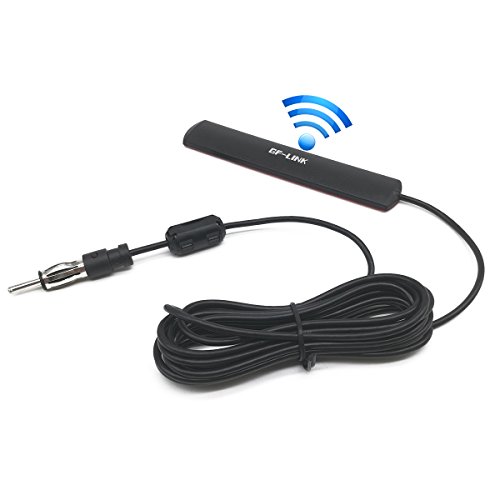
CHHLIUT offers a compact, built-in mini antenna designed to be glued to the windshield or glass surface. Its main advantage is a very small footprint, which helps preserve the vehicle’s interior aesthetics. The unit’s dimensions are approximately 4.53 by 0.85 by 0.22 inches, and it ships with about 10 feet of cable. This approach is particularly appealing for drivers who want a discrete antenna that minimizes glare or dashboard obstruction while maintaining functional AM/FM reception.
Practical notes: Adhesive mounting means clean application and secure placement are essential. If you frequently remove or reposition the antenna, consider how the adhesive’s longevity might affect long-term performance. Cable routing should avoid sharp bends to preserve signal integrity.
DORHEA Universal Radio Antenna

DORHEA’s universal patch antenna is designed for adhesive windshield mounting with a DIN plug connector. The unit features a 3-meter (approximately 10 feet) cable to allow flexible placement across the windshield surface. It emphasizes signal distance, reduced noise, and improved sensitivity for FM and AM reception. The invisible mounting aligns with a clean interior look while aiming to preserve or enhance radio performance in a wide range of vehicles from cars to SUVs and trucks.
Installation tips: Ensure the glass surface is clean and dry before applying the adhesive. Route the cable away from heat sources or moving parts, and test reception from different positions on the windshield to identify the best signal orientation.
BINGFU Hidden Patch Antenna
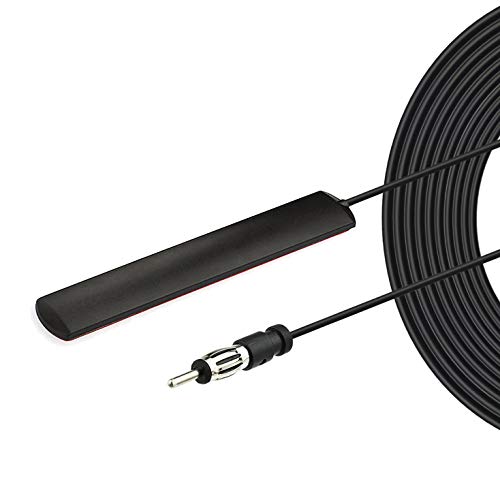
BINGFU presents a universal AM/FM radio antenna with a hidden adhesive mount. The compact patch design adheres to the windshield or glass surface with a 3-meter (10-foot) cable and a DIN plug connector. It is marketed as suitable for various vehicle types, including cars, trucks, SUVs, and other in-dash audio systems. The patch antenna is designed to be unobtrusive while delivering reliable AM/FM reception in typical urban and highway driving scenarios.
Considerations: Installation ease is a key selling point, but users should confirm compatibility with their head unit and ensure the adhesive holds up under regional temperature fluctuations. If the antenna is placed near large metal components, signal performance could be impacted.
KSaAuto 12V Car Antenna Booster (Extra Option)
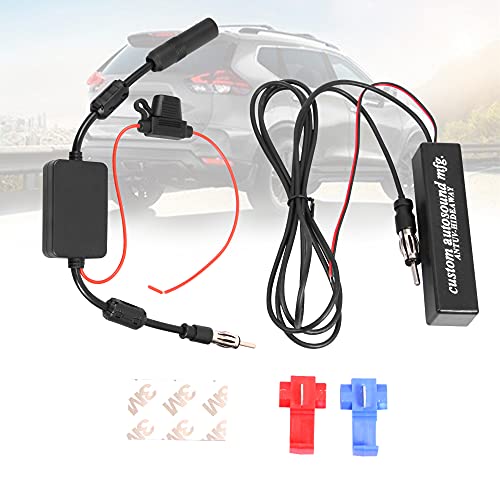
Although listed as an additional option, the KSaAuto antenna booster is designed to work with existing AM/FM radio systems to improve signal strength and reduce noise. It operates via a 12V power supply and can function in place of a factory antenna or in tandem with an external antenna. This product is useful for vehicles where the factory antenna is damaged or where the user wants to minimize visible hardware while still enhancing reception. It’s important to review installation requirements and ensure compatibility with your head unit and vehicle electrical system.
Note: This option is included here to reflect broader market choices for hidden antenna setups. Some installations may require professional assistance, particularly when integrating with factory antennas or optimizing power connections.
Buying Guide: Key Considerations For Hidden Antennas
- Frequency coverage: Most hidden antennas focus on FM (approx. 80–108 MHz) and AM (about 520 kHz–1710 kHz). Confirm that the range matches your listening preferences and local broadcasting standards.
- Mounting method: Adhesive windshield patches offer a clean look but require good surface adhesion and careful placement. Windshield or glass-mount options can be subtle, while some designs tuck beneath trim for a nearly invisible installation.
- Cable length and routing: Longer cables (around 3 meters or 10 feet) provide flexibility in placement but must be routed to avoid heat sources, moving parts, and interference. Plan an unobtrusive path to the head unit behind the dashboard.
- Connector compatibility: DIN plug connectors are common for aftermarket head units, but verify compatibility with your specific radio model and any adapters you might need for ISO or factory connections.
- Signal quality vs. aesthetics: Hidden antennas trade some signal robustness for a discreet appearance. Consider your driving environment (urban vs. rural), vehicle type, and whether you frequently travel in areas with weak signals.
- Installation complexity: Adhesive-based antennas require surface prep and curing time. Windshield-mounted options may be easier for DIY installs but can be affected by glare or visibility concerns in some settings.
- Maintenance and durability: Temperature changes, moisture, and sun exposure can affect adhesive performance and cable integrity. Look for UV-resistant materials and weatherproof connectors if you drive in harsh climates.
- Compatibility with existing systems: If you have an aftermarket stereo or a factory-fitted system, ensure the antenna’s connector type and power requirements align with your unit to avoid compatibility issues.
- Noise reduction and shielding: Some designs emphasize reducing electrical noise and improving signal-to-noise ratio. Consider how installation placement might impact interference from other electronic components in your vehicle.
- Warranty and support: A clear warranty and readily available support can help if adhesion fails or performance is inconsistent after installation.
When choosing among these options, consider your vehicle type, preferred mounting location, and whether you value a completely hidden appearance over maximum signal strength. For many drivers, a high-quality adhesive windshield antenna with a long cable and a standard DIN connection provides a reliable balance of aesthetics and performance. Always follow the manufacturer’s installation guidelines to optimize reception and preserve the vehicle’s interior style.