Best Hydrogen Generators for Cars and Portable Use
Hydrogen generation technology is increasingly popular for educational demos and personal use, including portable hydrogen generators and small-scale fuel-cell projects. This article highlights five noteworthy options and provides guidance on choosing the right device for car-related experiments, hobby projects, or wellness-focused hydrogen water solutions. Each product section includes a brief overview of features and practical considerations.
Summary Table of Selected Products
- Aitoserlea Hydrogen Fuel Cell Trolley – Hydrogen fuel production for educational trolley experiments.
- LeTkingok Hydrogen Fuel Cell – Similar hydrogen/air power generation concept for teaching demonstrations.
- WIYYH 2025 Upgrade Hydrogen Water Bottle – Portable hydrogen water generation using SPE/PEM technology.
- MOVOCA Hydrogen Water Bottle – 3-minute hydrogen generation with 2200ppb; portable hydration device.
- LOOHOI Hydrogen Water Bottle – SPE/PEM tech for quick hydrogen water, USB rechargeable.
Hydrogen Fuel Cell Trolley By Aitoserlea

The Aitoserlea hydrogen fuel cell trolley demonstrates a simple electrolysis-to-power setup. It uses zinc particles and citric acid to synthesize hydrogen, which then combines with air to generate electricity to drive the trolley. The system requires careful temperature management: an 80°C water step for the combination reaction improves hydrogen output, and venting must be managed to ensure only hydrogen and air remain in the fuel cell. This product emphasizes hands-on understanding of hydrogen production and fuel-cell operation in an educational context.
LeTkingok Hydrogen Fuel Cell Model For Teaching
LeTkingok offers a hydrogen fuel cell teaching model with similar principles to the Aitoserlea trolley. It highlights the hydrogen-oxygen power generation concept and serves as an educational tool for demonstrating hydrogen production, gas management, and fuel cell operation. Instructions describe using hot water for the combination reaction and vent management to ensure clean hydrogen-air power. This item is best suited for classrooms or home science projects focused on energy conversion and sustainability concepts.
MOVOCA Hydrogen Water Bottle
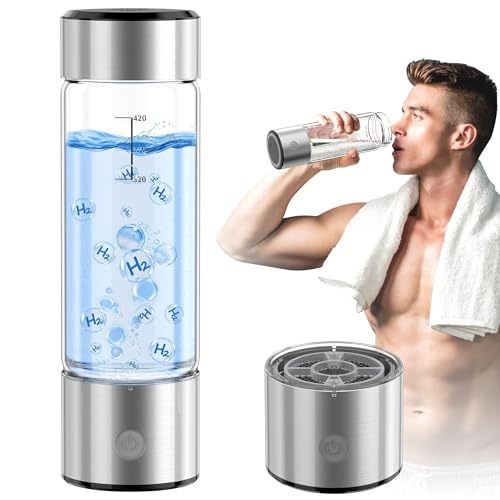
The MOVOCA hydrogen water bottle uses advanced SPE and PEM electrolysis technology to generate hydrogen-rich water in about three minutes, delivering up to 2200 ppb hydrogen ions per cycle. While primarily a hydration device, it demonstrates portable hydrogen generation in a consumer-friendly form. It is designed for fitness, travel, and daily health routines, and it emphasizes ease of use, portability, and a practical dosing of hydrogen for daily antioxidant benefits.
LOOHOI Hydrogen Water Bottle With SPE/PEM

LOOHOI features SPE/PEM hydrogen technology in a portable 16-ounce bottle. It generates up to 1500 ppb hydrogen per cycle, with a quick 3–5 minute production time. The device is USB-rechargeable and designed for office, gym, or travel use. The focus is on delivering clean hydrogen-rich water in a compact, rechargeable form factor ideal for daily hydration with antioxidant benefits.
IMUXYUQ Hydrogen Water Bottle Generator

IMUXYUQ presents a hydrogen water generator with dual-use capabilities: drink hydrogen water or inhale hydrogen gas via a nasal tube. It supports up to 2800 ppb hydrogen across a three-minute generation cycle, and includes a built-in self-cleaning cycle and a cleaning brush. This device targets users seeking versatile wellness options, including inhalation and drinking hydrogen, with a focus on user-friendly maintenance and daily portability.
LXYRQ Hydrogen Water Generator Pitcher

The LXYRQ pitcher-scale hydrogen generator uses SPE/PEM technology and DuPont membranes to produce up to 2000 ppb of hydrogen in one cycle. It combines a four-function design, including automatic cleaning, temperature control, and higher-concentration hydrogen production. The pitcher format enables household use with a larger water capacity (about two liters) for family-level hydration, emphasizing water quality and safety alongside hydrogen enrichment.
AquaGreen Inhalation And Water Hydrogen System

AquaGreen’s device combines hydrogen inhalation with hydrogen-rich water generation in one compact system. It uses SPE and PEM technology to achieve high-purity hydrogen suitable for inhalation and drinking water enrichment. The dual-function design targets users seeking a portable solution that supports breathing and hydration, potentially appealing to wellness-focused individuals who want flexibility in hydrogen delivery methods while traveling or at home.
Buying Guide: Key Purchase Considerations
- Intended use: For car-related experiments or teaching demos, prefer models explicitly designed for hydrogen production and safe gas handling. For personal hydration, water-generation bottles with SPE/PEM technology are relevant.
- Technology: SPE (Solid Polymer Electrolyte) and PEM (Proton Exchange Membrane) are common, delivering hydrogen efficiently. Look for higher ppb (parts per billion) or ppm (parts per million) ratings for meaningful hydrogen concentration.
- Safety and procedures: Educational kits may require precise temperature control and vent management. Follow all safety guidelines when handling hydrogen and performing reactions that release gas.
- Portability and durability: If you need on-the-go use, prioritize USB-rechargeable, compact designs with durable housings and leak-proof seals for travel and daily activities.
- Maintenance: Self-cleaning features and easy disassembly help keep devices hygienic. Ensure compatibility with standard cleaning routines to prevent residue buildup.
- Water quality and suitability: For hydrogen water devices, use appropriate water (soda, mineral, or alkaline as recommended) and avoid distilled or purified water unless specified by the manufacturer.
- Safety certifications and warranty: Check for certifications and warranty coverage when purchasing equipment intended for learning or personal health use.
- Cost of consumables: Some devices require replacement components or filters. Consider ongoing costs when evaluating long-term value.
Note: This article presents a range of products to illustrate different approaches to hydrogen generation, from educational hydrogen fuel cell demonstrations to consumer hydrogen water devices. Each item has distinct applications, safety considerations, and maintenance requirements.