Best Jump Cables for Car Battery: Top Picks for Reliable Emergency Starts
Car battery jump cables are essential for roadside emergencies, offering a dependable way to restart a dead or weak battery. The following selections prioritize strong clamps, durable insulation, and long lengths for reach, plus convenient carrying bags for storage. Each picks is suited to common American passenger cars, SUVs, and light trucks, ensuring safe, effective performance when you need it most.
| Product | Brand | Length / Gauge | Key Benefit |
|---|---|---|---|
| Energizer Jumper Cables for Car Battery, 16 Feet, 6 Gauge | Energizer | 16 ft • 6 gauge | Thick vinyl coating; easy handling; carrying bag included |
| TOPDC 8 Gauge 12 Feet Jumper Cables | TOPDC | 12 ft • 8 gauge | Strong clamps with insulated housing for safety |
| NOONE Jumper Cables for Car Battery, 10 Feet, 10 Gauge | Noone | 10 ft • 10 gauge | Universal fit with high-conductivity copper-clad aluminum |
| Energizer Jumper Cables for Car Battery, 20 Feet, 4 Gauge | Energizer | 20 ft • 4 gauge | Upgraded gauge for heavy-duty jumping; sturdy travel case |
| TOPDC 4 Gauge 25 Feet Jumper Cables | TOPDC | 25 ft • 4 gauge | Long reach with UL-listed, durable construction |
Energizer 16-Feet Jumper Cables (6 Gauge)
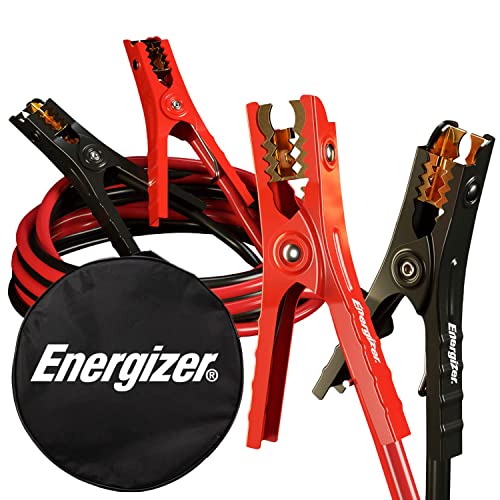
Energizer’s 16-foot, 6-gauge jumper cables provide solid performance for most passenger vehicles. The thick vinyl coating protects against rust and corrosion while maintaining flexibility in cold weather. A included carrying case supports easy transport and compact storage. The cables’ gauge is suited for standard jump-start operations on a range of cars, light trucks, and SUVs, delivering dependable current transfer when reliability matters most.
What to know about this option
- Suitable for most common vehicles and engines.
- Durable insulation reduces risk of short circuits during use.
- Carrying bag enhances portability for trunk or garage storage.
TOPDC 8 Gauge 12 Feet Jumper Cables

TOPDC’s 12-foot, 8-gauge cables balance affordability with performance. The four giant alligator clamps feature strong teeth and springs for a secure bite, while insulating rubber minimizes the risk of electric shock. These cables are designed to offer reliable conductivity and safety for standard jump-start scenarios on most vehicles encountered in daily use.
Key considerations
- Moderate length suitable for typical parking spaces.
- Insulated clamps help prevent accidental shocks.
- Great for everyday drivers and light utility use.
NOONE 10 Feet Jumper Cables (10 Gauge)

Noone’s 10-foot set uses 10-gauge conductors designed to handle up to 200 amps, suitable for most 12/24V car batteries. The rubberized insulation provides protection against leakage currents and gives a firm grip. The cables’ copper-clad aluminum conductors offer good conductivity across a range of temperatures, making them a solid choice for quick, safe starts in moderate conditions.
Why this option stands out
- Compact length for tight spaces while maintaining adequate current flow.
- Robust insulation and clamps ensure reliable attachment.
- Capable of supporting a broad set of small to mid-size engines.
Energizer 20 Feet Jumper Cables (4 Gauge)

These Energizer cables extend to 20 feet and are built with a thicker 4-gauge conductor, ideal for reaching across larger vehicles or obstructive engine bays. The same durable vinyl coating protects against rust and wear, and the included carrying case makes storage in trunks or garages straightforward. The higher gauge (smaller number) means better current capacity for demanding starts or colder climates.
Practical notes
- Long reach reduces the need to maneuver cars to close alignment.
- 4-gauge conductors support higher current for tough starts.
- Travel bag supports organization and transport.
TOPDC 4 Gauge 25 Feet Jumper Cables

The TOPDC 25-foot cables pair low gauge with an extended reach, making them suitable for larger cars, SUVs, and trucks. The clamps feature reinforced construction and safety-insured insulation, and the UL listing indicates compliance with industry standards. The cables’ length offers flexibility when vehicle positions require more spacing, such as in deeper parking spots or crowded garages.
Considerations for longer cables
- Longer cables increase reach but can be heavier; verify ease of handling.
- UL-listed construction supports safe use in diverse environments.
- Durable PVC insulation protects the internal wires from damage.
Buying Guide: Key Purchase Considerations
- Cable gauge: Lower gauge numbers (e.g., 4 gauge) carry more current for tougher starts; higher gauge (e.g., 6–10 gauge) is lighter and more affordable but may struggle with larger engines.
- Cable length: Longer cables improve reach in awkward layouts or crowded parking spaces but add weight and storage volume. Choose length based on typical parking scenarios you encounter.
- Clamps and grips: Look for strong, corrosion-resistant clamps with secure spring mechanisms and insulated handles to minimize shock risk.
- Insulation and coating: Thick vinyl or rubber coatings protect against moisture, corrosion, and wear. Ensure a robust outer jacket to extend cable life.
- Portability: Carrying cases or pouches help with organization and trunk storage, reducing the chance of misplacing cables.
- Safety features: UL listing, corrosion resistance, and high-quality connections reduce the risk of short circuits, leaks, or damaging the battery during use.
- Compatibility: Ensure the set supports common 12V systems found in most American cars, SUVs, and small trucks. A universal fit helps with multiple vehicles in a household.
When selecting jump cables, prioritize combinations of current capability, reach, durability, and safety features. This approach helps ensure readiness for a variety of emergency scenarios while minimizing risk to both the operator and the vehicle.