Best Lightweight Body Fillers for Auto Repairs and Dents
Lightweight body fillers are designed to smooth surfaces, fill dents, and dry quickly without sagging or shrinkage. This guide highlights top lightweight fillers from trusted brands, explains how they work, and compares their key advantages. Whether you’re fixing aluminum panels, fiberglass, or steel, these options help you finish jobs faster with professional results.
The following table summarizes the selected products, their primary strengths, and typical use cases to help you choose at a glance.
| Product | Brand | Best For | Key Benefit |
|---|---|---|---|
| Evercoat Body Shop Pro-Grade | Evercoat | All-metal and non-metal surfaces | Fast drying, easy sand, strong adhesion |
| Evercoat Lite Weight | Evercoat | Aluminum, fiberglass, lightweight filler jobs | Clog-free, sands easily |
| 3M Lightweight Body Filler 05801 | 3M | Automotive dents and scratches | Creamy mix, tack-free finish |
| Roberlo Maxifill Superior | Roberlo | Small-to-medium dents | Microspheres tech, reduced sanding time |
| U.S. Chemical USC Special Lite | U.S. Chemical & Plastics | General autobody repairs | Lightweight, effective filler |
Evercoat Body Shop 105001 Pro-Grade Body Filler

Evercoat’s Pro-Grade Body Shop filler is designed for professional dent repairs across aluminum, steel, and fiberglass. Its fast-drying formula helps technicians complete repairs quickly while maintaining a smooth, sandable finish. The filler blends easily, reducing the amount of shaping required, and it exhibits strong adhesion to diverse substrates, making it a versatile option for mixed-material projects.
Key features include fast drying and easy sanding, which can cut labor time on typical repair jobs. The product’s formulation supports shaping and feathering without sacrificing stability, which is important when working on curved or contoured panels. It’s suitable for both body shops and DIY enthusiasts who demand reliable performance from a lightweight filler. Use the included hardener as directed to optimize cure time and finish quality.
Evercoat Lite Weight Body Filler

Evercoat Lite Weight is designed for lighter repairs where weight savings and fine sanding matter. Its tack-free formulation sands to a fine finish, enabling precise feathering over riveted or panel joints. The clog-free design helps extend sanding belt or paper life, reducing material waste during long repair sessions. This filler pairs well with primers and topcoats for a seamless rebuild, especially on aluminum or composite panels where weight considerations are important.
Best used on areas that require meticulous surface preparation and a smooth, paint-ready surface. Its easy sanding and reduced clogging can translate into faster project completion, particularly in small to mid-size repair jobs where quick turnaround is valued. The filler’s formulation supports a consistent, uniform application with predictable shaping behavior.
3M Lightweight Body Filler, 05801
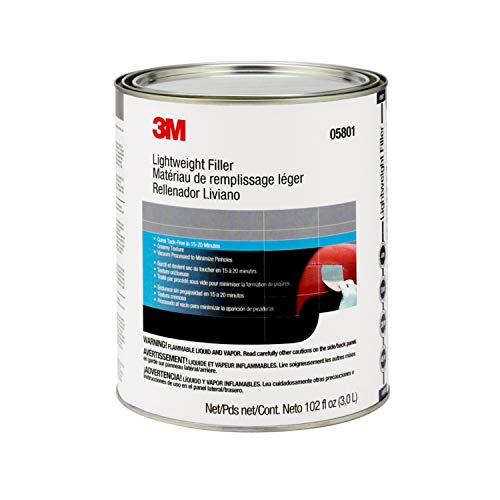
The 3M 05801 is a one-gallon lightweight filler designed for automotive dents and scratches with a creamy mix and good handling properties. Its tack-free finish helps reduce wait times before applying primer and paint, while easy spreading allows for efficient smoothing of irregular surfaces. This filler is well-suited for larger body repairs where a steady, predictable flow is essential to achieving a uniform surface without pinholes or texture issues.
When using this filler, ensure proper surface preparation (clean, dry, and abraded) and follow the recommended ratio of filler to hardener for optimal cure and hardness. It’s compatible with a variety of substrates commonly found in automotive repair, including metal and some composites. This makes it a versatile option for garages that handle multiple repair kinds in a single workspace.
U. S. Chemical & Plastics Special Lite Lightweight Filler
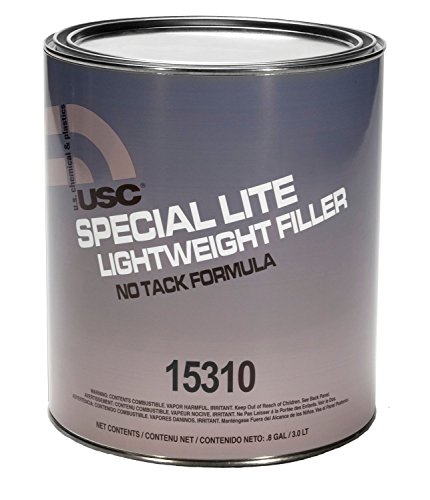
Special Lite from U.S. Chemical & Plastics is a lightweight filler option noted for its ease of use on various substrates, including metal surfaces used in automotive repair. Its lightweight formulation minimizes sag and provides predictable sanding, making it a practical choice for professionals who value efficiency and consistent results. The filler is designed to bond well to common autobody materials, helping to deliver a durable finish when correctly applied and cured.
This filler is especially useful for quick fixes that require minimal material but solid adhesion. For best results, prepare the substrate thoroughly, follow curing times, and apply thin, even coats to avoid air pockets. The result should be a smooth base for primer and color coats while maintaining manageable workflow in busy shops.
Roberlo Maxifill Superior Lightweight Filler

Roberlo Maxifill is engineered for easy sanding and paintable finishes, designed to handle dents, holes, and rust across diverse substrates including aluminum, steel, zinc, galvanized surfaces, and fiberglass. Its microspheres technology reduces sanding time by a notable margin, helping shops push projects through more quickly. The kit includes three liters of filler plus hardener, offering a complete solution for standard auto body repair workflows.
Maxifill’s rust-inhibiting properties add a layer of durability to repairs, which is beneficial for vehicles exposed to moisture or high-humidity environments. The adhesive qualities ensure reliable bonding to multiple surfaces, decreasing the likelihood of bond failure under stress. For technicians, this means a robust, long-lasting repair that remains smooth under primer and paint layers.
Buying Guide
Key considerations when choosing a lightweight body filler include substrate compatibility, drying time, sandability, and adhesion. A versatile option should bond well to aluminum, steel, fiberglass, and composites, while offering predictable cure times that fit your shop schedule. Sanding performance—particularly clog resistance and the rate at which you can feather edges—also matters for achieving a uniform finish without pinholes or texture.
Choose a product based on project scale: small-area touch-ups may benefit from lighter weight fillers with excellent tack-free properties, while larger dent repairs might require a filler with a faster cure and stronger adhesion to avoid sagging. Kit formats that pair filler with a hardener provide a complete solution, reducing the chances of mismatched components and ensuring consistent performance.
Environmental and safety factors should also influence your choice. Read labels for VOC content and disposal guidance. Proper surface preparation—cleaning, degreasing, and abrading—is essential regardless of the filler selected. For mixed-material applications, prioritize products with proven adhesion to multiple substrates to minimize the risk of separation between filler and substrate during subsequent topcoats.
From a technician’s perspective, evaluated options show a balance of fast-drying formulas, easy sanding, and reliable adhesion. Some products emphasize clog-free performance to extend sanding life, while others highlight rust inhibitors for longevity on outdoor or humid vehicles. In multi-brand shops, stocking a couple of fillers with complementary strengths—one for fast turnaround and one for precision finish—can optimize workflows and outcomes.
In summary, the best lightweight body filler depends on your typical repair scenarios: aluminum-heavy panels, fiberglass components, or mixed-material bodies. By selecting products with the right balance of cure time, adhesion, and sandability, you can achieve durable, paint-ready results with fewer passes and reduced labor costs.