Best Lithium Battery for RV Solar: Top 5 Lifepo4 Options
Choosing the right lithium battery for an RV solar setup can dramatically impact reliability, weight, and long-term cost. This guide reviews five high-value LiFePO4 models that balance capacity, durability, and BMS protection for off-grid adventures. Each option emphasizes long cycle life, cold-weather performance, and system compatibility to help you maximize solar efficiency while reducing maintenance.
| Product | Brand | Capacity | BMS |
|---|---|---|---|
| 2-Pack 12V 100Ah | GRNOE | 200Ah (2x 100Ah) | Built-in 100A BMS |
| 12V 300Ah | yeagulch | 300Ah | Built-in 200A BMS |
| 100Ah 12.8V | HRBEENERGY | 100Ah | Built-in 100A BMS |
| ELEFAST 12V 330Ah | Elefast | 330Ah | Built-in 200A BMS |
| ECO-WORTHY 12V 300Ah | ECO-WORTHY | 300Ah | Built-in 200A BMS |
The following selections focus on models commonly compatible with standard RV solar configurations, offering strong cycle life, robust protection, and reasonable weight. All five meet typical expectations for off-grid installations, including cold-weather performance and safe charging practices. Buyers should consider capacity needs, space, and mounting options when comparing these batteries.
GRNOE 12V 100Ah LiFePO4 Battery (2-pack)

The GRNOE 12V 100Ah battery combines compact dimensions with a high density of energy, weighing about 22.5 pounds per unit and measuring 12.9 by 6.7 by 8.6 inches. It is designed to replace SLA/AGM batteries with a notably lighter footprint and longer life. A built-in BMS provides protection against overheating, overcurrent, overcharge, over-discharge, and short circuits. The model supports a low-temperature cut-off, enabling operation in cold RV environments; however, charging requires a compatible charger voltage (14.6V ± 0.2V). This item comes in a two-pack, which can be convenient for higher daily usage or parallel configurations. The compact size helps fit standard RV compartments without sacrificing usable capacity.
yeagulch 12V 300Ah LiFePO4 Battery

The 12V 300Ah LiFePO4 battery from yeagulch emphasizes high cycle life, often exceeding 6000 cycles to 80% depth of discharge. With a built-in 200A BMS, it offers comprehensive protection, including overcharge and over-discharge protection, as well as automatic balancing to equalize state of charge across cells. Its energy density enables more energy storage in a smaller footprint compared to lead-acid equivalents, aiding RVs that prioritize space. The unit is suitable for larger RV systems and can be used in parallel with appropriate controllers and fusing. It’s a strong option for users seeking high total capacity while maintaining a reasonable weight profile.
HRBEENERGY 100Ah LiFePO4 Battery

The 100Ah LiFePO4 battery from HRBEENERGY provides robust protection with a built-in 100A BMS and a 12.8V nominal rating. It emphasizes lighter weight—approximately 19.4 pounds—compared with traditional lead-acid batteries of similar capacity. A key feature is the low-temperature cut-off, which helps guard the battery in cold environments by cutting charging when temperatures fall below freezing. The unit is positioned as a practical replacement for lead-acid systems, delivering higher energy density without adding significant bulk to the RV storage. The included BMS supports safe charging and deep discharge handling for longer life.
ELEFAST 12V 330Ah LiFePO4 Battery

ELEFAST offers a high-capacity 330Ah LiFePO4 battery built for RVs and off-grid systems. It ships with a built-in 200A BMS and Bluetooth connectivity for monitoring. The design accommodates series/parallel configurations, which supports expanding system voltage up to 51.2V in series or high Ah in parallel. The battery is engineered for reliability in RV environments and supports solar charging, making it a compelling choice for users planning multi-sun days or larger load profiles. Its EVE-grade cells contribute to a stable performance, especially when powering multiple loads across the RV’s electrical system.
ECO-WORTHY 12V 300Ah LiFePO4 Battery
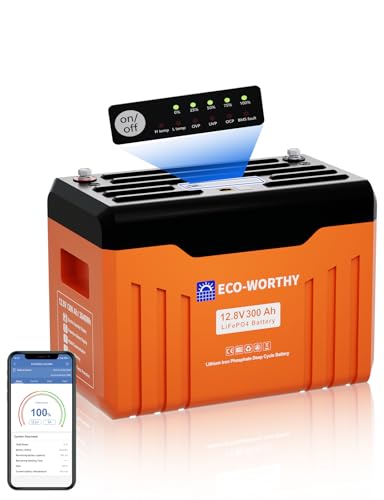
ECO-WORTHY pairs 300Ah capacity with a Bluetooth-enabled monitoring app and an LED SOC/status display, enabling real-time awareness of remaining capacity and health. The 200A BMS includes protections for over/under voltage, overloads, and high/low temperatures, with a low-temperature cut-off to prevent charging in freezing conditions. This model is targeted at off-grid and RV users who value remote monitoring and straightforward operation, especially in climates with temperature swings. Its heavier capacity helps power more significant RV systems or longer periods between recharges.
Buying Guide: Key Purchase Considerations
- Capacity and energy needs: Calculate daily consumption and plan for a cushion. HigherAh packs enable longer boondocking sessions with fewer recharges.
- Battery management system (BMS): A robust BMS protects against overcharge, over-discharge, over-current, and short circuits. Look for low-temperature cut-offs if you RV in cold environments.
- Weight and space: LiFePO4 cells provide high energy density with lighter weight than lead-acid. Ensure your battery box and mounting can accommodate the unit’s dimensions and weight.
- Charge compatibility: Use a charger that matches the battery’s charging voltage (often around 14.4–14.6V for 12V LiFePO4 systems). Inadequate charging voltage can prevent full capacity realization.
- Cold-weather performance: Low-temperature protection helps prevent charging at unsafe temperatures, preserving battery health in winter RV use.
- Expandability: If you anticipate growing power needs, consider batteries that support in-series or in-parallel configurations for future scaling.
- Durability and warranty: Inspect the build quality and warranty terms. Longer warranties often reflect confidence in cycle life and safety.
- System integration: Verify compatibility with your solar controller, inverter, and electrical distribution in the RV to minimize wiring changes and ensure safe operation.
When selecting a battery, balance initial cost against capacity, weight, and expected cycle life. Lifepo4 options tend to offer longer lifespans and lower maintenance than lead-acid equivalents, reducing long-term ownership costs in an RV solar setup. Always follow manufacturer recommendations for charging voltages and temperature limits to maximize performance and safety.