Best Lithium Marine Battery for Trolling Motor: A Comprehensive Guide
Choosing the right lithium battery for a trolling motor can boost run time, reliability, and overall boat performance. This guide reviews five top lithium options designed for marine use, trolling motors, and related applications. Each entry highlights key features, safety protections, and durability in harsh environments to help you compare at a glance.
| Product | Brand | Voltage/Capacity | Best For |
|---|---|---|---|
| CHITOLI 12V 100Ah Group 24 | CHITOLI | 12V 100Ah | RV, Marine, Trolling Motor |
| LiTime 12V 100Ah (Group 31) | LiTime | 12V 100Ah | Marine, Boat, RV |
| LiTime 36V 100Ah OBM | LiTime | 36V 100Ah | Electric Outboard Motors |
| MARSENERGY 12V 100Ah (R-1PC) | MARSENERGY | 12V 100Ah | Marine, Trolling Motor, Home Storage |
| MOSEWORTH 12V 100Ah | MOSEWORTH | 12V 100Ah | Marine, RV, Solar |
CHITOLI 12V 100Ah Group 24 Lithium Battery

CHITOLI’s 12V 100Ah Group 24 LiFePO4 battery is designed as a drop-in replacement for lead-acid setups, delivering lighter weight, smaller size, and dramatically higher energy density. It weighs about 22.57 pounds and offers significant space savings while providing 4000+ cycles at 100% DoD. A built-in smart BMS guards against overcharging, over-discharging, over-current, and short circuits, enabling safer operation in varied climates. Note: optimized for energy storage rather than engine starting, making it ideal for trolling motors, RV power, and marine accessories.
Key considerations: compatibility with your trolling motor voltage and battery box, cycle life expectations, and the difference between deep-cycle sizing and starter batteries. The battery’s high energy density supports longer cruising sessions, while the BMS protection helps maintain longevity in marine environments where temperature and humidity can fluctuate. This model emphasizes long-term energy storage with a strong emphasis on safety and cycle durability.
LiTime 12V 100Ah Trolling Motors LiFePO4 Battery (Group 31)

LiTime’s 12V 100Ah Group 31 model features a Bluetooth monitoring system that auto-connects for quick status checks, along with low-temperature protection that prevents charging below 32°F and discharging below -4°F. It includes 20+ safety protections, IP65 waterproofing, and salt resistance—tailored for harsh marine settings. The integrated BMS supports long cycle life (up to 15000 cycles at 60% DoD) while maintaining reliable performance in cold water applications, solar setups, and RV storage.
Considerations: remote monitoring via Bluetooth is convenient, but ensure your phone app and battery firmware are up to date. Low-temperature protection can affect charging in winter, so plan charging windows accordingly. The IP65 rating helps resist splashes, but proper mounting and enclosure still matter for salt spray exposure. This lithium option is well-suited for long days on the water or remote excursions where weight and reliability matter.
LiTime 36V 100Ah OBM Lithium Battery With 25A Charger

This LiTime 36V 100Ah battery is aimed at electric outboard systems, featuring a built-in 100A BMS and robust Bluetooth monitoring to oversee performance. It’s designed for high current demands with a 500A surge capability and compatibility across leading brands like Torqeedo and Yamaha. The IP65 rating and wide operating range ensure stable operation from cold mornings to hot afternoons on the water. It emphasizes deep cycles (4,000–15,000 cycles depending on DoD) and a compact footprint suitable for 36V trolling setups.
Key considerations: 36V systems require compatible chargers and wiring; verify the motor’s voltage requirements and ballast. The BMS protections are essential for preventing accidental overcharge or short circuits, which is especially important when the battery is mounted on a boat that experiences vibration and splash. This option is ideal for users running higher-voltage trolling configurations seeking long-term endurance and smart monitoring.
MARSENERGY 12V 100Ah Battery (R-1PC)
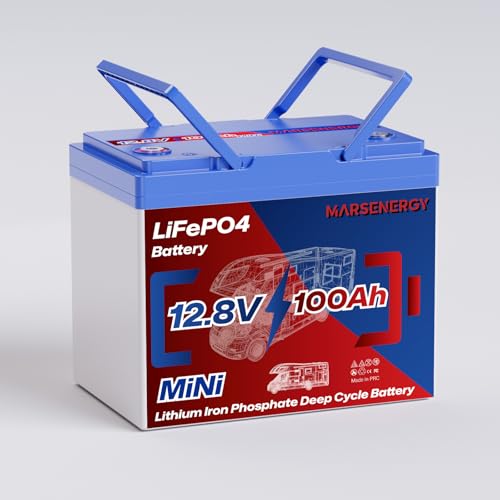
MARSENERGY’s 12V 100Ah LiFePO4 battery highlights a 10-year lifecycle with a 4500–15000 cycle range depending on depth of discharge. It weighs about 21 pounds and adheres to a compact 10.16 x 8.46 x 6.54 inch footprint, which aligns well with Group 24 boxes while offering compatibility with larger boxes like Group 27 or 31. The design emphasizes a robust, multi-environment build—enduring temperatures from -40°F to 162°F and resistant to immersion and shock. It features a built-in BMS that protects against typical failure modes and provides reliable marine service life.
Considerations: even with strong cycle life, environmental exposure and mounting orientation can influence BMS performance. Ensure secure fits in your boat’s storage compartments and verify the battery box’s rated volume for ventilation and heat dissipation. This model is a balanced choice when you want a high cycle count in a compact marine-friendly package.
MARSENERGY 12V 100Ah LiFePO4 Battery (R-1PC, Alternative Listing)
Similar to the earlier MarsEnergy option, this listing reinforces its 10-year expected lifespan with strong cycle performance and rugged construction. The description emphasizes the battery’s capacity to maintain high DoD for thousands of cycles, along with the safety features of a built-in BMS. This model is suitable for trolling motors, marine systems, and home energy storage on boats that require reliable power with long-term resilience in marine climates.
MOSEWORTH 12V 100Ah LiFePO4 Battery
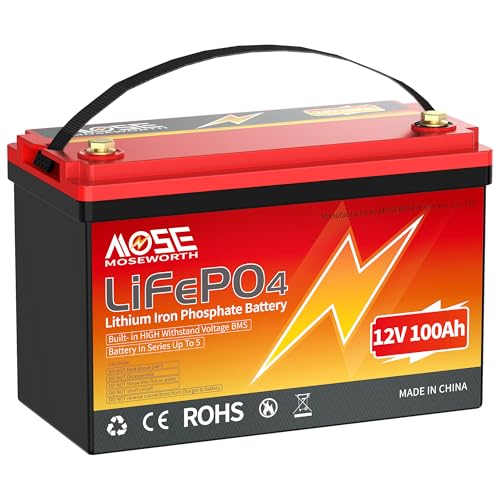
MOSEWORTH’s 12V 100Ah model includes a built-in 100A BMS with triple protection, including low-temperature cutoff and high-temperature safeguards for safe operation in extreme conditions. It emphasizes fast charging (potentially full in about two hours with appropriate solar input) and a compact size that fits many boat battery compartments. The battery supports series and parallel expansion to reach higher capacities and voltages, which can be beneficial for trolling motors within multi-battery configurations.
Considerations: ensure compatibility with your trolling motor’s voltage range and charging setup. The fast-charging claim depends on charger specifications; confirm your solar or AC charging source matches the recommended input. While compact, verify enclosure protection against salt spray and marine humidity to maximize lifespan.
Buying Guide: Key Purchase Considerations For Marine Trolling Motors
- Voltage and configuration: Match the battery voltage to your trolling motor and any series/parallel configuration you plan (12V vs 24V vs 36V). Some batteries are built for single 12V usage, while others support multi-battery packs or higher voltages.
- Capacity and cycle life: Look for 100Ah ratings as a baseline for endurance and the expected cycles (e.g., 4,000–15,000 cycles at varying DoD). Higher cycle life translates to longer overall lifespan with repeated charging cycles on the water.
- BMS protections: A smart BMS that guards against overcharge, over-discharge, short circuits, and temperature extremes is essential in marine environments where temperatures swing and vibrations are common.
- Temperature performance: Low-temp protection and wide operating temperature ranges help prevent premature charging or discharging failure in mornings or late-season trips.
- Weight and size: Lithium batteries typically weigh far less than lead-acid equivalents, improving handling and boat balance. Ensure the dimensions fit your battery box and mounting space.
- Water intrusion and sealing: IP ratings (such as IP65) indicate splash resistance; ensure enclosures or mounting locations provide adequate protection against saltwater exposure.
- Monitoring and diagnostics: Bluetooth or app-based monitoring can provide real-time status, voltage, and charge levels, aiding maintenance and planning.
- Charger compatibility: Verify the charging source (solar, shore power, or alternator) is compatible with the battery’s charging voltage and the BMS requirements.
- Expansion options: Some systems allow multiple batteries in series or parallel for higher voltage or capacity, useful as your trolling motor needs grow or you add solar storage.
- Durability in marine conditions: Consider vibration resistance, splash protection, and resistance to corrosion, especially if you routinely fish in saltwater.
Overall, when selecting a lithium battery for a trolling motor, prioritize a balance of voltage compatibility, deep-cycle longevity, robust safety protections, and marine-grade durability. The right choice depends on your boat size, typical trip length, weather conditions, and whether you plan to expand with solar or additional battery banks in the future.