Best Lithium Starting Batteries for Cars: Top 5 Picks for Quick Starts
Choosing a reliable lithium starting battery can boost cold-start performance, extend service life, and reduce maintenance compared with traditional lead-acid units. This article reviews five strong options that balance power, size, and safety features for American drivers. Each product section includes key specifications, compatibility notes, and safety features to help you select a model that fits your vehicle and climate.
| Product | Brand | Voltage | Capacity | CCA |
|---|---|---|---|---|
| Lithium LiFePO4 Car Battery Auto Battery | ECIENWELL | 12V | 40Ah | 660 |
| 12V BCI Group 47 LiFePO4 Battery | Wuldnmar | 12V | — (LiFePO4) | 600 (tested up to 850) |
| TPE Car Start-Stop 60Ah | TPE | 12.8V | 60Ah | 1100 |
| TET Lifepo4 60Ah | T.E.T LITHIUM | 12.8V | 60Ah | 1200 |
| SDULIBITIY 40Ah 600CCA | SDULIBITIY | 12.8V | 40Ah | 600 |
The following detailed sections highlight five lithium start-stop batteries that meet modern vehicle demands, including start-stop systems and cold-weather operation. All options use LiFePO4 chemistry for safety and longevity, with integrated BMS to protect against common faults.
Lithium LiFePO4 Car Battery by ECIENWELL

12V 40Ah capacity with 660CCA capability supports immediate ignition across a wide temperature range. Features include IP66 waterproofing and compatibility with threaded terminals via included M8 screws, boosting installation flexibility across more vehicle models. The battery integrates a robust BMS to guard against overcharge, undercharge, overload, and short circuits, aiding long-term reliability.
12V BCI Group 47 LiFePO4 Battery by Wuldnmar
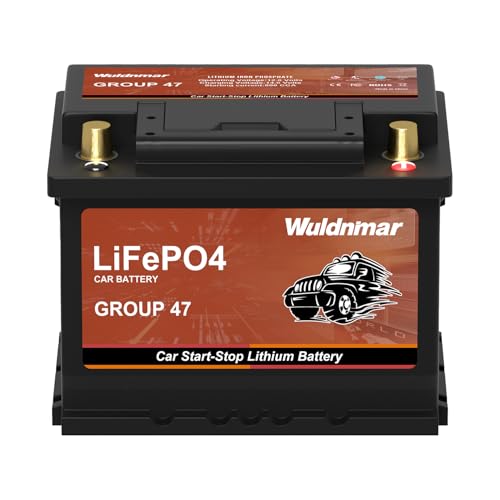
Designed for compatibility with 12V start-stop systems, this 9.60″ x 6.92″ x 7.75″ unit weighs about 11 lbs and delivers strong cold-cranking performance (CCA 600A, tested up to 850A). It uses LiFePO4 chemistry with a protective BMS, offering overcharge and over-discharge protection and enabling thousands of charge cycles, a significant upgrade over typical lead-acid alternatives.
TPE Car Start-Stop Lithium Battery, 60Ah

Ready-to-use and maintenance-free, this 12.8V, 60Ah battery offers up to 1100A CCA (standard testing to 1300 CCA). Its LiFePO4 composition is paired with a smart BMS that prevents overcharges, discharges, overcurrents, and overheating. A compact 10.8″ x 6.9″ x 7.5″ footprint fits many modern trucks and cars requiring a robust start-stop solution.
TET Lifepo4 Battery, 60Ah, 12.8V
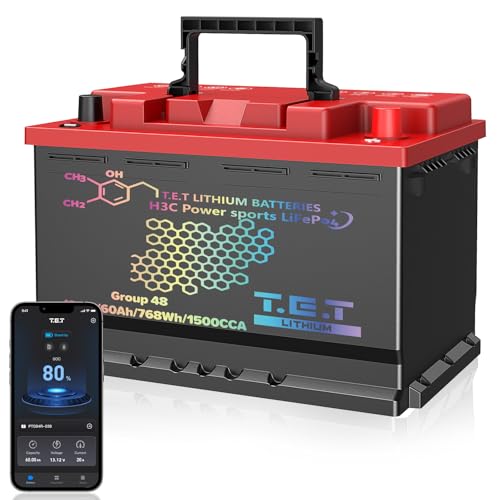
Group 48 sized, this 12.8V LiFePO4 battery provides a robust 1500+ cycle life at 100% DOD and substantial CCA (up to 1200). Bluetooth APP monitoring enables real-time health checks and anti-theft alerts. A premium BMS manages charging and discharging safely, while the device tolerates extreme temperatures, making it suitable for both hot climates and cold winters.
TPE Car Start-Stop Lithium Battery, Group 47

This 9.60″ x 6.92″ x 7.75″ LiFePO4 battery weighs about 11 lbs, with 600A CCA (tested up to 700 CCA). It emphasizes safety with a built-in BMS and strong performance for start-stop applications, offering a balance of size, weight, and power for many mid-size vehicles and light trucks.
Buying Guide: Key Factors to Consider When Choosing a Lithium Start-Stop Battery
When evaluating lithium start-stop batteries, consider the following to ensure a good fit and reliable performance in daily driving and extreme conditions:
- Compatibility and size: Check dimensions, terminal layout, and depth to fit your vehicle’s battery tray and mounting. Measure the existing battery and compare with the new unit.
- Voltage and capacity: Most options are 12V with capacities ranging from 40Ah to 60Ah. Higher capacity supports longer cranking power and deeper cycles, but may require a larger footprint.
- Cold-start performance: CCA ratings indicate ignition strength in cold weather. Lithium LiFePO4 typically maintains high CCA efficiency at low temperatures, a key advantage in colder regions.
- BMS protections: A robust Battery Management System guards against overcharge, over-discharge, short circuits, and overheating. This protects both the battery and vehicle electronics.
- Safety and durability: Look for IP ratings (water and dust resistance), rugged casings, and certifications. A strong BMS and proper venting are important for longevity.
- Warranty and lifecycle: LiFePO4 cells offer thousands of cycles, but check the manufacturer’s warranty and what constitutes eligible coverage.
- Installation considerations: Some batteries come with threaded terminals or included mounting accessories to ease installation on a wide range of vehicles.
- Maintenance and temperature management: Batteries with low-temperature protection and heating features help ensure performance in freezing climates and high-temperature environments.
- Charger compatibility: Use an appropriate LiFePO4 charger to preserve battery health and maximize charging efficiency.
Overall, the best choice depends on your vehicle’s battery footprint, climate, and how you use the start-stop system. The options above provide strong cold-weather performance, robust BMS safety, and compatibility across common American car models, delivering reliable starts with reduced maintenance compared to traditional lead-acid batteries.