Best Clay Bar Lubricants for Smooth, Scratch-Free Detailing
Selecting the right clay bar lubricant is essential for safe, efficient decontamination and a glass-smooth finish. This guide highlights top lubricants that pair well with clay bars, clay blocks, and clay mitts. Each product helps minimize friction, prevent marring, and enhance clay life, making it easier to remove embedded contaminants before waxing or coating.
| Product | Brand | Key Benefit |
|---|---|---|
| Chemical Guys WAC_CLY_100_16 Clay Luber | Chemical Guys | Silky glide with synthetic wetting agents |
| 3D GLW Clay Lubricant (64 oz) | 3D | Ultra slick, protective lubrication |
| 3D GLW Clay Lubricant (16 oz) | 3D | Neutral, low-residue protection |
| Nanoskin GLIDE Spray Detailer (16 oz) | Nanoskin | Silicone-free, body-shop safe |
| Wontolf Car Clay & Lubber Kit | Wontolf | All-in-one kit with clay bars and lubricant tablets |
Below is a detailed look at five lubricants that rank well for clay bar use, along with how they perform across common detailing scenarios in American garages and professional shops.
Chemical Guys Clay Luber WAC
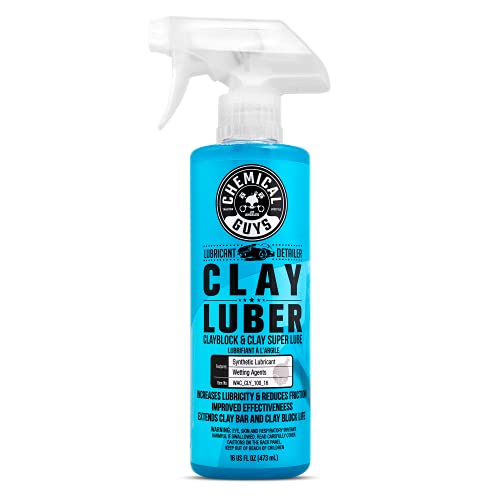
Chemical Guys Clay Luber creates a slick barrier between the clay bar and painted surfaces, allowing the clay to glide without grabbing or marring. Its spray-on formula is versatile for clay bars, blocks, and wash mitts, reducing friction as contaminants are lifted. The formula uses synthetic wetting agents to extend clay life and improve lubrication across various clay types. Suitable for cars, trucks, SUVs, and more, Clay Luber is designed to keep paint smooth while removing embedded debris.
3D GLW Clay Lubricant (64 oz)

The GLW series from 3D is touted for its extreme slickness, reducing friction between the clay and paint to protect against micro-marring. It supports safe removal of contaminants like dirt and brake dust while maintaining a surface-ready finish for subsequent coatings. The 64-ounce size offers excellent value for detailers performing frequent clay sessions on multiple vehicles or larger surfaces.
3D GLW Clay Lubricant (16 oz)

This smaller bottle retains the same neutral, low-residue formula as the 64 oz variant, optimized for quick sessions or touch-ups. It provides excellent cling between clay and paint, enabling safe decontamination without leaving behind oily residues that could interfere with wax or coatings. A practical choice for single-vehicle projects or detailers with limited space.
Nanoskin GLIDE Silicone Free Spray Detailer

GLIDE is a versatile detailing spray designed to prepare paint surfaces for clay, ceramic coating, or wax. Notably silicone-free, it is body shop safe and suitable for wipe-downs after washing to ensure a clean, residue-free surface. While primarily a detailing spray, GLIDE can be used as a pre-clay lubrication in a pinch, offering a residue-free way to inspect paint repairs and surface defects before coating applications.
Wontolf Car Clay & Lubber Kit

The Wontolf kit combines clay bars, effervescent lubricant tablets, a spray bottle, and a microfiber towel for a complete detailing workflow. The included 10 lubricant tablets provide a convenient, portable way to maintain slick clay surfaces during sessions. The clay bars themselves aim to remove contaminants effectively, while the tablets help maintain a consistently low-friction glide throughout the decontamination process.
Buying Guide
Key considerations when choosing a clay bar lubricant:
- Compatibility with clay types: Most lubricants are designed to work with natural clay, synthetic clay, or clay substitutes. Neutral formulas often perform well across varieties.
- Lubricity versus residue: A good clay lubricant should create a slick surface without leaving sticky or oily residues that interfere with wax, sealants, or ceramic coatings.
- Volume and value: Larger containers (e.g., 64 oz) offer better value for frequent detailers or larger vehicles, while smaller bottles suit casual use or travel.
- Silicone content: Silicone-free formulas are generally safer for paint correction work and are preferred in body shops and for coatings prep.
- Compatibility with tools: If you use clay mitts, blocks, or bars, ensure the lubricant surfaces freely without causing drag or friction that could mar the finish.
Other perspectives to consider:
- Professional detailers may prioritize long-lasting lubrication to minimize reapplication during a session, especially on complex panels.
- Home users often favor easy spray-on lubricants that are quick to apply and wipe clean without residue.
- For ceramic coating prep, selecting a low-residue or silicone-free option helps ensure coatings bond properly without contaminants.
When evaluating products, compare active ingredients, usage instructions, and compatibility with your clay type and vehicle finish. Always test on a small, inconspicuous area before broad use to ensure compatibility with your paint and coatings.