Best Marine Batteries for Starting and Electronics on a Boat
Choosing the right marine battery mix helps ensure reliable engine starting and dependable power for onboard electronics, trolling motors, and accessories. This guide reviews five top options that balance high cranking power, deep-cycle capacity, and maintenance features. Each product is evaluated for cross-brand compatibility, longevity, and performance in cold conditions to support American boaters across saltwater and freshwater applications.
| Product | Brand | Starting/Deep-Cycle | Approx. Capacity | Key Use |
|---|---|---|---|---|
| Litime 12V 140Ah Dual Purpose | Litime | 1000 CCA | 140 Ah | Cranking + Marine Electronics |
| Interstate Batteries Marine Deep Cycle | Interstate Batteries | 925 CCA | 100 Ah | Deep Cycle for Accessories |
| LiTime 12V 165Ah Dual Purpose | Litime | 1200 CCA | 165 Ah | Cranking + Marine Electronics |
| WattCycle 12V 100Ah Marine | WattCycle | 900 CCA | 100 Ah | Dual Purpose, Self-Heating |
| OPTIMA 34M Sealed AGM | OPTIMA | 800 CCA | 50 AH MCA 1000 | Starting + Maintenance Free |
The table highlights a mix of high-cranking batteries and true deep-cycle units designed for marine environments. When selecting, consider the boat’s electrical demand, typical climate, and whether you need one battery to handle both starting and auxiliary electronics or separate dedicated cycles for each task.
Litime 12V 140Ah Dual Purpose Battery

2-in-1 Functionality: Powers outboard motor cranking and marine devices, reducing the need for multiple heavy batteries and saving space. ABYC-compliant installation supports safe cross-brand use. 1000 CCA starting power at 14°F and 1200 MCA at 32°F helps prevent cold-start failures in colder waters. The battery is designed for compatibility with common boat brands like Yamaha, Mercury, Honda, Suzuki, and Evinrude with appropriate guidance.
Interstate Batteries Marine Deep Cycle Battery 12V 100Ah
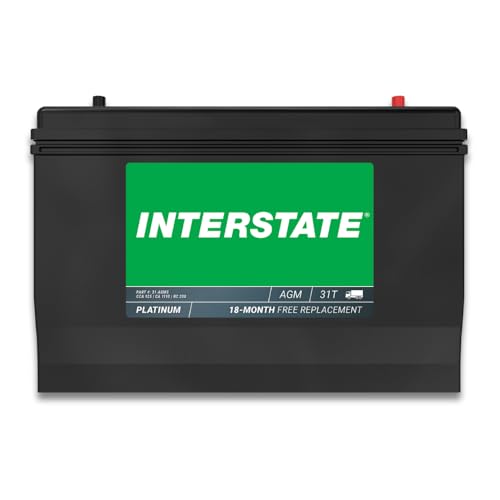
EXTREME DEEP-CYCLE POWER: A 2-in-1 pure lead AGM battery delivering reliable starting power and deep cycling capability for the boat’s motor, electronics, trolling motor, and accessories. Thick plates enable sustained discharge and repeated recharge without rapid capacity loss. Service life is oriented toward longer-term, repeated cycles, with a focus on durability in marine conditions.
LiTime 12V 165Ah Dual Purpose Battery

2-in-1 Functionality: Powers outboard motor cranking and marine devices, enabling a compact system with less wiring complexity. Brand compatibility covers Mercury, Honda, Suzuki, Evinrude, and more, with ABYC-compliant installation for safe cross-brand use. 1200 CCA starting power at 14°F and 1300 MCA at 32°F provide strong cold-start performance and reliable operation in diverse climates.
WattCycle 12V 100Ah Marine Battery

Dual Purpose Design: Serves dual needs for trolling motors and electronics, while also supporting automotive engine demands. Self-heating feature activates below 0°C/32°F, warming to 5°C/41°F to preserve performance. A 900 CCA rating ensures reliable cold starts, with a built-in emergency surge via the Forced Start Button for power backup in chilly conditions.
OPTIMA 34M Sealed AGM Battery

SPIRALCELL TECHNOLOGY: Delivers high starting power with 800 CCA and robust ripple resistance. Sealed AGM design supports maintenance-free operation and versatile mounting. With reserve capacity around 100 minutes, it’s suited for starting duty with flexibility for mounted placements and RV/marine installations across seasons.
Buying Guide: Key Purchase Considerations
- Starting vs. deep-cycle needs: For most boats, a dual-purpose battery reduces weight and complexity, while dedicated deep-cycle units are ideal for electronics-heavy configurations.
- Cold-cranking amps and climate: Higher CCA values improve cold-start reliability in cold waters and early mornings on the water.
- Battery chemistry: AGM and LiFePO4 (lithium) offer lower maintenance and longer life but at different price points and charging requirements. LiFePO4 often provides higher usable capacity and lighter weight.
- Cross-brand compatibility: ABYC-compliant installations help ensure safe, standardized cross-brand use when mixing brands for starting and auxiliary power.
- Weight and space: Dual-purpose models typically save space but check mounting dimensions and weight ratings for your vessel’s limits.
- Charging and maintenance: Verify charger compatibility (14.4–14.6V charging range for AGM/LiFePO4) and whether fast charging is supported without compromising cycle life.
- Warranty and service: Longer warranties and accessible support help with investment protection for marine environments.
- Environmental exposure: Saltwater and vibration demand robust casings and secure mounting; consider water-resistance and corrosion protection features.
- Replacement planning: Keep a dedicated spare battery or be prepared to upgrade to a higher-capacity model if your electronics suite expands.