Best Memory Savers for Car Batteries: Protect Vehicle Settings During Battery Changes
Memory savers keep essential vehicle data intact when a car battery is removed or replaced. This article highlights five reliable options, compares their capabilities, and offers practical buying guidance to help American drivers choose the right memory saver for their needs.
| Product | Brand |
|---|---|
| EZRED MS4000 Automotive Memory Saver With Built In Charger | EZRED |
| E60 OBD II Vehicle ECU Emergency Power Supply Cable | MR CARTOOL |
| VSTM OBD II Vehicle ECU Emergency Power Supply Cable Memory Saver | VSTM |
| LUTIFIX OBD2 Vehicle ECU Emergency Power Supply Cable | LUTIFIX |
| All-Sun GK504 Automotive Setting Keeper | allsun |
These options cover built‑in chargers, OBD II connections, and long cable designs to suit different vehicles and battery replacement workflows. The list emphasizes reliability, protection features, and ease of use across modern and older cars alike.
EZRED MS4000 Automotive Memory Saver With Built In Charger

The EZRED MS4000 combines a memory saver function with a built‑in charger. It preserves drive-ability codes and settings when disconnecting or changing the starter battery, protecting anti-theft radios, clocks, keyless entry systems, and related memory data. The unit includes a 12V, 4.5Ah sealed lead-acid battery and uses a direct wired OBDII connector to power the vehicle’s systems during battery changes. It is safeguarded by a 4A circuit breaker for reliable protection of memory features and vehicle electronics.
E60 OBD II Vehicle ECU Emergency Power Supply Cable

Designed for use during car battery replacement, the E60 cable connects a secondary power source to the OBD2 port to protect ECU data. It offers two power methods: (1) clip power from a 12V battery or (2) a battery box that uses AA batteries (not included). The setup length is 64 cm, and it can be powered from a jump starter or any 12V DC source. This approach supports ECU data preservation and reduces the need for reprogramming after battery changes.
VSTM OBD II Memory Saver With Long Cable

The VSTM memory saver features a long 10 ft (3 meters) cable for flexible positioning. It uses gold-plated OBD pins for improved contact and reliability and includes an 8A fast‑blow fuse for overload protection. The design emphasizes compatibility with various vehicles and the ability to source 12V power from an alternate battery or jump starter, preserving vehicle codes, presets, and critical electronics during battery changes and maintenance.
LUTIFIX OBD2 Vehicle ECU Emergency Power Supply Cable
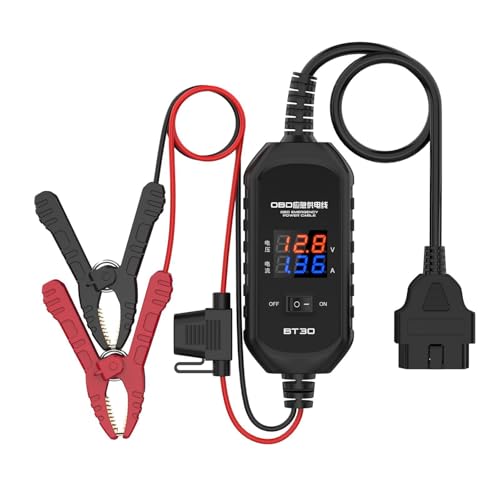
LUTIFIX offers an enhanced OBD2 memory saver with simultaneous voltage and current display, plus over-voltage, over-current, and polarity reversal protection. It includes a 3A fuse and provides clear monitoring to prevent under‑powered or unsafe conditions during battery replacement. This cable supports data preservation across modern ECUs and is designed to be used with a 12V source from a jump starter or external battery, safeguarding memory and settings.
All-Sun GK504 Automotive Setting Keeper
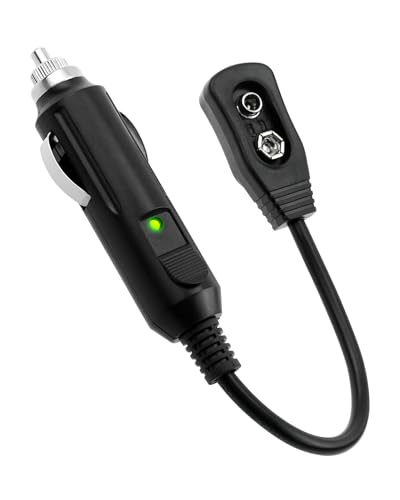
The All-Sun GK504 is a rugged memory saver designed to save on-board computer memory data. It provides a straightforward plug‑in solution via the vehicle cigarette lighter, enabling quick data retention during battery tasks. Its hard plastic body emphasizes durability in typical garage environments and ease of use for basic memory preservation needs.
Buying Guide: Key Considerations When Choosing a Car Memory Saver
- Power source and delivery method: Choose between built-in chargers, external battery power, or OBD II port connections based on your typical maintenance workflow and vehicle type.
- Protection features: Look for overload protection, fuse type (fast-blow vs slow-blow), surge protection, and polarity reversal safeguards to protect ECU data.
- Cable length and flexibility: Longer cables offer greater placement flexibility for hard-to-reach batteries; ensure the length fits your garage or driveway setup.
- Compatibility: Verify support for your vehicle’s ECU and 12V systems, especially for late-model cars with advanced memory requirements.
- Ease of use: Simple plug‑in operation, clear indicators, and minimal setup help reduce the risk of user error during battery changes.
- Durability: A robust chassis and reliable connectors help ensure long-term performance in shop or home environments.
- Portability: Consider weight and form factor if you perform battery work across multiple vehicles or locations.
- Cost of ownership: Include accessory needs (batteries, clips, adapters) and the potential for extended use beyond a single battery change.