Best MX Front Tire Options for Motocross and Off‑Road Training
Choosing the right front tire for motocross and off-road riding can dramatically affect traction, steering feedback, and cornering confidence. This guide highlights top front tire choices from trusted brands, focusing on mid-soft to mid-hard terrain performance, grip, and durability. Each option below is well-suited for MX training, amateur racing, or any rider seeking predictable steering and reliable braking on varied off-road surfaces.
| Product | Brand | Terrain Focus | Notes |
|---|---|---|---|
| Pirelli Scorpion MX Extra X Front | Pirelli | Mid-soft to mid-hard | Arrow-like front blocks for precision |
| Pirelli Scorpion MX 32 Mid Soft Front | Pirelli | Soft to intermediate | Front/rear two-pack option |
| Dunlop Geomax MX53 Front 70/100-19 | DUNLOP | Hard to intermediate | Block-In-A-Block design for stability |
| Dunlop Geomax MX53 Front 80/100-21 | Dunlop Tires | Hard to intermediate | Versatile across terrains |
| Tusk EMEX T‑45 Front 70/100‑17 | TUSK | Intermediate to hard | Bridged side knobs for stability |
Pirelli Scorpion MX Extra X Front 80/100-21
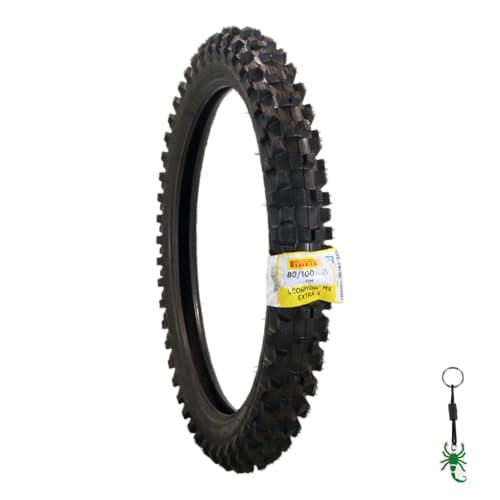
The Pirelli Scorpion MX Extra X front tire combines versatile terrain performance with an advanced tread design for motocross and off-road training. It emphasizes grip on mid-soft to mid-hard surfaces, helping riders maintain directional accuracy during aggressive braking and cornering. The front arrow-like and V-shaped tread blocks improve steering response while the rear’s bridged layout supports rigidity and traction through jumps and uneven terrain. Its multi-ply carcass resists punctures, striking a balance between durability and flexibility to absorb impacts. This tire is well-suited for amateur racing and training sessions where predictable steering matters.
Pirelli Scorpion MX 32 Front 80/100-21

This front tire from Pirelli specializes in mid-soft to mid-hard conditions with traction engineered for competition, training, and recreational riding. The MX 32’s block arrangement is optimized to improve braking stability and cornering grip, helping riders maintain control on a variety of tracks. The tire’s front-specific design emphasizes steering feel and consistency, making it a solid choice for riders who need reliable front-end feedback during fast transitions and aggressive line choices.
Dunlop Geomax MX53 Front 70/100-19

The MX53 front tire is designed for a wide range of terrains, excelling on hard-packed tracks while offering versatility in intermediate riding conditions. It introduces a Block-In-A-Block design for more progressive cornering action and increased slide control, which translates to smoother transitions and more stable mid-corner behavior. This tire provides dependable steering feel and bite on compact surfaces, but remains capable across varied off-road terrains, making it a balanced choice for riders who multitask between practice and race days.
Dunlop Geomax MX53 Front 80/100-21

The 80/100-21 variant from the MX53 line expands the same core MX53 performance to a larger front profile, maintaining hard-pack performance while offering improved stability on intermediate conditions. Its front-specific construction emphasizes consistent steering feedback and reliable cornering control, making it a suitable upgrade for riders transitioning to larger front tires for enhanced stability and edge grip across terrains.
Tusk EMEX T‑45 Front 70/100‑17

This front tire is sized for mini MX and youth bikes, with a 70/100-17 profile ideal for smaller machines or trail-oriented mini bikes. Engineered for hard terrain, it features deep, widely spaced center lugs for solid grip on intermediate to hard-packed off-road surfaces. Bridged side knobs reduce flex for improved stability during aggressive cornering, helping young riders develop confident steering and precise track navigation without sacrificing durability on rough terrain.
Buying Guide: Key Purchase Considerations
When selecting a front tire for motocross and off-road riding, consider terrain type, track conditions, bike size, and rider weight. For soft to intermediate surfaces, tires with larger blocks and more siping offer better bite and grip, while hard-packed tracks benefit from stiffer carcasses and more rigid tread patterns for stable steering. Front tires should complement the rear tire’s grip profile to maintain balanced handling. Durability is important for training days and amateur racing, so look for multi-ply constructions and puncture resistance without sacrificing flexibility for landed landings and jumps.
Other factors include tire size compatibility with your bike, rim width, and availability of tubes or tubeless options. Larger front tires (e.g., 80/100-21) improve stability on big bikes and high-speed lines, but may alter steering feel and acceleration. Consider a model with a proven track record for reliability, easy tuning through tread design, and a balance between grip and wear resistance. For younger riders or smaller bikes, smaller sizes like 70/100-17 provide appropriate grip and handling tailored to lighter weights and shorter wheelbases.
In practice, riders may prefer a front tire with a directional tread that provides predictable feedback through corners, combined with an accompanying rear tire that complements grip levels for a cohesive setup. Package deals or two-packs can simplify selection for a complete front-and-rear system, particularly for those who train regularly or participate in weekend racing.