Best Oil for Drag Racing Engines: High-Performance Racing Oils
Choosing the right oil is critical for drag racing engines, where high RPM, extreme temperatures, and rapid throttle changes test lubrication systems. This article highlights top oils designed for high-performance, high-RPM applications, helping you balance protection, heat management, and horsepower retention. Below is a quick summary of five suitable options, followed by detailed product sections and a buying guide.
| Brand | Name | ||
|---|---|---|---|
| Lucas Oil | SAE 20W-50 Racing Engine Oil, 5 Quart | 20W-50 | High zinc fortified; good for high RPM; helps lower oil temperature |
| Lucas Oil | 10621 SAE 20W-50 Racing Engine Oil, 5 Quart | 20W-50 | High zinc fortified; reduces drag; suited for high RPM |
| Valvoline | VR1 Racing Synthetic SAE 20W-50 | 20W-50 | Synthetic; designed for modern and classic high-performance engines; anti-friction/anti-wear |
| Lucas Oil | Synthetic SAE 10W-30 Racing Engine Oil, 5 Quarts | 10W-30 | High zinc fortified; lower oil temperature; good for hot track conditions |
| Lucas Oil | Synthetic SAE 10W-40 Racing Engine Oil, 5 Quarts | 10W-40 | High zinc fortified; supports high RPM and heat management |
Lucas Oil SAE 20W-50 Racing Engine Oil, 5 Quart
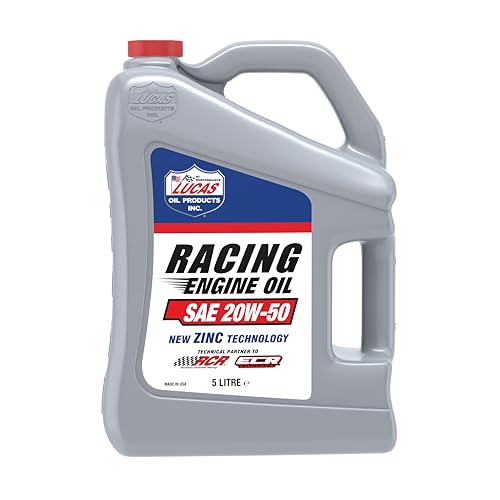
Lucas Oil’s SAE 20W-50 Racing Engine Oil is formulated for high RPM engines commonly found in drag racing setups. It offers enhanced zinc content for film strength, helping protect pistons, cams, and bearings under extreme loads. The product is marketed as reducing engine temperature through better heat transfer and maintaining consistent oil pressure during rapid RPM changes. This 5-quart option is suitable for teams seeking a single-source oil with robust anti-wear properties and reliable high-temperature performance.
Lucas Oil 10621 SAE 20W-50 Racing Engine Oil, 5 Quart

This 5-quart pack from Lucas Oil emphasizes high zinc content and reduced drag to squeeze more horsepower from high-RPM racing engines. Marketed for both modern and classic high-performance builds, it aims to deliver dependable lubrication under aggressive track conditions while helping manage heat generation during hard acceleration and repeated gear shifts.
Valvoline VR1 Racing Synthetic SAE 20W-50

Valvoline’s VR1 Racing Synthetic 20W-50 is positioned as America’s racing oil, engineered for high-performance gasoline engines and those operating with partial alcohol fuels. The formula includes friction modifiers to minimize wear and keep heat in check at high RPMs, supporting both track and street use. It’s a solid pick for teams requiring a full synthetic base with robust stability under demanding racing conditions.
Lucas Oil Synthetic SAE 10W-30 Racing Engine Oil, 5 Quarts
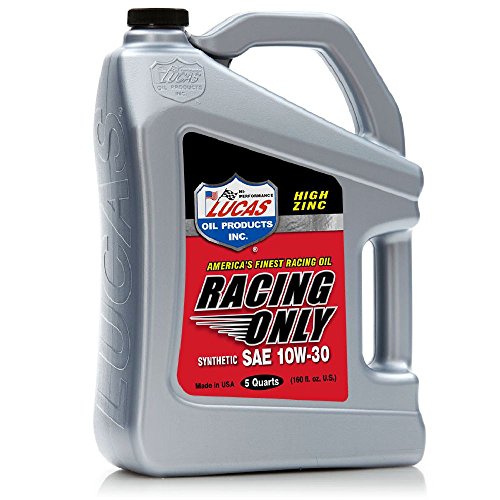
Lucas Oil’s Synthetic 10W-30 racing oil provides high zinc content and a formulation tailored for high-RPM engines. The synthetic base helps maintain viscosity stability across temperature swings typical of drag racing events, contributing to consistent oil pressure and protection of critical engine parts during launches and mid-track operations.
Lucas Oil Synthetic SAE 10W-40 Racing Engine Oil, 5 Quarts

This 10W-40 option from Lucas Oil blends synthetic performance with high zinc fortification. It aims to provide solid protection for high-RPM drag racing engines while maintaining good film strength at elevated temperatures. The product is positioned as suitable for both track and street use, offering versatility for teams that race and drive to events.
Buying Guide
Key purchase considerations for drag racing engine oils include viscosity choice, zinc content, and oil chemistry. Consider the following perspectives to select the best fit for your engine and track conditions:
- Viscosity strategy: 20W-50 oils typically offer robust high-temperature protection for naturally aspirated and small-block V8 drag engines, while 10W-30 and 10W-40 synthetic formulas can deliver lower start-up resistance and improved flow in cool-down phases.
- Anti-wear protection: High zinc content (zinc dialkyldithiophosphate) supports piston and camshaft protection under extreme load. Synthetic blends often provide superior film strength at high RPMs compared with conventional oils.
- Oil type: Full synthetic oils generally perform better under thermal stress and maintain viscosity consistency at track temperatures; however, high-zinc conventional blends can still offer strong protection in classic or built race engines.
- Track compatibility: If you run on fuels with alcohol, ensure the oil formulation remains stable and maintains film strength to minimize wear during transitions between throttle positions.
- Maintenance schedule: Drag racing can push oil temperatures higher. Consider oils with good oxidation resistance and detergency to keep piston rings and galleries clean over multiple hard runs.
- Engine configuration: For engines with flat-tappet cams or performance cam profiles, select oils that emphasize anti-wear properties and friction reduction to preserve cam lobes and lifters.
- Cost and availability: While premium synthetic racing oils offer protection, field teams should balance cost with track demands and oil change intervals to maintain competitiveness.
When selecting an oil, verify compatibility with your engine’s specifications, fuel system, and track rules. For teams seeking a straightforward choice, options with high zinc content and robust heat management tend to perform well in high-RPM drag racing applications, while synthetic formulations provide consistent performance across a wider range of temperatures.