Best Oil Grade for High Mileage Vehicles: Top Options for 75K+ Miles
Choosing the right oil for a high-mileage engine helps protect wear, maintain performance, and extend engine life. This guide reviews leading oils and additives designed for vehicles with 75,000 miles or more. We highlight five relevant products, explain what makes each suited for high-mileage use, and offer clear buying considerations to help you select confidently.
The table below summarizes five recommended options, focusing on high-mileage suitability, viscosity, and standout features. Use it as a quick reference when comparing products.
| Product | Brand | Key Benefit | Viscosity | Best For |
|---|---|---|---|---|
| Mobil 1 Extended Performance High Mileage | Mobil | Triple Action+ protection for engines over 75k, long oil-change interval | 5W-30 | Durability and cleanliness |
| Lucas Oil 10118 High Mileage Oil Stabilizer | Lucas Oil | Reduces wear and noise, improves lubrication for worn engines | N/A | Wear reduction and performance |
| Castrol GTX High Mileage Synthetic Blend | Castrol | Low emissions impact and sludge control | 5W-30 | Sludge prevention and protection |
| STP High Mileage Oil Treatment + Stop Leak | STP | Seal conditioning and anti-wear protection plus stop leaks | N/A | Seal care and leaks prevention |
| Castrol Edge High Mileage | Castrol | Phosphorus replacement tech and better leak resistance | 0W-20 | Low-speed emissions support and protection |
Mobil 1 Extended Performance High Mileage 5W-30

Mobil 1 Extended Performance High Mileage full-synthetic motor oil 5W-30 is designed for engines with over 75,000 miles. The formula aims to extend oil-change intervals while preserving engine cleanliness and performance. It employs Mobil 1’s Triple Action+ technology to deliver strong lubrication, wear protection, and deposit control. This oil also meets ILSAC GF-6 standards, helping address LSPI and timing chain wear while supporting fuel efficiency. It is a ready choice for high-mileage drivers seeking dependable protection and cleaner operation between services.
When evaluating this option, consider your vehicle’s manufacturer recommendations and the interval you aim to maintain. While synthetic, it’s important to ensure your engine tolerances align with a 5W-30 grade and the higher-mileage design tuned for longevity. Regular oil monitoring can help verify the oil’s performance across miles driven.
Lucas Oil 10118 High Mileage Oil Stabilizer
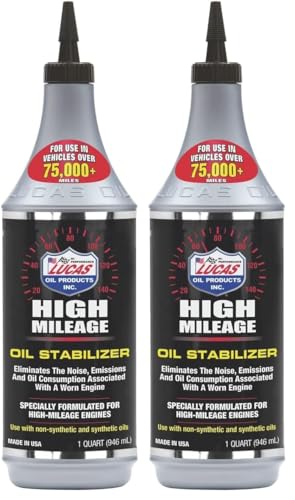
Lucas Oil 10118 High Mileage Oil Stabilizer is designed to minimize wear in engines with substantial mileage. It lubricates internal parts and can help reduce noise and emissions-related concerns linked to aging engines. This product is an additive rather than a full oil, making it suitable to blend into existing oil routines to bolster protection, particularly when engines exhibit signs of wear or consumption.
Use cases include older engines with noisy operation or those showing minor oil consumption. It’s important to follow the recommended dosage per your vehicle’s specifications and to pair stabilizers with an appropriate base oil. Additives like this are often used as a maintenance boost between oil changes or for extra protection in high-mileage engines.
Castrol GTX High Mileage 5W-30 Synthetic Blend

Castrol GTX High Mileage 5W-30 Synthetic Blend targets engines with higher mileage by focusing on deposit control and emission system protection. Its Phosphorus Replacement Technology supports the longevity of emission systems, while enhanced dispersancy helps combat sludge buildup. Castrol emphasizes leak reduction and burn-off control, with an expectation of extended oil-change intervals for high-mileage vehicles.
Consider compatibility with your vehicle’s warranty and oil-change recommendations. A synthetic blend may balance price, performance, and protection for many high-mileage engines. If your engine runs hotter or experiences deposits, this option may offer practical benefits without the cost of full synthetic.
STP High Mileage Oil Treatment + Stop Leak

STP High Mileage Oil Treatment + Stop Leak is designed for vehicles with over 75,000 miles. The product includes a ZDDP-based anti-wear additive to create a protective cushion between moving parts and help reduce friction. It also targets seal conditioning to address leaks and smoking issues, which are common in aging engines. The formula is intended to be added at each oil change, working with your base oil to improve protection and leak resistance.
As with any additive, ensure compatibility with your engine’s design and the base oil in use. This option provides a practical way to reinforce protection in high-mileage engines, particularly those with minor leaks or heightened wear concerns. It does not replace the need for a suitable oil grade, but complements an appropriate maintenance plan.
Castrol Edge High Mileage 0W-20

Castrol Edge High Mileage 0W-20 Advanced Full Synthetic is designed for modern high-mileage engines that require tighter tolerances and efficient fuel usage. This formulation features Phosphorus Replacement Technology intended to extend the life of emission systems while delivering strong protection against leaks. The 0W-20 viscosity aligns with many newer engines’ efficiency targets while providing adequate protection for longer intervals in suitable vehicles.
When considering a 0W-20 option for a high-mileage engine, verify that the vehicle manufacturer allows this viscosity and that it aligns with your driving patterns. This oil aims to maximize engine cleanliness and reduce deposits while supporting emissions performance in compatible engines.
Buying Guide: Key Purchase Considerations For High-Mileage Engines
- Engine wear status and mileage: For engines with substantial wear, high-mileage formulations include additives to reduce friction, manage deposits, and protect seals. Consider whether you prefer an oil with robust wear protection or a seal-focused additive.
- Viscosity selection: The viscosity you select should follow the manufacturer’s recommendations, but high-mileage options often include 5W-30, 0W-20, and 5W-20 grades. Heavier grades (like 5W-30) can offer strong protection at operating temperatures; lighter grades (like 0W-20) emphasize fuel economy and cold-start performance.
- Base oil type: Full synthetic oils generally provide better protection and longer intervals, especially for engines with higher mileage. Synthetic blends offer a balance between protection and cost, while stabilizers/additives can complement existing oils.
- Additives vs. full oils: Stabilizers and stop-leak products help address leaks and wear but do not replace a full-synthetic or high-mileage oil when severe wear is present. Use additives as a supplement, not a sole replacement.
- Emission system compatibility: Some high-mileage oils include technology to protect emission systems. Ensure the chosen oil or additive meets your vehicle’s emission standards and the specifications required by your engine.
- Oil-change intervals: High-mileage oils often support extended intervals, but always follow your vehicle’s manual and consider driving conditions. In severe service, shorter intervals may be warranted.
- Warranty and manufacturer guidance: While many high-mileage products are compatible with most engines, verify that your chosen oil aligns with your manufacturer’s recommended viscosity and formulation. Some warranties require specific oil specifications.
- Cost and availability: Prioritize proven performance and protection within your budget. Some additives provide cost-effective protection, while full synthetic oils may offer longer protection per change.
- Storage and handling: Follow recommended storage guidelines, especially for additives. Proper storage helps maintain formulation integrity and ensures consistent performance over time.
In summary, selecting the right oil or additive for a high-mileage engine involves balancing viscosity, base oil type, and additive features. The products reviewed here cover common needs—from robust wear protection to seal care and sludge control—allowing you to tailor a maintenance plan to your vehicle’s condition and driving habits.