Best Oil Leak Seal Solutions for Cars and Trucks in 2026
Dealing with oil leaks can be stressful and costly. This guide highlights top oil leak seal products designed to stop leaks, rejuvenate seals, and protect engine performance. Each option below is chosen for effectiveness, compatibility with common oils (conventional and synthetic), and ease of use. Read on to compare products, see what they treat best, and find the right solution for your vehicle’s leak type and mileage.
Summary of chosen products:
- Lucas Oil Stop Leak — Engine oil seal restoration and leak prevention.
- ATP Automotive AT-205 Re-Seal — Fast-acting seal conditioner for multiple systems.
- Bar’s Leaks OS-1 Oil Seal — Engine oil burning and leak repair in one formula.
- Bar’s Leaks One Seal Stop Leak — Multipurpose seal stopper for engine, transmission, and power steering.
- Bar’s Leaks Rear Main Seal Repair — Targeted rear main and other hard-to-stop leaks.
These products span a range of leak types, from seal hardening and burning oil symptoms to main seal failures. When selecting, consider your engine type, mileage, and whether you prefer a universal stop-leak approach or a targeted repair treatment. Always follow label directions and consult a professional for persistent leaks or oil consumption above normal levels.
Lucas Oil 10278 Engine Oil Stop Leak

Product Type: Auto Oil. Package Dimensions: 8.89 L x 10.16 W x 30.48 H cm. Package Weight: 0.953 kg. Lucas Oil Stop Leak is designed to address minor oil leaks and help condition seals, promoting improved sealing over time. Suitable for use with conventional or synthetic oils as part of a regular maintenance routine. Follow the bottle’s dosage guidance for your engine size and leak severity.
ATP Automotive AT-205 Re-Seal Stops Leaks

Professional-strength fast-acting resealer designed to stop leaks across multiple systems. Restores rubber seals and gaskets in engines, transmissions, power steering, differentials, and hydraulic systems. Compatible with conventional and synthetic oils, ATF, gear oil, and hydraulic fluids. Provides a broad-spectrum seal restoration suitable for older seals and mixed-fluid systems.
Bar’s Leaks OS-1 Oil Seal Engine Oil Burning and Leak Repair

Repairs leaking main seals and gaskets in gasoline and diesel engines, including turbocharged and hybrid engines. Renews worn valve seals and guides. Helps stop oil burning and blue exhaust smoke when used at appropriate dosage. Suitable for a wide range of engines, including heavy-duty applications when dosed correctly.
Bar’s Leaks One Seal Stop Leak

Multi-purpose stop-leak for engine oil, transmission fluid, and power steering fluid systems. One bottle treats a single system leak and is designed to seal minor leaks caused by wear and age. A practical, easy-to-use option for ongoing maintenance and leak prevention across several fluid systems.
Bar’s Leaks Rear Main Seal Repair
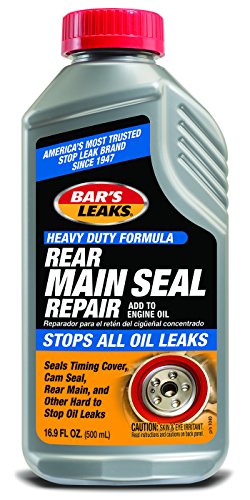
Specifically designed to seal rear main leaks and other hard-to-stop leaks. Adds to engine oil and is suitable for use in many engines, offering targeted action toward rear main seal issues while also improving overall sealing performance for seals and gaskets that wear with age.
Buying Guide
Key purchase considerations when selecting an oil leak seal product:
- Leak type and location: Determine whether the leak is a minor seal seep, a bleeding gasket, or a rear main seal issue to choose a product aimed at that problem.
- Engine type and oil compatibility: Check whether the product supports conventional, synthetic, or both oil types, and ensure compatibility with your vehicle’s engine design.
- Seal age and mileage: Older seals and high-mileage engines may respond better to elasticity restorers or multi-seal formulations.
- System scope: Decide if you need a universal stop-leak for engine, transmission, and power steering, or a targeted solution for a single leak area.
- Usage pattern: Some products require repeated dosing; others are single-use treatments. Follow manufacturer instructions for intervals and dosage.
- Maintenance plan: Oil leaks can indicate wear patterns or failing seals. If leaks persist after treatment, consider professional inspection or seal replacement.
Effectiveness can vary by vehicle, oil type, and leak severity. For persistent leaks, especially those accompanied by burning oil or smoke, seek professional diagnosis. These products are designed to supplement maintenance, not replace necessary mechanical repairs.