Best Outboard Jet Motor Picks for Safe, Efficient Boat Power
Choosing the right outboard jet motor can boost safety, fuel efficiency, and maneuverability for inflatable boats, rubber boats, and small craft. This guide highlights five well-rounded options featuring four-stroke engines, wind cooling, and CDI ignition systems, plus versatile controls like tilt, 360-degree rotation, and reverse gearing. Each entry includes practical specs, design strengths, and how it fits different boating needs—whether you’re cruising calm lakes or chasing fish on a river.
Below is a quick summary of the selected products to help you compare at a glance.
| Product | Brand | Engine Power | Key Features |
|---|---|---|---|
| JDCEREN 4HP 55CC Outboard | JDCEREN | 4HP / 2900W | 4-stroke, CDI ignition, 360-degree rotation, reverse gear |
| Pxolerig 4HP 55CC Jet Pump | Pxolerig | 4HP / 2900W | Step-less speed, 360-degree rotation, CDI ignition |
| GrfceVue 4HP Jet Pump | GrfceVue | 4HP / 2900W | Wind cooling, CDI ignition, forward/reverse |
| MOCHAG 4HP Jet Drive | MOCHAG | 4HP / 2900W | Tilt, 360-degree rotation, CDI ignition, reverse gear |
| HinLIaDa 48V Jet Pump | HinLIaDa | 1000W | Brushless, 180° swivel, omni-directional control |
JDCEREN 4HP 55CC Outboard Motor

The JDCEREN 4HP 55CC outboard motor offers a compact, durable 4-stroke design with a 2900W output and 4500-5500rpm range. A high-quality carburetor promotes efficient gasoline combustion, and the CDI ignition system ensures reliable starts. The engine supports 360-degree rotation and reverse gear via a 180-degree tilt, enabling flexible forward and backward steering for tight waterways and shallow docks.
Pxolerig 4HP Jet Pump Outboard

This 4-stroke, 55CC jet pump delivers robust power with 2900W output and 4500-5500rpm. It features a step-less speed control and a high-quality carburetor to ensure clean fuel burn. The design includes tilt and 360-degree rotation, along with a CDI ignition and a 180-degree rotation mechanism for reverse, making maneuvering versatile in various water conditions.
GrfceVue 4-Stroke Jet Outboard Motor

GrfceVue’s 4-stroke, 55CC engine pushes 2900W with 4500-5500rpm, ensuring responsive throttle and smooth operation. The model emphasizes eco-friendly operation via a fuel-efficient carburetor, reducing fuel consumption compared to two-stroke engines. Wind cooling and multiple exhaust vents help manage heat, while the CDI ignition and forward/reverse via 180-degree head movement contribute to precise control during choppy water or docking.
MOCHAG 4HP Short Shaft Jet Motor
MOCHAG offers a compact 4-stroke, 55CC engine with 2900W power and 4500-5500rpm. The unit emphasizes durable construction with premium materials including plastic, nylon, and aluminum alloy. It provides a step-less speed control, tilt function, 360-degree rotation, and a CDI ignition system, plus a 180-degree rotatable head enabling easy forward and reverse control—especially useful for tight boating spaces.
HinLIaDa 48V Jet Pump Electric Motor
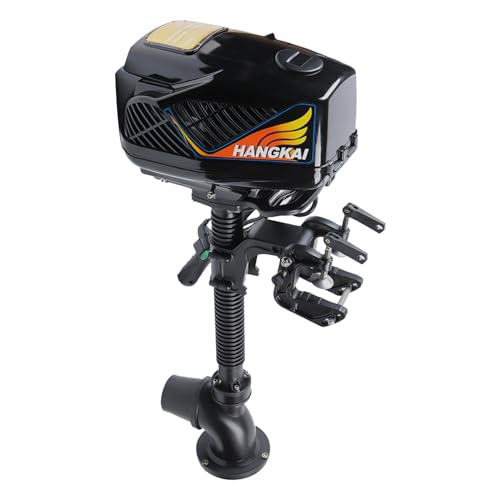
This 48V electric outboard motor delivers about 1000W, with a brushless design for higher efficiency and lower maintenance. The unit supports a 180° rotatable stand and an omnidirectional joystick for flexible control, suitable for kayaks, dinghies, and inflatable craft. Although different from gas-powered models, its steady thrust and electric operation make it a practical option for easy, quiet propulsion.
DNYSYSJ 2 Stroke 3.5HP Outboard

DNYSYSJ’s 3.5HP 2-stroke engine offers a full throttle operating range with a manual start. It balances power and simplicity for those who prefer a lighter, straightforward setup. While offering solid performance, two-stroke designs can be less fuel-efficient and emit more exhaust compared to four-stroke counterparts, which is a consideration for longer outings.
LyeXD 2.3HP 52CC Outboard

LyeXD’s 52CC, 2.3HP two-stroke model with water cooling and a CDI system offers reliable, easy starting for inflatable boats. It features adjustable mounting height for different hulls and a compact footprint. This option is suitable for light-duty use and smaller crafts where space and weight are critical factors.
Buying Guide: Key Purchase Considerations For Outboard Jet Motors
Engine type and power: Decide between four-stroke vs two-stroke. Four-stroke engines typically offer better fuel efficiency and cleaner operation, while two-strokes can provide higher power-to-weight for certain uses. Match horsepower to boat size, load, and desired speed.
Cooling method: Wind cooling is common in smaller jet motors and helps prevent overheating. Consider models with effective heat management for extended use or hot climates.
Ignition system: CDI ignition provides reliable starts and stable timing. Ensure the unit includes a robust ignition setup for quick starts in varying temperatures and conditions.
Control features: Look for tilt functions, 360-degree rotation, and the ability to reverse by orientation (180-degree head rotation). These controls improve maneuverability in tight bays and near docks.
Durability and materials: A combination of aluminum, nylon, and high-grade plastics is typical. Prioritize corrosion resistance if you boat in saltwater or humid environments.
Mounting and shaft length: Short vs long shaft compatibility affects fit on different boats. Ensure mounting height and shaft length align with your hull and transom.
Maintenance: Brushes, seals, and carburetor upkeep are considerations for electric vs combustion models. Choose units with accessible parts and clear maintenance guidance.
Price vs reliability: While price matters, prioritize proven reliability, good customer support, and availability of replacement parts to minimize downtime on the water.
Intended use: For inflatable, rubber, or small wooden boats, compact size, light weight, and ease of handling are important. For fishing applications, stability and smooth throttle response may be prioritized.
Overall, the five selected models provide a spectrum of options—from traditional four-stroke jet motors with CDI ignition and flexible steering to electric propulsion for quieter, low-maintenance boating. Assess your boat size, typical water conditions, and maintenance preferences to choose the best fit for your next trip on the water.