Best Parking Assist Systems to Help You Park Perfectly Every Time
Finding the right parking assist system can reduce scrapes and bumper dings while making tight spots feel simpler. This guide reviews five top options—ranging from simple dual-laser guides to advanced ultrasonic systems—highlighting how they help drivers in American garages. Each option focuses on visibility, sensor range, and ease of installation to fit different garage layouts and vehicle types. Explore practical features, installation notes, and how to choose the best system for your space.
| Product | Brand | Key Benefit | Best Use |
|---|---|---|---|
| Fosmon Wider Angle Upgrade | Fosmon | Wider dual lasers for two-car garages | Two-car spaces with motion-activation |
| ZONETECH Dual Laser Guide | ZONETECH | 360-degree adjustability with motion sensor | Single or shared stall parking |
| Rostra Rear Bumper Parking Assist | Rostra | Ultrasonic sensors with BackZone tech | Cars and SUVs needing precise distance warnings |
| STKR Garage Side Parking Sensor | STKR Concepts | LED indicators and siren for side clearance | Garage door track mounting |
| Frienda Park Dual Laser | Frienda | Dual lasers with 360° rotation | Cramped garages with two cars |
Note: This summary table highlights five models that balance visibility, ease of use, and installation practicality for typical American garages. Each product section below provides a deeper look at features, setup considerations, and what to expect in real-world use.
Fosmon Wider Angle Dual Laser Garage Parking Assist
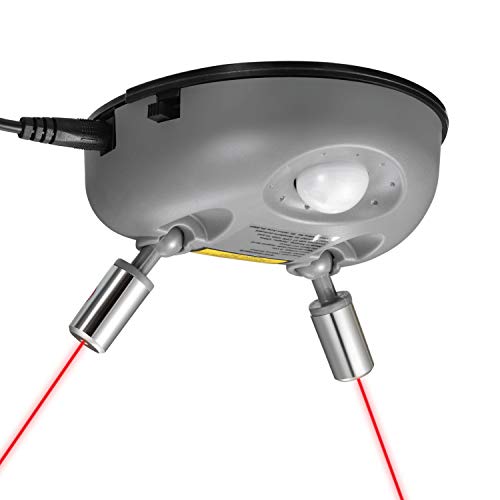
The Fosmon system features a wider angle upgrade to 75 degrees, designed for one- or two-car garages. Its dual lasers help guide parking in a clearly defined zone, aiming to reduce bumper contact. The motion-activated lasers detect movement up to 33 feet (10 meters) and shut off after 30 seconds without activity, conserving energy and reducing false alarms. Setup is described as straightforward, with the aim of helping drivers position their vehicle accurately without guesswork.
Key considerations include how the dual lasers align with your parking stalls and whether you need guidance for two vehicles side-by-side. The system’s visibility and quick response time are strong points for daily use in common U.S. garages, but users should ensure proper mounting height to avoid glare or misalignment from ceiling obstructions.
ELSNU Backup Parktronic System With 8 Sensors

The ELSNU kit includes six sensors—four at the rear and two at the front corners—to assist parking from both directions. This configuration supports safer backing and cautious forward movement in tight spaces. The system’s front sensors activate during driving and braking, continuing for a grace period after brakes release, which helps drivers navigate narrow passages and avoid rooftop or bumper contact. The kit emphasizes preventing collisions behind and in front of the vehicle, offering a balanced approach to parking in urban garages with tight clearances.
Consider how the front sensors will function as you approach obstacles before entering a stall. While the front sensing is useful for cautious drivers, installation complexity and compatibility with your vehicle’s bumper and wiring should be reviewed before purchase. The system aims to provide consistent feedback across different densities of obstacles, which is a practical feature in busy driveways.
bylikeho 360-Degree Laser Parking Assistant

bylikeho offers a 360-degree adjustable laser garage parking system with dual lasers and a robust mounting option. The device uses a standard American power supply with a choice of battery operation for outage resilience, ensuring you can park even during power interruptions. A motion sensor detects vehicle approach from up to 10 feet, illuminating as you near the stall and turning off after 30 seconds of inactivity. The ABS body construction aims to endure typical garage environments, providing a reliable long-term solution for precise stopping points.
Users should verify mounting heights and line-of-sight to maintain a clear laser path. The dual-laser setup supports two cars or a single wide stall, and the motion sensor helps beginners learn the stopping point while offering a consistent cue for nocturnal parking. Battery backup adds value in areas with unstable power supply or frequent outages.
ZONETECH Dual Laser Guide With 360° Adjustability
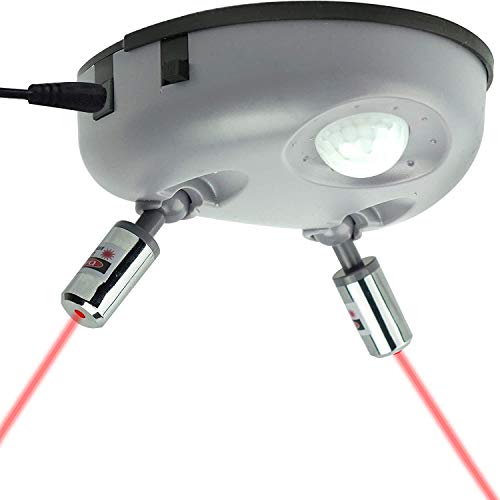
ZONETECH’s system emphasizes 360-degree adjustability for precise alignment with any stall, plus a motion sensor that detects activity up to 10 feet away. The dual-laser setup can be controlled individually for one stall or two, accommodating different garage layouts. This flexibility makes it suitable for garages where vehicle sizes vary or where a single installation must serve multiple parking scenarios. The material and build aim to endure typical garage conditions, with easy pointing adjustments to ensure accuracy.
When selecting this model, think about whether you need a single-stall or two-car configuration and how easily you can adjust lasers to fit your vehicle’s stopping point. The combination of motion sensing and adjustable lasers helps reduce guessing and improves parking consistency across daily use.
Rostra Rear Bumper Parking Assist System

Rostra’s Rear Bumper Parking Assist uses ultrasonic sensors to provide BackZone Plus feedback, helping drivers recognize obstacles during parking maneuvers. The kit emphasizes consistency across varying obstacle densities and includes sensors that can be painted to match the vehicle’s finish for a factory look. This system is well-suited for drivers who want a traditional ultrasonic approach that integrates with existing bumpers and is relatively discreet in appearance.
Key considerations include sensor placement, potential color matching for aesthetics, and compatibility with your vehicle’s dashboard or audible alerts. Ultrasonic sensing tends to be straightforward to install and interpret, offering reliable guidance in busy garages and emphasizing safer reverse parking routines.
STKR Garage Side Parking Sensor System
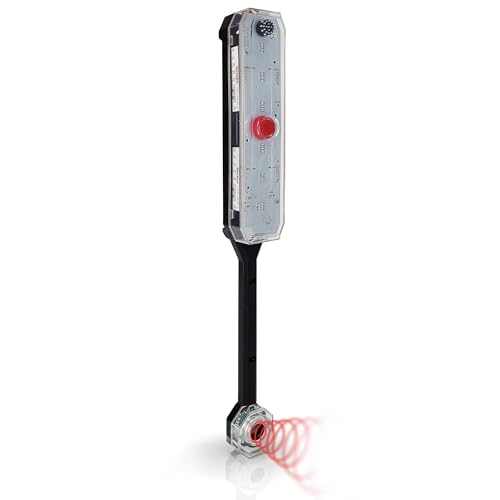
STKR Concepts provides a side-oriented parking sensor system designed to protect side mirrors and bodywork as you enter the garage. Features include bright LED indicators and a siren alert that clearly communicates clearance levels—green for clear, yellow for caution, and red with an audible alarm when too close. The system is mounted along the garage track and allows adjustable warning ranges, with a practical setup that promotes mindful parking alignment in tight spaces.
When evaluating this option, consider the impact on side clearance awareness and how audible alerts might influence parking behavior in shared spaces. The visual and audible cues can be helpful for households with multiple drivers or for older drivers who prefer clear, immediate feedback when stopping.
Buying Guide: What to Consider When Choosing a Parking Assist System
- Garage layout: Determine whether you need single-stall guidance, two-car compatibility, or both. Dual-laser setups excel in cramped spaces, while ultrasonic sensors excel in reverse parking and obstacle detection.
- Power and reliability: Systems with battery backup or USB-C power offer resilience during outages, especially in areas with unstable power supply.
- Mounting options and aesthetics: Consider ceiling or wall mounting, the visibility of lasers, and whether the device can be painted to match your vehicle or garage decor.
- Sensor type and range: Laser-based guides emphasize visual cues and adjustable angles, while ultrasonic sensors prioritize distance feedback and warnings. Decide which feedback type suits your driving style.
- Vehicle compatibility: Check vehicle height, bumper shape, and garage opening dimensions to ensure the system can be installed without obstruction or interference.
- Ease of installation: Some systems are DIY-friendly with straightforward mounting, while others may require professional installation for optimal alignment.
- Safety cues: Look for systems with clear LED indicators and audible alerts to accommodate different driver preferences and lighting conditions.
- Maintenance and durability: Consider materials suitable for humid garages and long-term exposure to temperature fluctuations.
In choosing a parking assist system, prioritize how the device will integrate into your daily routine, garage size, and the number of vehicles you park. A system with adjustable lasers, responsive sensors, and reliable power options tends to offer the most versatility across various households and vehicles.