Best Prop Options for Mercury 115 2 Stroke Outboards
Choosing the right propeller for a Mercury 2-stroke 115 HP engine can improve acceleration, top speed, and fuel efficiency. The following selections are compatible upgrades and OEM-style replacements from trusted brands, featuring aluminum construction and multiple blade designs. Each option emphasizes durability, correct spline count, and matched pitch for Mercury engines in the 115 HP range. Read on to compare key specs and find the best fit for your boat’s performance needs.
Summary of selected products:
| Product | Brand | Size (Diameter x Pitch) | Spline/Rotation | Notes | Amazon Link |
|---|---|---|---|---|---|
| Your Props Marine 13 Spline Tooth Prop | VQPROPs | 10 3/8″ x 14″ | 13 Spline, Right | Upgrade aluminum prop for Mercury 30-70HP range compatibility; durable, improved blade | Link |
| MiBarco 10 3/8 x 13 | MiBarco | 10 3/8″ x 13″ | 10 Spline, Right | OEM-style replacement for Mercury 9.9-25HP; aluminum, durable | Link |
| VQPROPs 13 1/4 x 17 | VQPROPs | 13 1/4″ x 17″ | 15 Spline, Right | Mercury 40-140HP compatibility; hub kits included | Link |
| Mercury Spitfire 4-Blade | MERCURY | 13″ x 17″ | — | Aluminum with Flo-Torq II hub kit included | Link |
| YOUNG PROPS 13 1/2 x 15 | YOUNG PROPS | 13 1/2″ x 15″ | 15 Spline, Right | Reliability for Mercury 40-140HP; 4-blade aluminum | Link |
Your Props Marine 13 Spline Right Prop
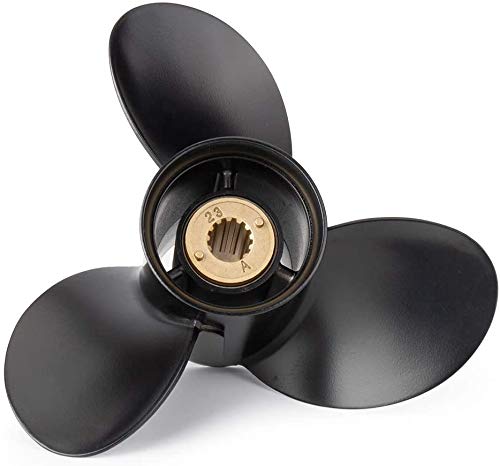
The Your Props Marine propeller uses a 13-spline tooth design and a right-hand rotation, suitable for Mercury engines in the 30-70 HP range. The aluminum blade is engineered for flexibility and high reliability, delivering improved top speed and acceleration while reducing engine wear. The prop is black, with an emphasis on durability under typical boating conditions. It’s designed to meet strict quality controls for consistent performance across use cases, including fishing and recreational boating.
MiBarco 10 3/8 x 13 Prop

MiBarco offers an OEM-style aluminum propeller with a 10 3/8 diameter and 13 pitch, right-handed spline teeth. This prop is compatible with Mercury engines in the 9.9 to 25 HP range, making it a solid upgrade or replacement for small to mid-range outboards. The model emphasizes good finish and speed, with an emphasis on durability and fuel efficiency through precise blade geometry. It’s a practical option for lighter boats where quick acceleration is prioritized.
VQPROPs 13 1/4 x 17 Prop

This propeller from VQPROPs features a 13 1/4 diameter and 17 pitch with a 15-spline tooth layout and right-hand rotation. It is presented as an OEM-compatible option for Mercury engines in the 40-140 HP range and comes with hub kits included. The aluminum construction supports durability and efficiency, with a focus on maintaining top speed and acceleration while reducing wear on the engine.
Mercury Spitfire 4-Blade Propeller

The Spitfire is a four-blade aluminum prop designed for Mercury 75-125 HP applications. It includes the Flo-Torq II hub kit (#835257K1) for improved engine isolation and shock absorption. With a 13″ diameter and 17″ pitch, this prop balances load distribution and performance, offering solid acceleration and reliable low-to-mid speed response for versatile boating needs. The aluminum construction supports durability while maintaining alignment with Mercury propulsion systems.
YOUNG PROPS 13 1/2 x 15 Propeller

The 13 1/2 x 15 prop from Young Props uses a 15-spline tooth arrangement and right-hand rotation, designed for Mercury engines in the 40-140 HP range. The 4-blade aluminum design aims to provide enhanced lift and midrange acceleration, with a focus on durability under repetitive marine use. Hub kits are included, simplifying installation and ensuring compatibility with MerCruiser Alpha/Bravo One drive configurations as a backup solution or upgrade option.
Buying Guide: Key Considerations For Mercury 115 2 Stroke Prop Selection
- Engine compatibility: Confirm the prop’s spline count, diameter, pitch, and rotation direction match your Mercury 115 2-stroke model’s specifications and gearcase type. Using an incompatible prop can reduce performance or cause mechanical issues.
- Pitch and diameter balance: Higher pitch improves top speed but can reduce holeship and acceleration; lower pitch improves acceleration but may reduce top speed. For Mercury 115 HP applications, common choices range from moderate pitches to maintain a balanced performance.
- Material and durability: Aluminum props are common for budget-friendly efficiency and corrosion resistance. Stainless steel options offer higher strength and performance but at a higher cost and potential blade damage risk in shallow water.
- Blade configuration: Four-blade props typically provide better midrange torque and lift, aiding holeshot and load carrying, while three-blade designs favor top speed and fuel efficiency on lighter boats.
- Hub and vibration control: Look for props that include a hub kit or Flo-Torq II system for vibration reduction and smoother engagement between the engine and prop.
- Usage scenario: Consider boat weight, load, and typical operating conditions (inland rivers, coastal waters, or sport boating). Heavier loads may benefit from smaller pitch or multiple blades to improve acceleration.
- Installation and maintenance: Ensure you have the correct tools and instructions for installation. Periodic inspection of blades for dings, corrosion, and balance is recommended for sustained performance.
- Cost vs. benefit: OEM-style or aftermarket aluminum props provide good value, while higher-end options may yield incremental performance gains. Assess your priorities: speed, fuel economy, or longevity.
- Resale value: A commonly used prop with a well-documented size and compatibility can retain value when upgrading or selling your boat.
Overall, selecting a prop for a Mercury 115 2-stroke involves matching technical specifications with your boat’s intended use. The options above cover a range of pitches, blades, and spline counts to help users optimize acceleration, top speed, and fuel efficiency while maintaining engine reliability. When in doubt, consult your engine’s manual or a marine technician to verify spline compatibility and recommended pitch ranges for your specific hull and operating conditions.