Best Radiator Options for 7.3 Powerstroke: High-Capacity Cores for Towing and Off-Road Adventures
The Ford 7.3L Powerstroke is a robust engine that benefits from upgraded cooling, especially under heavy towing, hot climates, or demanding off-road conditions. This guide highlights five top radiator options designed to match or exceed the factory cooling performance while maintaining reliable durability. Each choice features aluminum construction, multi-row cores, and compatible installation with common Powerstroke setups.
Summary of selected products:
| Product | Brand | Core Type | Approx. Rows | Fitment Highlights |
|---|---|---|---|---|
| Mishimoto MMRAD-F2D-99 | Mishimoto | Aluminum | 2 | Direct for 7.3L, seamless with stock shroud |
| ALLOYWORKS 3 Row Core | AW ALLOYWORKS | Aluminum | 3 | 1995-1997 F350 7.3L, 35-45% cooling boost |
| EnginCool 3 Row Downflow | EnginCool | Aluminum | 3 | F59/F-250/F-350 7.3L, no drilling |
| RadRace 3 Row Aluminum | RadRace | Aluminum | 3 | 1995-1997 F59/F250/F350, TIG welded |
| Cubauto 4 Row Aluminum | Cubauto | Aluminum | 4 | 1983-1996 F-series, multiple fitments |
Mishimoto MMRAD-F2D-99 Performance Aluminum Radiator

Designed specifically for the Ford Powerstroke 7.3L from 1999 to 2003, this aluminum radiator blends a two-row core with TIG-welded end tanks for durability. The installation is engineered to align with the stock fan shroud, minimizing or eliminating the need for modifications. Its construction supports heavier thermal loads useful during towing, off-road adventures, or performance enhancements, helping maintain stable engine temperatures under demanding conditions.
Key features include a fully brazed aluminum core and end tanks that contribute to efficient heat dissipation. This radiator is built to withstand rugged use while delivering reliable cooling. It’s a straightforward upgrade for Powerstroke owners looking to preserve coolant temperatures during high-stress driving scenarios.
ALLOYWORKS 3 Row Core All Aluminum Radiator For 1995 1996 1997 Ford F350 7.3L Powerstroke

For older 1995–1997 F350 Powerstroke diesels, this 3-row aluminum radiator emphasizes cooling efficiency with a claimed improvement of 35% to 45% over stock. It’s crafted from high-quality T-6061 aluminum, delivering a lightweight yet sturdy core that can handle demanding loads without a major weight penalty. The design supports robust heat transfer while maintaining compatibility with the vehicle’s original mounting points and shroud setup.
Installing a 3-row core typically yields enhanced heat rejection during prolonged pulling or heavy-duty operation. The AW ALLOYWORKS unit is positioned as a direct-fit upgrade that meets the needs of owners who want noticeably cooler engine temps under load while preserving the factory mounting geometry.
EnginCool Aluminum Radiator For 1995-1997 Ford F250/F350 7.3L Powerstroke

This 3-row downflow radiator is tailored for the 7.3L Powerstroke diesel lineup (1995–1997) and fits Ford F-series trucks with ease. Core dimensions are sizeable, and the unit emphasizes leak-tested durability with no need for drilling or major modifications during installation. It’s designed to endure hard road conditions and towing duties, offering a reliable alternative to stock thermal management.
Specifications highlight 100% leak-tested construction and a no-drill installation approach. The unit’s 3-row design aims to improve heat transfer efficiency, supporting cooler engine operation over extended periods of heavy usage. Its durability aligns with the expectations of owners who demand long-term reliability in demanding environments.
RadRace 3 Row Aluminum Radiator For 1995-1997 Ford F59 F250 F350 7.3L Powerstroke
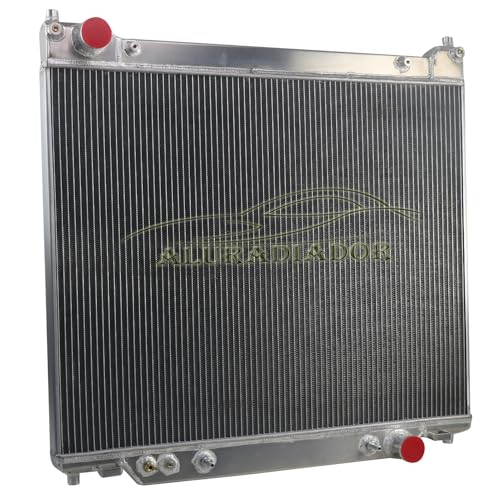
RadRace offers a TIG-welded, all-aluminum 3-row radiator designed to fit 1995–1997 Ford F59, F250, and F350 trucks with 7.3L Powerstroke engines. The core dimensions and overall size are tuned to match original assembly layouts, facilitating a direct bolt-on upgrade. Its construction prioritizes lightweight strength and enhanced coolant capacity, making it a solid choice for owners seeking higher cooling capacity without complex modifications.
Features include a full aviation-grade aluminum build, a 100% TIG weld process, and high-capacity performance. The radiator is positioned as a balance between weight and cooling efficiency, appealing to users who tow or drive in demanding environments where consistent cooling matters.
Mishimoto MMTC-F2D-99SL Transmission Cooler

While primarily a transmission cooler, this Mishimoto unit complements the radiator upgrade for 7.3L Powerstroke applications by reducing transmission fluid temperatures, which can indirectly support overall drivetrain thermal management. It’s designed for 1999–2003 Powerstroke engines and features a substantial 37-row stacked plate design, resulting in a dramatic increase in core volume and additional fluid capacity compared with factory cooling. Reducing transmission temperatures helps preserve transmission life during heavy hauling and.
p>The cooler claims a measurable temperature reduction of more than 10°F (5.6°C) in transmission fluid. It integrates alongside radiator upgrades to deliver a cohesive cooling strategy for high-load driving scenarios, including towing and off-road use. The unit’s design emphasizes compatibility and efficient heat transfer without sacrificing pressure or flow characteristics in the system.
ALLOYWORKS 4 Row Aluminum Radiator For 1995-1997 Ford F59 F250 F350

This 4-row aluminum radiator targets the 1995–1997 Ford F59/F-250/F-350 Powerstroke lineup. It emphasizes a heavy-duty cooling core built from full aluminum without plastics, a core size of 23.57 by 29.82 inches, and a 4-row design to maximize heat rejection. The unit is TIG-welded and designed for durability under tough operating conditions, including heavy towing and long highway runs. It presents a straightforward upgrade path for owners seeking the maximum cooling capacity within a direct-fit framework.
Expect a robust core that improves cooling efficiency by a noticeable margin compared with factory radiators. The absence of epoxy and the emphasis on welded seams contribute to longevity and reliability under demanding working conditions, which is valuable for frequent haulers and off-road enthusiasts alike.
VIPDUHI Aluminum Radiator for 1999–2004 Ford F250/F350 and More

This direct-fit radiator targets a broad range of 7.3L Powerstroke-era Ford trucks, including 1999–2004 Excursions and various F-series Super Duties. Core dimensions are specified as 29.4 by 26.5 inches, with an overall size of 30 by 31.7 inches. It supports both automatic and manual transmissions and integrates with a film of high-performance features—TIG welded, a multi-louvered fin design, and an aluminum-only construction. The unit promises a 35%–45% cooling improvement in extreme conditions, delivering strong performance without epoxy-based components.
Buying Guide: Key Considerations for 7.3 Powerstroke Radiators
- Core design and cooling capacity: Multi-row cores (2–4 rows) provide higher heat rejection and better tolerance under load. Consider your use case—daily driving, towing, or heavy off-road work—to pick the right balance between weight and cooling efficiency.
- Material and construction: All-aluminum radiators with TIG welds offer durability and efficient heat transfer. Avoid epoxy-filled cores if longevity in rugged conditions is a priority.
- Fitment and installation: Look for direct-fit designs that align with factory shrouds and mounting points to minimize modification work. Some 3- or 4-row cores may require additional brackets or shims.
- System compatibility: Ensure compatibility with existing transmission coolers and engine oil coolers if you rely on integrated cooling features. Some models specify whether an oil cooler is included or required.
- Thermal performance claims: Manufacturers often cite percentage improvements in cooling. Use these figures as a guide but prefer units with independent testing or credible third-party validation when possible.
- Maintenance and durability: TIG-welded joints and leak-tested builds contribute to longer service life. Review user feedback for reports of leaks or fitment issues after installation.
- Budget vs. benefit: While higher-row radiators deliver more cooling, the incremental gains should match your vehicle’s use case. For high-mileage daily drivers, a well-built 2–3 row radiator often suffices; for heavy towing or off-road, a 3–4 row option may be warranted.
The options above provide a range of cooling capacities and fitments for 7.3 Powerstroke engines. When selecting a radiator, consider the core count, material quality, and how closely the unit matches your vehicle’s mounting geometry. For owners pursuing maximum cooling capacity in demanding conditions, the 3- to 4-row aluminum radiators tend to deliver the most noticeable performance gains, while 2-row designs strike a balance between weight and efficiency for standard heavy-duty use.