Best Radiator Stop Leak Additive Solutions for Cars
Radiator stop leak additives offer a quick, proactive way to address coolant leaks and protect cooling systems without a full repair. This article highlights five widely used products that help seal leaks, prevent corrosion, and extend the life of radiators and heaters. Each option is evaluated for compatibility with common cooling systems and antifreeze types, providing practical guidance for vehicle owners and DIY enthusiasts alike.
| Product | Brand | Key Benefit |
|---|---|---|
| Liqui Moly Radiator Stop Leak | Liqui Moly | Immediate seals and protects cooling systems |
| Bar’s Leaks Cooling System Radiator Stop Leak | Bar’s Leaks | Seals leaks and reduces temperature with liquid aluminum formula |
| Bar’s Leaks 1109 Liquid Copper Block Seal | Bar’s Leaks | Permanently seals leaks with antifreeze-compatible formula |
| Bar’s Leaks Radiator Stop Leak | Bar’s Leaks | Seals radiators, heater cores, and related components |
| XADO ATOMEX Stop Leak Radiator Coolant Additive | XADO | Cost-effective fix with broad compatibility |
Liqui Moly Radiator Stop Leak

Liqui Moly Radiator Stop Leak is designed to seal leaks immediately and prevent further coolant loss. It acts to protect the combustion chamber from coolant damage and is suitable for all cooling and heating systems, with or without water filters. The formula aims to form a durable seal, reducing the risk of overheating and ongoing leaks. Suitable for use in a variety of vehicle types, this additive emphasizes reliability and broad compatibility with standard antifreeze protocols.
Bar’s Leaks Cooling System Radiator Stop Leak
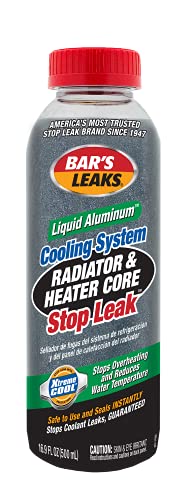
Bar’s Leaks Cooling System Radiator Stop Leak uses a liquid aluminum formula to seal radiator leaks, freeze plug leaks, and related seals. It is designed to lower the risk of overheating by maintaining coolant integrity and sealing multiple leak paths. The product is marketed for its multifaceted sealing capability across radiators, heater cores, and related components, with attention to durability and system protection over time.
Bar’s Leaks 1109 Liquid Copper Block Seal

Bar’s Leaks 1109 Liquid Copper Block Seal provides a one-step solution to permanently fix coolant loss problems. The formula is antifreeze-compatible and designed to seal leaks in plastics, aluminum, and cast iron components, including heads, blocks, intake manifolds, and gaskets. It claims to be easy to use—pour directly into the radiator—while forming a strong seal that resists future leaks when used properly.
Bar’s Leaks Radiator Stop Leak, 11 oz

This product uses a pelletized formula designed to seal internal and external leaks, including radiator seams, heater cores, and gaskets. It targets larger leaks more effectively than some competitor formulas and emphasizes compatibility with plastic, aluminum, and metal radiators. The kit also includes protective additives to inhibit rust and corrosion, supporting long-term cooling system reliability.
XADO ATOMEX Stop Leak Radiator Coolant Additive

XADO ATOMEX Stop Leak offers an affordable fix that can eliminate the need for costly radiator repairs. The formula focuses on stopping leaks and maintaining engine performance, with broad compatibility for gasoline and diesel engines. It’s designed to be safe for gaskets, hoses, aluminum, plastic, and steel radiators, providing a versatile option for mixed cooling systems.
Buying Guide
- System compatibility: Check antifreeze compatibility and material safety for plastics, aluminum, steel, and rubber components. Ensure the product matches your vehicle’s cooling system.
- Leak type and location: Consider whether you’re addressing small pinholes, larger gasket or heater core leaks, or coolant-to-oil seepage. Some formulas optimize for quick seals, while others target long-term protection.
- Ease of use: Many stop-leak additives are poured directly into the radiator. Others may include pelletized blends or require agitation; choose based on your comfort with DIY maintenance.
- Maintenance considerations: Some products claim to inhibit rust and corrosion, while others emphasize sealing capability. Decide which benefit is most important for your system’s longevity.
- Warranty and OEM approval: For vehicles under warranty or with OEM-recommended maintenance plans, verify compatibility and any potential impact on warranties.
- Usage frequency: Some formulas are designed for one-time use with a durable seal, while others are recommended for periodic treatments at set mileage intervals.
- Vehicle type and engine: Confirm compatibility for gasoline vs. diesel engines, and for vehicles ranging from passenger cars to light trucks and RVs.
When choosing a radiator stop leak additive, reliability and compatibility with your cooling system are paramount. Consider the severity of leaks, the material composition of your radiator and blocks, and your willingness to perform periodic inspections after application. For ongoing leaks or high-mileage systems, pairing a stop-leak treatment with a professional inspection of hoses, clamps, and water pumps can help ensure continued cooling efficiency and engine protection.