Best Rated Outboard Motors for Boats: Top Picks and Buying Guide
Finding the right outboard motor depends on intended use, boat size, and operating conditions. Below is a curated, objective overview of five well-regarded options. Each entry includes key features, typical applications, and practical considerations to help you choose a motor that pairs well with your craft and your goals on the water.
| Product | Brand | Power/Type | Water Type |
|---|---|---|---|
| LIWBYYG 2 Stroke 18HP Outboard Motor | LIWBYYG | 18 HP / 2-stroke | Freshwater & Saltwater |
| Newport NT300 Electric Outboard Motor | Newport Vessels | 3 HP Equiv / 1300W / Electric | Saltwater & Freshwater |
| Cbhfmljd 18HP Hangkai Outboard Motor | Cbhfmljd | 18 HP / 2-stroke | Marine environments |
| BJTDLLX Short Shaft 12HP | BJTDLLX | 12 HP / 2-stroke | Small craft |
| DNYSYSJ 3.5 HP Outboard Motor | DNYSYSJ | 3.5 HP / 2-stroke | Small boats |
Across these options, buyers can compare power ranges, propulsion types, and maintenance needs. If you rely on quiet operation and zero emissions for longer trips, the electric Newport NT300 stands out. For high-thrust, cost-effective power on smaller boats, the LIWBYYG and Hangkai options provide robust performance. The BJTDLLX and DNYSYSJ models emphasize simplicity and accessibility for casual boaters. Consider your boat length, allowable shaft height, fuel availability, and noise tolerance when choosing.
LIWBYYG 2 Stroke 18HP Outboard Motor

The LIWBYYG outboard motor uses a 246cc two-stroke design with a maximum output of 18 horsepower and a top speed around 5500 rpm. It features a lightweight aluminum alloy build and an integrated water cooling system to manage heat during extended runs. A three-blade, eight-inch propeller minimizes water resistance, delivering solid acceleration. A CDI ignition system supports quick starts, and an anti-vortex plate helps maintain smooth operation at various tilt angles. Noise is controlled by a large muffler, helping crew stay aware of activity on the water surface.
Key considerations: This model excels in fresh and saltwater use, but two-stroke architecture means higher fuel consumption and periodic maintenance. Ensure compatibility with your boat’s transom and shaft length, and verify serviceability in your region. For backyard installations or rental fleets, its straightforward design can be appealing.
Newport NT300 Electric Outboard Motor

The NT300 is a compact electric outboard delivering 3 horsepower equivalent propulsion (1300 watts) and up to 110 pounds of thrust. It operates quietly, with a digital throttle and LCD display for precise control. The 24.6-inch shaft length and 9.8-inch two-blade composite propeller suit a variety of small craft. Trim and tilt options, along with field-oriented control, support smooth operation in changing conditions. Reported ranges suggest efficient use for coastal and freshwater trips, with runtime around 30 hours depending on variables like boat weight and conditions.
Key considerations: Electric propulsion provides quieter operation and reduced maintenance compared to gas engines. However, battery capacity and recharging logistics can constrain long excursions. This option is best for people prioritizing low noise, reliability, and ease of use on smaller boats or as a supplemental motor for kayaks and small crafts.
Cbhfmljd 18HP Hangkai Outboard Motor

This Hangkai-equipped model provides 18 horsepower from a two-stroke engine paired with water cooling for reliability in demanding conditions. A 360-degree steering rotation allows reverse without gear shifts, and a start-in-gear protection feature minimizes props turning during idling. The unit emphasizes smooth, quiet operation through a circulating oil lubrication system and direct bearing support. A robust design aims to balance power and durability while maintaining practical serviceability for small to mid-sized boats.
Key considerations: Look for warranty terms and ease of obtaining replacement parts. The 360-degree steering is convenient for tight docking or maneuvering in marinas. Operators should verify mounting compatibility with the boat’s transom and ensure appropriate fuel handling for two-stroke engines.
BJTDLLX Short Shaft 12HP Outboard

The BJTDLLX 12HP outboard combines a 5500 rpm two-stroke engine with a compact short shaft design for smaller boats and inflatable craft. It provides thrust in the 661–1,763 pound range and speeds up to 30 km/h, with a water cooling system to maintain performance. Aluminum construction supports durability while keeping weight manageable. The unit offers forward, neutral, and reverse gears, enabling straightforward cruise control and maneuvering. A simple pull-start mechanism eases field operation.
Key considerations: Ideal for small boats or as a portable secondary motor. Check shaft length compatibility and ensure the boat’s mounting hardware fits the engine’s clamp and mounting pattern. Fuel efficiency and maintenance intervals are typical considerations for 2-stroke engines in recreational use.
DNYSYSJ 3.5 HP 2-Stroke With CDI
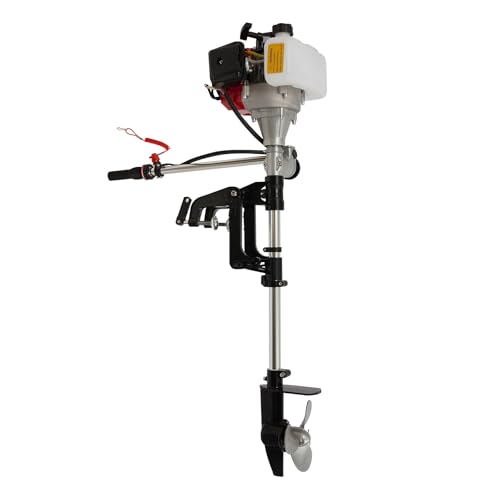
This 3.5 HP two-stroke motor is noted for ease of use and straightforward operation, featuring manual start and a CDI ignition system. A 8.2-foot boat compatibility profile suits small craft and aquaculture setups. The engine includes forced air cooling and a simple design intended for reliable performance in basic marine tasks. It’s suitable for learners or as a light auxiliary motor on small boats.
Key considerations: Lower power output makes it best for small vessels or as a secondary propulsion source. Manual starting requires physical effort, and fuel and oil mixing are needed for two-stroke operation. Review service availability and parts support in your region if you depend on this model.
Buying Guide
- <strong Power needs: Determine the maximum boat weight, hull type, and typical load to select horsepower. Two-stroke engines generally deliver strong power-to-weight but may require more frequent maintenance and fuel mixing. Electric motors prioritize quiet operation and low maintenance but may limit range without charging infrastructure.
- <strong Shaft length and mounting: Confirm shaft length (short vs long) and clamp compatibility with your transom. An improper shaft height can reduce efficiency and cause cavitation or vibration.
- <strong Fuel and maintenance: Gas engines require fuel and oil mixing (or separate oil tanks for some models). Electric motors need battery capacity planning and charging time. Consider available service centers and replacement parts in your region.
- <strong Operating environment: Saltwater exposure demands corrosion resistance and thorough rinsing after use. Freshwater setups may enjoy easier maintenance but still benefit from protective coatings and regular checks.
- <strong Noise and emissions preferences: Electric motors offer quiet operation and zero emissions, which may be a priority for kayaks, small boats, or marina days with noise restrictions.
- <strong Warranty and support: Review warranty terms, routine maintenance requirements, and access to authorized service centers. A longer warranty can offset higher upfront costs.
- <strong Ecosystem and parts availability: Check that you can source consumables, impellers, seals, and water pumps locally to minimize downtime.
Overall, the best choice depends on your vessel, boating style, and budget. Gas engines like the LIWBYYG and Hangkai options deliver solid propulsion for mid-sized craft and travelers who need reliable power on a budget. Electric options like the Newport NT300 excel for quiet days and urban marinas, while the BJTDLLX and DNYSYSJ lines offer simple, approachable solutions for beginners and light-duty use. Evaluate shaft compatibility, maintenance needs, and the operational environment to pick the most suitable rated outboard motor for your watercraft.