Best Rear Diff Fluid for Smooth Shifts and Protected Gears
Choosing the right rear differential fluid is essential for long-term gear health, quiet operation, and reliable towing performance. This guide highlights top選 refrigerant options from Valvoline and Lucas Oil designed to protect gears, clutch packs, and bearings under both cold starts and heavy loads. The picks below emphasize synthetic formulations, temperature range, and specialized additives that reduce wear and noise.
| Product | Brand | Key Benefit |
|---|---|---|
| Valvoline FlexFill Advanced Full Synthetic 75W-90 Gear Oil 1 QT | Valvoline | Faster filling with FlexFill; improved clutch pack protection |
| Valvoline Advanced Full Synthetic 75W-90 Gear Oil 1 QT | Valvoline | 1.5x better gear wear protection; broad temperature range |
| Valvoline FlexFill Advanced Full Synthetic 75W-140 Gear Oil 1 QT | Valvoline | 2X faster filling; enhanced protection at high loads |
| Valvoline Advanced Full Synthetic 75W-140 Gear Oil 1 QT | Valvoline | 30% better protection under towing; limited slip support |
| Lucas Oil 10047 SAE 75W-90 Synthetic Gear Oil | Lucas Oil | Economical option with OEM replacement compatibility |
Introduction note: The products below are chosen for rear differential use, focusing on synthetic formulations and additives that protect gears, extend life, and maintain performance across temperature ranges typical in American driving conditions.
Valvoline FlexFill Advanced 75W-90 Gear Oil 1 QT
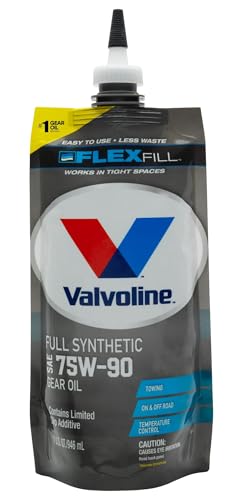
Valvoline FlexFill Advanced Full Synthetic 75W-90 Gear Oil integrates FlexFill packaging for easier filling while delivering robust protection for clutch packs and gears. The formulation targets noise reduction and extended wear protection, with benefits including 30% better protection under heavy loads and 1.5x improved gear wear resistance. Suitable for vehicles requiring a high-performance 75W-90 synthetic gear oil, it aims to provide smooth operation across a wide temperature spectrum.
Valvoline Advanced Full Synthetic 75W-90 Gear Oil 1 QT

This 75W-90 gear oil from Valvoline emphasizes high-temperature and low-temperature performance with a broad operating range of -50F to 300F. It includes limited-slip compatibility to optimize clutch-pack performance and delivers 1.5x stronger extreme pressure protection along with improved protection against towing and heavy loads, making it a strong all-around pick for demanding rear differentials.
Valvoline FlexFill Advanced 75W-140 Gear Oil 1 QT

Designed for higher-load conditions and hotter environments, this 75W-140 oil combines FlexFill packaging with advanced synthetic performance. It provides strong protection against wear and improved clutch pack behavior under heavy use, along with the same 2X easier filling advantage that helps with quick top-offs during maintenance.
Valvoline Advanced Full Synthetic 75W-140 Gear Oil 1 QT

This 75W-140 variant emphasizes extreme pressure protection and increased towing capacity protection. It also features limited-slip compatibility to ensure reliable clutch-pack performance, making it suitable for trucks and performance cars that demand more robust lubrication under load and at elevated temperatures.
Lucas Oil 10047 SAE 75W-90 Synthetic Gear Oil

Lucas Oil 10047 is a budget-friendly synthetic gear oil option designed for transmission and differential lubrication. It aims to replace OEM specifications with dependable performance for a variety of rear differentials, offering good protection characteristics and compatibility for many vehicle types.
Buying Guide: Key Purchase Considerations For Rear Diff Fluids
- Viscosity grade: Most U.S. rear differentials use 75W-90 or 75W-140 lubricants. 75W-90 provides strong all-season performance, while 75W-140 offers enhanced protection under heavy loads and hotter operating conditions. Match the viscosity to your vehicle’s manufacturer recommendations and driving needs.
- Synthetic vs conventional: Full synthetic fluids deliver superior oxidation resistance, better wear protection, and steadier viscosity across temperature ranges. For towing or high-stress use, synthetic formulations are typically preferred.
- Temperature range: Look for fluids rated for cold starts and high-temperature operation. For climates with extreme cold or frequent heavy-duty use, a wider temperature envelope helps maintain fluidity and lubrication.
- Clutch-pack compatibility: Some rear differentials use limited-slip or clutch-based designs. If your vehicle requires this feature, ensure the fluid supports clutch-pack performance to avoid slip or chatter.
- Extreme pressure protection: Higher-end fluids may offer stronger EP protection to resist wear under peak loads, contributing to longer gear life and quieter operation.
- Packaging and ease of use: Some brands use convenient packaging (like FlexFill) that reduces spillage and speeds up maintenance. Consider packaging if you perform fluid changes yourself.
- Rear-diff-specific formulation: Not all gear oils are identical for differentials. Check that the product is formulated for rear differential use and compatible with your vehicle’s LSD or differential type.
- Brand ecosystem and availability: While Valvoline offers a broad range with strong performance characteristics, Lucas Oil provides cost-effective options. Availability at retailers or via auto parts channels can influence long-term maintenance planning.
Note: This article presents objective product features and typical performance attributes. Always verify the exact specification in your vehicle’s owner manual and follow the manufacturer’s recommendations for oil type and change intervals.