Best RFID Card Solutions for EV Charging
Finding reliable RFID-enabled access for EV charging stations helps operators control who can charge and when. This guide highlights five top RFID-capable options from well-known brands, focusing on compatibility, ease of use, and security features. Whether you’re outfitting a residential, commercial, or multi-user setup, these products integrate RFID access with Level 2 charging to streamline operations and protect your charging infrastructure.
| Product | Brand | Key Feature |
|---|---|---|
| Leviton Additional Charging Station Access Control (RFID) Card, ERFID | Leviton | Enables RFID access gating for Leviton EV Series |
| Autel RFID Blocking Cards 2 Pack Ev Charger | Autel | RFID blocking cards designed for Autel chargers |
| SaiTech IT 5 Pack RFID Blocking Card | SaiTech IT | Wallet‑size RF/NFC protection for all contactless cards |
| WOLFBOX Level 2 EV Charger 48 Amp | WOLFBOX | RFID card support with smart app and Wi‑Fi |
| JEEKVISEN Level 2 EV Charger 48Amp 240V | JEEKVISEN | RFID card control with app and Wi‑Fi |
Note: This article presents objective information based on listed features. Prices are not included, and compatibility should be verified for your specific charging setup.
Leviton ERFID RFID Card For EV Series
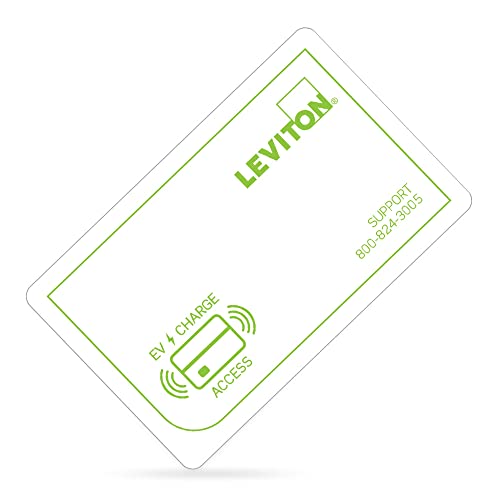
The Leviton ERFID card provides an official access control layer for Leviton EV Series charging stations. By default, Leviton stations ship with access control disabled; activation occurs by tapping the ADMIN card included with the station. This product is a replacement card, designed to extend your existing RFID access system across EV320, EV32W, EV480, and EV48W stations. The card is compact, portable, and intended for use in controlled access environments where multiple users may require charging privileges. Its integration workflow is straightforward: obtain the card, register it in the station’s admin interface, and assign user permissions as needed. Consider compatibility with your current RFID system and whether you require additional access cards for staff, residents, or tenants.
Key considerations:
- Compatibility: Specifically designed for Leviton EV Series stations.
- Access control scope: Replaces or supplements existing RFID access as needed.
- Activation: Requires admin card to enable access controls on compatible stations.
Autel RFID Blocking Cards 2 Pack Ev Charger

The Autel RFID Blocking Cards are designed to protect sensitive information on contactless cards when used with Autel EV chargers. These cards fit easily into wallets or pockets and offer a convenient option for users who want to shield their cards in high-traffic charging scenarios. While not an access-control card themselves, RFID blocking cards help prevent unauthorized reading of cards that interact with Autel charging stations. They are compact, non-intrusive, and simple to carry as part of a daily charging routine. For operators, this adds an emphasis on user privacy within shared charging environments.
Key considerations:
- Privacy: Increase protection against unauthorized RFID reads.
- Compatibility: Specifically marketed for Autel EV chargers.
- Carryability: Lightweight and wallet-friendly for everyday use.
SaiTech IT RFID Blocking Card Pack

The SaiTech IT RFID Blocking Card is a multi-card protection solution intended to shield wallets from e-pickpocketing. This 5-pack includes a simple jamming chip with an antenna that detects incoming radio waves and emits a counter-signal to protect all RFID-enabled cards within the wallet. With a practical 2.4-inch shielding range, it helps secure credit cards, IDs, and access cards against unauthorized reads. The design emphasizes battery-free, lifetime use since it relies on passive jamming rather than power-hungry components. For users frequently charging in public or semi-public spaces, this can reduce risk exposure for all RFID cards in a single wallet.
Key considerations:
- Security approach: RFID shielding via jamming signal (no battery required).
- Coverage: Strong shielding across a wallet’s interior, including secondary cards.
- Use case: Suitable for personal protection; not a charging-access credential themselves.
WOLFBOX Level 2 EV Charger 48 Amp (RFID Card Supported)

The WOLFBOX 48 Amp Level 2 charger combines fast charging with user-friendly RFID card support and robust connectivity. Featuring a 25-foot weatherproof cable and a CSA-certified, UL-adherent design, this unit supports app management and Wi-Fi connectivity for monitoring and scheduling. The RFID card capability adds a convenient physical credential option alongside app control. It’s designed for both indoor and outdoor use and comes with installation tools for easier setup. Potential considerations include ensuring the RFID option aligns with your access control policy and confirming compatibility with your electrical panel and outlet configuration for a seamless deployment.
Key considerations:
- Access method: RFID card plus app control for flexible access management.
- Durability: NEMA 4X enclosure suitable for outdoor installations.
- Compatibility: Works with standard SAE J1772 connectors and common EV models.
Zapvolt Level 2 EV Charger With RFID Card

The Zapvolt Level 2 charger advertises fast charging up to 8x that of Level 1 units, delivering up to 38 miles per charging hour. It includes an RFID card option, Wi‑Fi connectivity, and a broad compatibility range, including many popular EV models. The unit emphasizes weather resistance and outdoor suitability with a rugged design and a long 25-foot cable. The charger supports app scheduling, energy monitoring, and cost-saving features via remote control and RFID card convenience. For buyers, it’s important to verify that the charger’s RFID integration aligns with any existing access policy and that the modular current settings meet the vehicle charging needs of your fleet or household.
Key considerations:
- Charging speed: Up to 38 miles per hour under Level 2 operation.
- Access options: RFID card plus app-based control for flexible use.
- Outdoor readiness: Weatherproof with broad model compatibility.
JEEKVISEN RFID Card Level 2 EV Charger

The JEEKVISEN Level 2 charger provides 48A with a 3‑in‑1 feature set: robust RFID card support, app control, and Wi‑Fi connectivity. It offers adjustable amperage (16–48A) and a weatherproof design suitable for diverse environments. The charger is designed for fast, safe charging at 240V AC with a wide operating range, including protection against voltage, overload, over-temperature, and short circuits. It’s a comprehensive option for users who want a feature-rich, Wi‑Fi-enabled charger that also supports RFID-based access control as part of broader fleet or residential management policies.
Key considerations:
- Adjustable amperage for tailoring charging speed and electrical load.
- Security: Integrated protection features for safe operation.
- Support: Combines RFID access with app-based monitoring for flexibility.
Buying Guide: RFID Access For EV Charging
When choosing RFID-enabled charging, consider how access control fits into your broader charging strategy. Point these factors to ensure you pick a system that aligns with your infrastructure, security needs, and user base.
-
<liCompatibility: Verify RFID card compatibility with both the charger and the existing access control system. Some brands offer proprietary RFID cards that work best within their ecosystem, while others provide universal blocking and security options that protect wallet contents.
<liAccess control scope: Decide whether you need simple card-based access, admin-managed user groups, or combined app control for scheduling and remote authorization.
<liSecurity features: Look for features such as tamper resistance, encryption, and anti-skimming capabilities. For wallets, consider RFID blocking solutions if privacy is a priority for users in shared spaces.
<liOutdoor readiness: If installations are outdoors, ensure the charger has a weatherproof, NEMA-rated enclosure and reliable durability under temperature swings and precipitation.
<liEase of installation: Some units come with installation tools and straightforward wiring guidance. Align this with your site’s electrical capacity and local codes.
<liFuture-proofing: Consider whether the charger can support future software updates, additional access methods, or expanded user management as your charging needs grow.