Best Rubbing Compound for Fiberglass: Restore Gel Coat and Shine
Rubbing compounds designed for fiberglass help restore dull gel coats, remove oxidation, and revive color and luster on boats, RVs, and marine surfaces. The following hand-picked options are widely used by DIY enthusiasts and professionals alike. Each product targets fiberglass and gel coat finishes with varying cutting power and finishes, making it easier to choose the right solution for your restoration project.
| Product | Brand | Key Benefit |
|---|---|---|
| Meguiar’s Marine/RV One Step Compound | Meguiar’s | Cleans, polishes, and adds high gloss to fiberglass gel coats |
| 3M Super Duty Rubbing Compound | 3M | High cut rate for heavy oxidation and scratches |
| Marine Rubbing Compound, Better Boat | Better Boat | Rapid restoration with ease of application |
| STAR BRITE Liquid Rubbing Compound | STAR BRITE | Versatile formula for fiberglass, metal, and painted surfaces |
| TotalBoat TotalBuff Marine Rubbing Compound | TotalBoat | Aggressive fast cut for heavy oxidation and scratches |
Below is a concise guide to help you compare options, understand their use cases, and choose the best rubbing compound for your fiberglass restoration needs.
Meguiar’s Marine/RV One Step Compound

Meguiar’s Marine/RV One Step Compound is crafted to clean fiberglass and gel coat surfaces while delivering a high-gloss finish. It combines cleaning action with polishing to simplify the process into a single step, saving time on RVs and boats. The formula aims to remove moderate oxidation, stains, and light scratches while restoring color and shine to neglected surfaces. This product is suitable for marine and RV applications where a bright, mirror-like finish is desired. It is particularly useful for routine maintenance to keep gel coats looking fresh.
3M Super Duty Rubbing Compound

3M’s Super Duty Rubbing Compound is designed for a high cut rate, making it effective at removing oxidation and deeper scratches on gelcoat, paint, and other fiberglass finishes. It’s an economical option that handles weathered surfaces well, helping restore dull areas to a more uniform appearance. The product is typically used in heavy correction stages, often followed by polishing or waxing to protect the surface. While powerful, it’s important to work gradually to avoid introducing haze or swirling on delicate finishes.
Marine Rubbing Compound, Better Boat

Better Boat’s Marine Rubbing Compound offers rapid restoration for fiberglass gel coat, emphasizing ease of use and a user-friendly application. It’s suitable for removing heavy oxidation and reviving faded surfaces. The formulation supports both hand application and machine buffing, with a long open time to help keep the product wet during use. This makes it a practical option for DIYers who want reliable results without complex steps. The product is marketed as a professional-grade solution accessible to non-professionals.
STAR BRITE Liquid Rubbing Compound
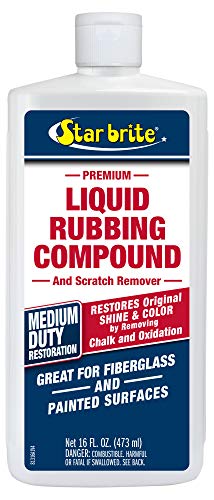
STAR BRITE’s Liquid Rubbing Compound is formulated to handle medium oxidation and scratches on fiberglass, metal, and painted surfaces. It is designed for easy hand or buffer application, minimizing hardening and making cleanup straightforward. For enhanced results, it’s common to follow with a dedicated marine polish. The formula is versatile, appealing to users who work on multiple surface types beyond fiberglass gel coat.
TotalBoat TotalBuff Marine Rubbing Compound
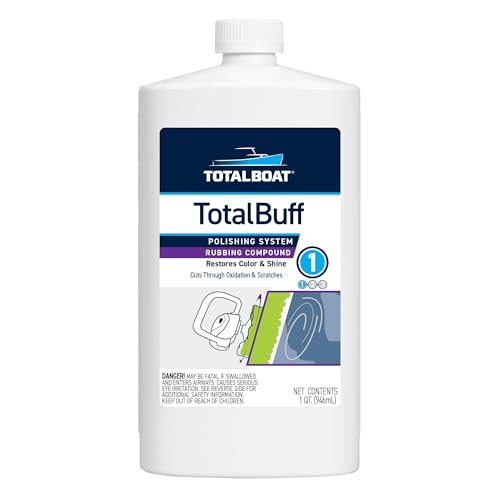
TotalBuff Marine Rubbing Compound provides an aggressive fast cut designed to remove heavy oxidation and scratches from fiberglass gelcoat and painted surfaces. It’s suitable for use on boats as well as other fiberglass projects. The product supports easy application by hand or with a buffer, featuring a long open time to keep the compound wet for the duration of the work. It is positioned as particularly effective for badly weathered finishes and may be paired with polishing products for optimal protection and shine.
Buying Guide: Key Considerations For Fiberglass Restoration
When selecting a rubbing compound for fiberglass, consider the oxidation level, surface condition, and your workflow. Heavy oxidation and deeper scratches typically require a higher cut compound, while light oxidation benefits from a gentler polish that minimizes haze. One-step products can simplify maintenance, but dedicated polishing stages often yield more consistent, long-lasting finishes.
- Cutting power: Higher cut compounds remove more material but may require follow-up polishing to restore gloss. For severe oxidation, start with a heavy-cut product and refine with a lighter compound.
- Surface compatibility: Verify the product is formulated for fiberglass gel coat and avoid harsh abrasives on sensitive finishes.
- Application method: Some compounds are designed for hand use, others for machine polishing. Open time and resistance to dusting influence ease of use.
- Finish quality: Consider whether you want a mirror-like glaze in a single step or prefer a staged approach with polish and wax.
- Follow-up protection: Use a compatible marine polish or wax after polishing to protect against UV and environmental exposure.
- Safety and surface care: Work in a well-ventilated area and wear eye protection. Test on a small area first to ensure color and gloss are restored without hazing.
For fiberglass restoration, the choice often depends on the project scale. Light oxidation and minor scratches may respond well to a one-step compound that both polishes and protects. Heavier oxidation or dull gel coat typically benefits from a two-step approach: a high-cut compound to remove oxidation, followed by a polishing stage and protective coating. Manufacturers commonly recommend using a buffer for even results and to minimize human fatigue during larger jobs.
Whichever product you select, always follow the manufacturer’s instructions for application and curing times. Regular maintenance after a successful restoration—such as periodic polishing and UV protection—helps extend the life of the gel coat and preserves the finish for years.