Best RV Converter Chargers for Lithium Batteries
When towing or camping off-grid, a reliable RV converter charger is essential for keeping lithium batteries topped up and powering daily comforts. The following selection highlights top-rated converters with adjustable voltages, multi-stage charging, and lithium compatibility. Each option is designed to deliver clean, stable 12V DC power from standard AC shore power, helping extend battery life and support essential electronics on the road.
Summary of selected products:
| Product | Brand | Output Range | Key Benefit |
|---|---|---|---|
| WAVLINK | 13.0V – 16.5V | Custom modes for lithium and lead-acid; strong 55A output | |
| RecPro | 13V – 16.5V | 4-stage charging for diverse battery chemistries | |
| VEVOR | 13.0V – 16.5V | Dedicated lithium and lead-acid modes; high current | |
| PowerMax | 13.0V – 16.5V | 4-stage smart charging; broad compatibility | |
| Hihitomorrow | 13.0V – 16.5V | High amperage with lithium compatibility |
WAVLINK 55 Amp RV Power Converter

The WAVLINK unit converts 120V AC to 12V DC for charging batteries and powering RV electronics. It supports lead-acid and lithium battery configurations with tailored charging modes and a selectable voltage range from 13.0V to 16.5V. A robust 55A output streams power to essential devices, ensuring reliable operation during travel. Built to integrate with varied RV electrical setups, this converter emphasizes efficiency and battery health across multiple chemistries.
RecPro RV Power Converter 55 Amp

RecPro’s 55-amp converter provides 120VAC shore power to 12VDC, enabling battery charging while simultaneously powering 12V lights and appliances. Available in multiple capacities, including 55A, this converter supports a four-stage smart charging process that helps optimize battery health. It is suitable for RVs requiring consistent, dependable DC power for living spaces and onboard systems.
VEVOR RV Converter 80 Amp

VEVOR’s 80A converter delivers substantial current for larger battery banks and heavier loads. It features four-stage charging with an adjustable 13.0V–16.5V output, making it compatible with lithium, lead-acid, and other battery types. The design targets robust RV power systems and off-grid setups requiring strong, reliable DC supply for a wide range of devices.
PowerMax 60 Amp RV Converter
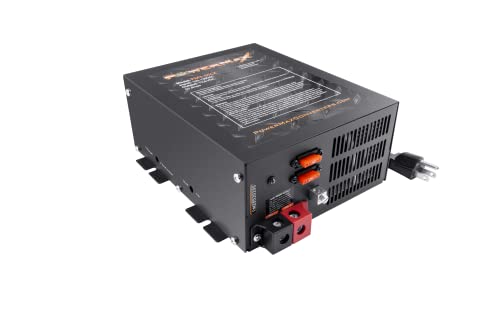
PowerMax 60A delivers 110V AC to 12V DC with a four-stage charging system that adapts to battery needs. The adjustable output range from 13V to 16.5V supports lithium and lead-acid chemistries, offering a balanced solution for RV, boat, and off-grid setups. The unit focuses on efficiency, battery longevity, and dependable power delivery for demanding RV environments.
100 Amp RV Power Converter
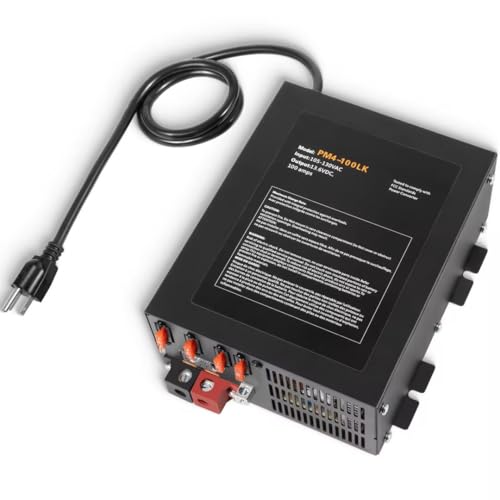
The 100A RV power converter provides a powerful conversion from AC to DC with an adjustable voltage range of 13.0V to 16.5V. It supports lithium batteries and delivers up to 100 amps of current to sustain high-demand onboard systems. This makes it well-suited for larger RV systems, high-energy appliances, and off-grid configurations requiring robust charging capabilities.
Buying Guide: Key Considerations for Selecting an RV Converter Charger
- Battery compatibility: Confirm lithium compatibility and whether the unit supports other chemistries (lead-acid, AGM, etc.). Look for fixed voltage and adjustable voltage options within 13.0V–16.5V to match battery requirements.
- Current capacity: Choose a model with enough amperage to meet your load and battery size. Larger RVs and fleets of devices benefit from 60A–80A or higher, especially with lithium packs.
- Charging profile: A 4-stage charging system (bulk, absorption, float, equalization) helps maximize battery life and safety. Ensure the charger includes smart mode selection for different battery types.
- Installation and cooling: Check fit for your space and whether the unit includes quiet cooling or thermal management that avoids overheating in hot climates.
- Reliability and warranties: Look for units with solid warranties (several years) and reputable brands. Customer support can be critical for troubleshooting.
- Safety features: Overcharge protection, short-circuit protection, and reverse polarity safeguards are important for protecting batteries and electronics.
- Size and weight: For RVs with tight compartments, consider the form factor and mounting options to ensure a clean, secure installation.
- Documentation and support: User manuals, setup guides, and troubleshooting resources help ensure proper configuration and maintenance.
In selecting an RV converter charger for lithium batteries, prioritize models that offer lithium-specific charging profiles, robust current capacity, and compatible voltage ranges. For compact rigs, a 55A unit with lithium mode can be sufficient, while larger layouts may benefit from 80A or higher with flexible voltage settings. Always verify that the unit supports your battery pack’s chemistry and recommended charging parameters.