Best Silicone Lubricants for Car Window Seals and Tracks
Keep car windows operating smoothly by using silicone lubricants designed for rubber seals, tracks, and moving parts. The following selections are well-suited for automotive window channels, weather stripping, and hinges, helping to reduce friction, deter sticking, and extend service life. Each product below is vetted for compatibility with non-metal materials and common automotive substrates.
| Product | Brand | Key Benefit |
|---|---|---|
| DuPont Silicone Lubricant with Teflon Fluoro Polymer | DuPont | Light-duty protection for non-metal materials; waterproofs and preserves |
| WD-40 Specialist Silicone Lubricant with Smart Straw | WD-40 Specialist | Quick-drying, residue-free; safe on rubber, vinyl, and plastic |
| CRC Heavy Duty Silicone Lubricant | CRC | Clean, residue-free lubrication for demanding surfaces |
| KEZE Silicone Grease with PTFE | Keze | Low-friction, versatile for plastic-to-metal and rubber applications |
| Glodway Automotive Window Door Seal Lubricant | KÖRPER BESONDERS GLODWAY | Targeted for door seals and window tracks; dual spraying options |
DuPont Silicone Lubricant with Teflon Fluoro Polymer
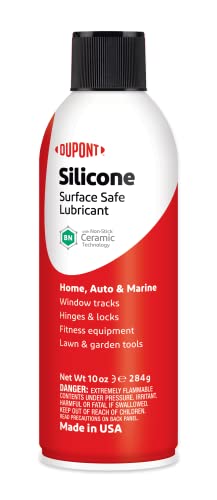
DuPont Silicone Lubricant with Teflon Fluoro Polymer is a light-duty option designed for non-metal materials that may react to harsher lubricants. It provides waterproofing, lubrication, and preservation, making it suitable for window seals and tracks that require gentler care without leaving heavy residues.
WD-40 Specialist Silicone Lubricant with Smart Straw

WD-40 Specialist Silicone Lubricant offers quick-drying, residue-free lubrication suitable for rubber, vinyl, and plastic components found in window tracks and seals. The Smart Straw allows precise application, reducing overspray on surrounding components.
CRC Heavy Duty Silicone Lubricant

CRC Heavy Duty Silicone Lubricant is a robust option that leaves little to no residue and is effective on a range of materials. It can help reduce sticking and squeaks in window channels and door seals under more demanding conditions.
KEZE 92003 Silicone Grease with PTFE

KEZE Silicone Grease with PTFE combines silicone with PTFE to reduce friction and provide durable lubrication across plastic-to-metal, rubber-to-metal, and other material interfaces. Its extended temperature range and anti-abrasion properties suit window tracks and seals in varying climates.
Glodway Automotive Window Door Seal Lubricant

Glodway’s seal lubricant is designed specifically for automotive window and door seals. It features two Smart Straw sprays for precise interior track access and a wide spray option for larger areas, making it versatile for RVs, boats, and cars, while easing window operation and reducing wind noise.
Buying Guide
Key considerations when choosing a silicone lubricant for car windows include material compatibility, application control, and environmental conditions. For rubber seals and vinyl components, opt for silicone products labeled safe for non-metal materials to avoid staining or swelling. If you need precise internal track lubrication, look for a spray with a Smart Straw or dual spray options to minimize overspray and mess. For extreme temperatures or outdoor exposure, prioritize products with broader temperature ranges and water resistance. If you require long-lasting lubrication with low friction across multiple materials, consider greases that combine silicone with PTFE or ceramic components. Always follow manufacturer instructions for use and testing on a small area before full application to prevent unintended interactions with paints, coatings, or sealants.
When comparing products, consider:
- Residue and cleanliness: residue-free formulas reduce dirt attraction and maintain a clean window track.
- Material compatibility: verify the product is safe for rubber, vinyl, and plastic components in your vehicle.
- Application format: aerosols provide quick coverage; grease or paste offers longer-lasting lubrication for busy tracks.
- Temperature tolerance: higher temperature ranges support durability in hot climates or sun-exposed areas.
- Certifications and safety: NSF-rated or food-safe variants may be preferred where incidental contact is possible; ensure appropriate safety data.