Best Solar Air Conditioner for Car and Vanlife Comfort
For travelers who live on the road, a solar-ready portable air conditioner can be a game changer. This guide highlights five options that pair well with off-grid power setups, including high-efficiency cooling, cordless operation, and vehicle-friendly design. Each product section includes its standout features and how it fits into a mobile lifestyle—whether you’re camping, RVing, or driving long distances in sunny climates.
The following table offers a quick snapshot of the chosen products, helping you compare core capabilities at a glance.
| Product | Brand | Key Benefit |
|---|---|---|
| EF ECOFLOW WAVE 3 Portable Air Conditioner | EF ECOFLOW | 8-hour cordless operation with fast charging |
| EF ECOFLOW WAVE 3 Portable Air Conditioner (Add-on Battery) | EF ECOFLOW | Extended runtime with add-on battery |
| Dfmyhked 12V Vehicle Air Conditioner | Dfmyhked | Direct 12V cooling for trucks, RVs, and vans |
| Zero Breeze Mark 3 Portable Air Conditioner | Zero Breeze | Low power usage with dual-duct option |
| Countrymod 12V DC RV Air Conditioner | countrymod | High BTU in a compact, energy-efficient unit |
EF ECOFLOW WAVE 3 Portable AC

- HyperSpeed Climate Control: 1800W cooling delivers rapid cooling, with 15°F drop in 15 minutes under extreme heat.
- 2000W heating capability: Provides warmth at vents quickly for variable climates.
- Cordless Freedom: 1024Wh LFP battery enables up to 8 hours of operation; 75-minute fast charging via AC, car, solar, or EcoFlow charger.
- Real-time monitoring: APP integration for power management and settings.
- Compact, versatile fit: Designed to fit in a range of vehicles and overland setups, cooling 120-180 sq ft spaces.
EF ECOFLOW WAVE 3 With Add-on Battery

- Same HyperSpeed Cooling and Heating capabilities as the base model.
- Extended cordless operation with an add-on battery option for longer off-grid use.
- Fast charging in 75 minutes and app-based power management for off-grid trips.
- All-terrain compatibility with a compact 20″ footprint and strap kit for rooftops or truck beds.
- Ideal for extended vanlife camping when wall outlets are unavailable.
Dfmyhked 12V Vehicle Air Conditioner
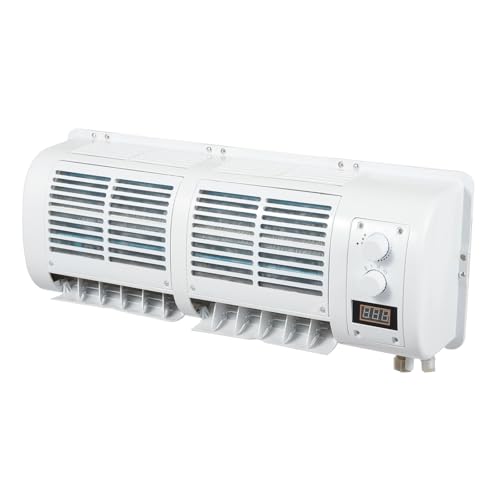
- Reinforced ABS shell and robust heat exchanger for durability in harsh environments.
- High cooling performance with 22,525 BTU/h and a strong 4,929.87 ft³/h airflow.
- Three-speed adjustable fan and programmable temperature control for personalized comfort.
- Designed for light trucks, forklifts, cranes, and RVs—portable yet capable for mobile use.
- Compact mounting and straightforward operation suited for on-the-road living spaces.
Zero Breeze Mark 3 Portable AC
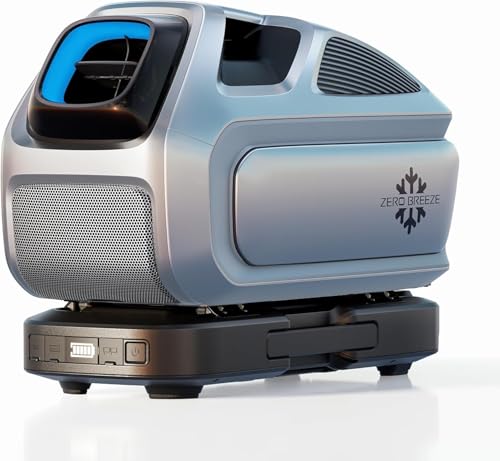
- Three modes (Rockets/Cool/Sleep) plus Fan, Dry, Care, and Heating.
- Thermostat control from 61°F to 88°F with ultra-low power consumption (as low as 150W).
- Dehumidification and active drain system for comfort and maintenance relief.
- Dual-duct options for efficient cooling in open or semi-enclosed spaces.
- Portable footprint suitable for cars, RVs, campsites, and small rooms.
Countrymod 12V RV Air Conditioner

- 11,000 BTU cooling with inverter design to adjust compressor speed for efficiency.
- Energy-saving operation at about 0.3 kWh per hour, with potential battery life up to 10 hours.
- Ultra-low noise operation (45-55 decibels) for comfortable sleeping conditions.
- Distributes cold air evenly to reduce direct drafts and discomfort.
- Ideal for RVs, trailers, fifth wheels, and off-grid setups requiring reliable cooling on the go.
Buying Guide: Key Purchase Considerations
When selecting a solar-friendly or off-grid air conditioning solution for a car, RV, or van, consider how you plan to power the unit, the space you need to cool, and your off-grid charging habits. Below are several critical factors to weigh in depth.
- Power source and runtime: If you rely on solar, evaluate battery capacity (Ah or Wh), charging options, and runtime under typical outdoor heat. Models with 8 hours of cordless operation or expandable batteries offer more flexibility for overnight use.
- BTU and cooling area: Match BTU ratings to the space you intend to cool. Small vans or tents require less BTU than larger RV interiors; over-specified units waste energy, while underpowered units struggle in heat.
- Power efficiency: Inverter technology and energy-efficient comfort modes help maximize battery life and solar charging efficiency. Look for models with intelligent climate control to maintain stable temperatures with minimal swings.
- Portability and mounting: Consider the vehicle footprint, weight, and whether the unit ships with mounting or straps. Compact dimensions and carry-friendly designs facilitate easier storage in vehicles with limited space.
- Durability and reliability: Outdoorsy use demands robust housings, corrosion resistance, and components designed to withstand vibration and temperature swings.
- Audible comfort: Noise levels influence sleep and driving comfort. If you’ll operate the unit at night in a cabin, prioritize lower decibel ratings and quiet fan modes.
- Installation and maintenance: Some units are plug-and-play, while others require more involved installation. Check for ease of cleaning, condensate management, and filter maintenance.
- Safety and compatibility: Ensure the device integrates with your existing power system, whether it’s a portable power station, rooftop solar, or vehicle alternator charging.
These considerations help you balance practical off-grid cooling with energy availability, ensuring you stay comfortable without compromising your power budget on the road.