Best Solar for RV: Top Off-Grid Power Solutions for Your RV
An off-road or on-road RV setup thrives on reliable power. The following five solar options span portable panels to integrated RV kits, each designed to maximize daily output, withstand harsh conditions, and simplify installation. This guide compares efficiency, durability, and controller features to help you pick the right system for your adventures.
| Product | Brand | Key Benefit |
|---|---|---|
| ECO-WORTHY 200W Kit | ECO-WORTHY | High efficiency monocrystalline cells; robust frame |
| SOLPERK 20W Kit | SOLPERK | Compact 12V charging with strong weatherproofing |
| Renogy 200W Kit | Renogy | Adventurer 30A PWM controller; durable build |
| Jackery Solar Generator 1000 V2 | Jackery | Integrated power station with fast charging |
| Renogy 200W Portable Panel | Renogy | Foldable, IP65, high efficiency 25% |
ECO-WORTHY 200W Solar Panel Kit For RV and Off-Grid

The ECO-WORTHY 200W kit targets RV owners seeking a balance between high output and field durability. The kit centers on a monocrystalline panel with up to 21.5% efficiency under sunny conditions, supported by a corrosion-resistant aluminum frame built to endure wind and snow loads. The included 30A PWM charge controller provides reliable, simple battery management for recreational vehicles and off-grid setups. A key advantage is the panel’s broad applicability—from RVs and caravans to boats and cabins—making it a versatile choice for mixed-use power needs.
Product highlights include a stated daily output around 800Wh under four hours of peak sun, which suits mid-sized RV systems aiming for steady battery charging during travel days. The panel’s IP65-rated junction box adds weather protection, while the rigid frame design suggests long service life in outdoor environments. Potential buyers should confirm compatibility with their existing battery bank and mounting space, as bay dimensions and mounting hardware can influence installation time.
SOLPERK Solar Panel Kit 20W 12V
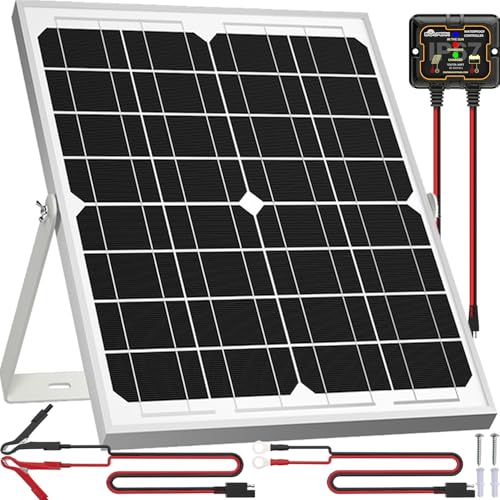
The SOLPERK 20W kit focuses on compact, efficient charging for smaller electrical needs in RV setups or trailers. The panel uses A+ monocrystalline cells with claimed efficiency in the 21–30% range, enabling reliable maintenance charging for 12V batteries like LiFePO4, AGM, and sealed lead-acid variants. The kit includes a smart 8A charge controller that supports a three-stage charging cycle to prevent overcharging and short circuits, along with weather-resistant hardware designed to withstand wind, rain, and snow. It’s an attractive option for users with limited space or those who want a supplementary panel to maintain battery health during travel between sites.
With IP65-grade protection and a rugged frame, the SOLPERK panel is built to outlast typical portable panels in challenging weather. Installation simplicity stands out: it’s designed for quick setup on RVs, boats, or camping trailers. As with any small solar addition, anticipate modest daily energy contributions, but appreciate its low-cost entry point and potential to extend battery life between full solar days.
Renogy 200W Solar Panel Kit With Adventurer 30A PWM
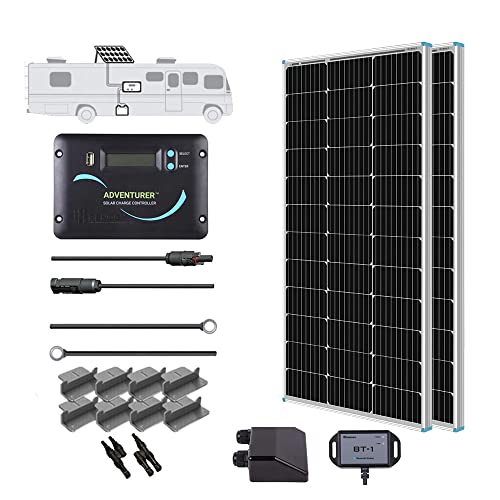
The Renogy 200W kit targets RVers seeking a balanced, mid-range system with a robust PWM charge controller. The Adventurer 30A PWM controller provides solid protection against overcharging, deep discharge, and short circuits, helping to safeguard battery banks on the move. The panel itself uses corrosion-resistant aluminum and is designed to withstand high winds and snow loads, making it suitable for openroad travel and exposed campsites. A compact footprint helps it fit on most RV roofs or trailer top surfaces, while the mounting hardware supports multiple orientations for optimal sun exposure.
Hard-wearing construction and decent efficiency make this kit a reliable standard for RV enthusiasts who need straightforward setup and solid performance. Users should compare their daily energy demands with the panel’s output under typical travel conditions and ensure compatibility with their battery type and accessory charging needs, such as inverters or power banks.
Jackery Solar Generator 1000 V2 With 200W Panel

The Jackery Solar Generator 1000 V2 is an integrated off-grid power solution featuring a 1,070Wh LiFePO4 battery and a 1,500W AC output with a 3,000W surge capacity. This system couples a robust portable power station with fast-charging capabilities, including emergency fast charging via the Jackery app. Its light 23.8-pound design and ergonomic handle support mobility for campers and RV travelers who want ready-to-use power at a moment’s notice. The product emphasizes longevity, claiming a durable life span with a high-quality LFP battery that maintains a substantial portion of its capacity after thousands of cycles.
Users gain the convenience of a single integrated unit that powers essential appliances, plus USB-C and USB-A outputs for charging mobile devices. The main consideration is cost versus modularity: while convenient, it is a premium option compared to standalone panels plus traditional inverter systems. It’s particularly appealing for those prioritizing speed, portability, and dependable power during short trips or emergency scenarios.
Renogy 200W Portable Solar Panel – Foldable IP65

Renogy’s portable foldable 200W panel emphasizes high efficiency with 16BB N-Type cells delivering up to 25% efficiency, a step above many compact panels. The foldable design reduces footprint and weight, enabling easy transport and storage. At 13.89 pounds, it’s one of the lightest 200W options, and the magnetic closure facilitates quick setup and pack-down. The panel includes versatile outputs: a USB-C PD port for modern devices and dual USB-A for standard peripherals, plus MC4 connectors to charge a power station or 12V battery system. This makes it an excellent companion for RVs, SUVs, or camping rigs with limited space but high energy demands.
Consider this panel if you prioritize portability and quick deployment without sacrificing efficiency. It suits scenarios where you want to augment a primary system or to charge smaller devices while on the move. Its durability and weatherproofing are important for all-season use, though a larger, roof-mounted solution may still be preferable for heavy daily solar requirements on extended trips.
Buying Guide
- Determine energy needs: Calculate daily watt-hours required by your RV appliances, then match panel wattage to meet or exceed that demand under typical sun exposure.
- Panel type and efficiency: Monocrystalline cells offer higher efficiency and better performance in less-than-ideal light; polycrystalline panels are typically lower in cost but also slightly less efficient.
- Controller choice: PWM controllers are simple and cost-effective for smaller systems; MPPT controllers yield higher efficiency, especially in larger setups or with longer cable runs.
- Durability and mounting: Aluminum frames with IP ratings protect against weather; consider roof mounting on RVs or portable setups for flexible usage.
- Portability vs. fixed installs: Portable foldable panels are ideal for travelers who frequently move sites; roof-mounted kits are suited for steady, long-term off-grid stays.
- Battery compatibility: Verify that the system is compatible with your battery type (LiFePO4, AGM, GEL, etc.) and whether additional charge regulation or inverters are required for your appliances.
- Expansion options: If you anticipate growing energy needs, choose modular kits that allow easy addition of panels or a higher-capacity controller.
- Warranty and support: Look for panels with multi-year warranties and responsive customer support to minimize downtime and maintenance concerns.
In summary, the best solar setup for an RV depends on travel frequency, space, and power requirements. For high daily usage with a preference for consolidated gear, integrated kits with reliable controllers and strong frames are advantageous. For lighter needs or travel-only use, compact panels and modular accessories can provide efficient, scalable options. Always verify compatibility with existing batteries and consider future energy goals during selection.