Best Car Door Sound Deadening for Quiet Rides
When choosing car door sound deadening, the best options blend effective vibration dampening with ease of installation. This guide highlights top choices that balance performance, installation simplicity, and value for American drivers looking to reduce road and engine noise in daily commutes or weekend trips. Each product section includes essential features, coverage details, and practical notes to help you decide what fits your vehicle and goals.
| Brand | Name | ||
|---|---|---|---|
| KILMAT | KILMAT 80 mil 36 sqft | 80 mil (2.0 mm) | 36 sq ft |
| Siless | Siless 80 mil (2mm) 36 sqft | 80 mil (2 mm) | 36 sq ft |
| Skar Audio | Premium 80mil 12 Sq Ft Door Kit | 80 mil (2.0 mm) | 12 sq ft |
| Siless | Siless Liner 157 (4 mm) 36 sqft | 157 mil (4 mm) | 36 sq ft |
| VOISEN | VOISEN 157 MIL (4 mm) 36 sqft | 157 mil (4 mm) | 36 sq ft |
KILMAT 80 mil 36 sqft Car Sound Deadening Mat

KILMAT’s 80 mil automotive sound deadener uses a self-adhesive butyl and foil composition designed for DIY installation. The material is thicker to deliver stronger damping, with a total weight around 0.5 pounds per square foot. Its adhesive-backed, user-friendly design supports straightforward installation across door panels and other body sections, enhancing quietness by reducing panel resonance and road noise. The 36-square-foot kit offers ample coverage for most mid-size vehicles and provides a balanced blend of stiffness and flexibility for easy cutting and shaping.
KILMAT 80 mil 10 sqft Car Sound Deadening Mat

This compact KILMAT kit uses the same 80 mil butyl and foil construction in a smaller footprint, ideal for targeted areas or tighter quarters. It preserves the core benefits: strong self-adhesive performance, straightforward trimming, and effective vibration damping. Although smaller, the thicker profile remains the key to improved insulation compared to thinner products, helping to lower noise levels in mounted doors, trunks, or small engine bay sections where space is at a premium.
Siless 80 mil (2mm) 36 sqft Car Sound Deadening

Siless 80 mil is positioned as high-value, offering a robust 2 mm-thick damping layer designed for automotive use. The line emphasizes a sophisticated formulation and a cost-effective approach to car soundproofing, presenting a practical option for enthusiasts seeking noticeable acoustic gains without premium pricing. The 36-square-foot coverage supports full or partial door treatment, depending on vehicle size and the chosen installation strategy. The product commonly pairs well with additional Siless components for comprehensive sound management.
VOISEN 157 MIL 36 sqft Car Sound Deadening

VOISEN offers a multi-layer, 157 mil (about 4 mm) construction intended to deliver strong heat blocking and vibration dampening. The 36-square-foot roll is designed for flexible application across doors, trunks, hoods, and firewall sections. The three-layer composition emphasizes heat resistance and waterproofing, supporting quieter cabin interiors in varied climates. Installers can expect substantial reductions in road and engine noise, especially when combined with other dampening strategies in a full-spectrum build.
Siless Liner 157 (4 mm) 36 sqft
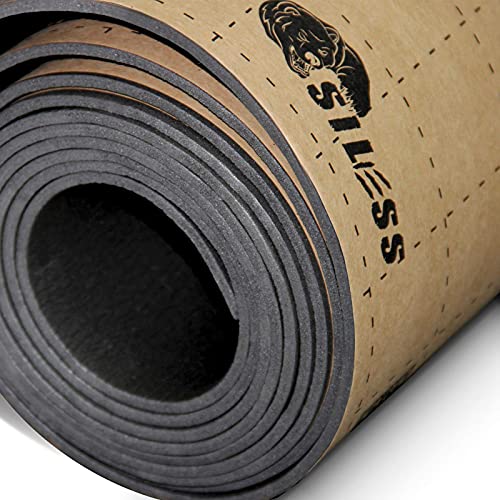
Siless Liner 157 uses a closed-cell polyethylene foam with a 4 mm thickness and a built-in adhesive layer. This liner approach emphasizes moisture resistance, heat blocking, and lightweight performance for door panels and similar areas. The product’s waterproof and flexible formulation makes it suitable for DIY projects where a robust thermal barrier and vibration deadening are desired without adding excessive weight. It is especially helpful for applications requiring durable, waterproof insulation with easy handling and installation.
Buying Guide
- Coverage vs. area: Larger kits (like 36 sqft) provide more versatility for full doors, trunks, and panels, while smaller sheets are ideal for targeted dampening. Consider the number of panels and the size of each panel when estimating material needs.
- Thickness and damping: Thicker materials (around 2–4 mm) generally offer greater vibration dampening and heat blocking, but may require more careful cutting and longer install time. Balance thickness with your space constraints.
- Adhesive quality: Strong self-adhesive backs simplify installation, reduce application time, and improve long-term bonding. Clean surfaces and proper pressure during installation boost adhesion.
- Temperature and moisture resistance: For vehicles exposed to heat and humidity, closed-cell foams and foil-faced layers increase durability and performance over time. Waterproofing helps prevent moisture-related issues inside panels.
- Multi-layer vs. single-layer: Multi-layer systems (foil, butyl, and foam layers) typically deliver better thermal and acoustic performance, but may be pricier. Evaluate whether a single-layer option meets your noise goals, or if a layered approach is warranted for your vehicle.
- DIY feasibility: Look for kits with clear cut guides, pre-slit sheets, and ample adhesive. For first-time installations, kits with larger sheets and straightforward instructions can shorten the learning curve.
- Sound path considerations: In doors, focus on inner and outer skins, speaker wells, and the door cavity. In some cases, treating the firewall and trunk can yield additional quietness, though it requires more material and effort.
- Compatibility: Ensure the product’s backing and thickness are suitable for your car’s door structure and speaker placement. Some kits include pre-cut shapes or strips for easier tailoring.
- Cost-to-performance: While premium materials offer higher damping, a well-planned combination of mid-range products can achieve substantial noise reduction without overspending.
All listed products are designed to reduce road, wind, and engine noise by adding mass, damping vibrations, and blocking heat transfer. When selecting for a car door, consider the door’s internal cavity, speaker location, and how much resonance you want to eliminate. For best results, combine door dampening with selective trunk, firewall, and floor treatments according to your vehicle’s noise profile and your preferences for cabin quietness.