Best Sound Insulation for Boat Engine Compartment
Engine noise and heat can travel through a boat’s engine compartment, affecting onboard comfort and acoustics. The right sound insulation mat not only dampens rumble and vibration but also helps manage heat transfer, improving cooling efficiency and cabin comfort. This article highlights five top options, with practical guidance on selecting materials suitable for marine use and harsh conditions.
Summary Table: Selected Products
| Product | Brand | Approx. Thickness | Total Coverage | |
|---|---|---|---|---|
| uxcell 394mil 10mm 16.36sqft | uxcell | 10mm | 16.26 sq ft | Aluminum foil foam for sound damping and heat shielding |
| Fourub 590Mil (15MM) | FOURUB | 15mm | ~39 in x 96 in | Self-adhesive, flame retardant, reduces engine noise and heat transfer |
| uxcell 394mil 10.76sqft | uxcell | 10mm | 10.76 sq ft | Heatproof, reduces engine/road noise |
| Car Heat Sound Deadening Insulation Mat (ALLWIN) | ALLWIN | 394 mil | 10.8 sq ft | Waterproof, blocks radiant heat, includes closed-cell foam |
| Car Heat Sound Deadening Insulation Mat (2 Pack) | CZXNBI | 197 mil | 21.6 sq ft | Two-pack for larger areas; strong heat barrier |
uxcell 394mil 10mm 16.36sqft Sound Deadener Mat
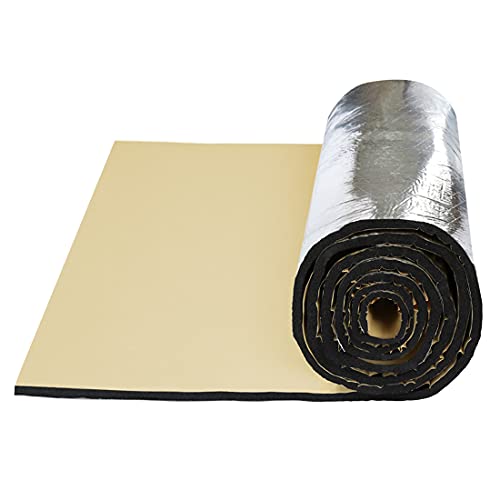
The uxcell mat features a 10mm aluminum foil foam construction designed to dampen engine, road, and transmission noise. With a thick foam core and an outer aluminum layer, it aims to reduce heat transfer and provide insulation for the cabin. The product’s size covers a substantial surface area suitable for boat engine compartments, where space is at a premium and vibration can travel quickly. Use in conjunction with sealing tapes and cleanly cut panels to maximize coverage and performance.
Fourub 590Mil Engine Sound Deadener Mat

Fourub’s 15mm thick insulation is designed for high noise reduction and heat shielding. It features a self-adhesive backing that is water resistant and flame retardant, making it suitable for marine environments where moisture exposure is possible. The material aims to lower motor noise and reduce heat transfer to the cabin space, improving overall comfort during travel and onboard activities. Consider multiple panels for comprehensive coverage in the engine bay and under seating areas facing the engine.
uxcell 394mil 10.76sqft Fender Insulation Mat

This 40×40 inch panel offers 10mm thickness with aluminum foil foam to dampen engine and road noise. The heatproof surface and reflective foil help deflect radiant heat from the engine and exhaust, contributing to cabin temperature stability. For boats, it can be placed around compartments where heat and vibration are most noticeable, such as engine bays and near bulkheads adjacent to living spaces.
ALLWIN Car Heat Sound Deadening Insulation Mat

ALLWIN’s 394 mil insulation focuses on a strong heat barrier and sound dampening. The mat blocks up to 98% of radiant heat, while its self-adhesive, waterproof closed-cell foam minimizes moisture uptake. In a marine setting, this combination helps keep engine vibrations quieter in the cabin and supports overall thermal stability, potentially reducing the need for excessive cooling or heating in certain zones of the boat.
CZXNBI 197 Mil, 2-Pack Insulation Mat

The 197 mil mat from CZXNBI comes in a 2-pack offering 21.6 square feet of coverage. It provides a strong heat barrier and sound dampening while remaining lightweight and manageable for boat maintenance. The thicker profile relative to standard 1-pack options may provide better attenuation for the engine bay’s higher noise and vibration levels, especially on larger vessels or boats with high engine output.
Buying Guide: Key Purchase Considerations
When selecting sound insulation for a boat engine compartment, consider these factors to balance performance, durability, and practicality on the water.
- Noise reduction versus heat shielding: Thicker materials typically provide better sound dampening but may be less flexible for tight compartments. Look for composite layers with aluminum foil, foam, and a heatproof surface for dual benefits.
- Moisture resistance: Marine environments demand water resistance and anti-moisture properties. Self-adhesive, waterproof, closed-cell foams are preferable, as they resist moisture that can degrade insulation over time.
- Temperature range: Engine compartments experience wide temperature swings. Materials rated from sub-freezing to high heat help maintain effectiveness and longevity on boats.
- Adhesion and installability: A strong adhesive backing simplifies installation on curved or irregular surfaces common in boats. Pre-cut panels or flexible sheets can save time during retrofits.
- Weight considerations: Excessive weight can affect boat performance. Choose materials offering a balance of effective attenuation and manageable weight per square foot.
- Marine compatibility: Confirm that the product is designed or rated for vehicle and marine use. Some products perform well in cars but may require additional protection in saltwater environments.
- Coverage strategy: For engine compartments, target critical zones: top of the engine, firewall, hood or cowling interfaces, and areas facing interior living spaces to maximize comfort gains.
- Fire and safety standards: Flame retardancy and low odor are important, as engine compartments can experience heat buildup. Look for flame retardant formulations and minimal off-gassing.
- Maintenance and longevity: Select mats that can be easily cleaned and resist degradation from humidity, salt spray, and engine oil exposure.
In practice, a layered approach—combining a high-density sound dampening layer with a heat-reflective foil and a moisture-resistant backing—provides robust performance for boat engine compartments. For larger engines or boats with open engine bays, pairing thicker mats (15–20 mm) with multiple panels can yield noticeable reductions in noise and heat transfer, while still allowing flexible installation around complex shapes.