Best Sounding Car Audio Speakers for Your Ride in 2026
Upgrade your vehicle’s sound system with speakers that deliver clear highs, crisp mids, and solid bass without distortion. The following selections cover a range of sizes and power handling to fit common factory setups and aftermarket upgrades. Each entry is chosen for overall balance, build quality, and installation practicality, helping you enjoy a concert-like listening experience on the go.
Summary of selected products:
- BOSS Audio Systems CH6530 Chaos Series 6.5 Inch Car Door Speakers — 300 Watts (Pair), 3 Way
- ZYZCLES 2026 Upgraded Premium 6.5″ Hi-Fi Coaxial Car Speakers — 250W RMS, 1000W Peak (Pair)
- JVC CS-J6930 6″x9″ 3-Way Car Speakers — 400 Watts Max
- Pioneer TS-501M 4-Way Coaxial Car Speakers — 300 W Max (Pair)
- JBL GTO939 6×9″ 3-Way Car Coaxial Speakers
Best Sounding Car Door And Panel Speakers: Core Concepts
Choosing the right car speakers involves matching power handling, impedance, and speaker design to your vehicle’s audio system. Three-way and four-way designs typically offer better high-frequency detail and broader soundstage, while coaxial speakers provide simple upgrades with solid all-around performance. Look for components with durable surrounds, stable tweeters, and easy install features like clear polarity markings or plug-and-play terminals for quicker upgrades.
Product 1: BOSS Audio Systems CH6530 Chaos Series 6.5 Inch Car Door Speakers

The CH6530 set brings a 3-way design in a compact 6.5-inch package, aiming for a balanced sound with decent midrange detail and usable bass for a factory-aligned upgrade. With a 4-ohm impedance and a stated power handling of up to 300 watts per pair, these speakers are suitable for standard aftermarket amps or head-unit power. The physical footprint is designed for common door panel openings, and mounting depth sits around two inches, which reduces fitment surprises in many vehicles.
Key considerations: The 3-way configuration helps separate highs, mids, and lows for cleaner overall sound. The included mounting hardware in most kits supports straightforward installation, though vehicle compatibility should be confirmed to ensure the 5.5-inch mounting holes align with factory openings. Expect solid vocal clarity and a punchy, if not showroom, bass performance on moderate listening levels.
Product 2: ZYZCLES 2026 Upgraded Premium 6.5″ Hi-Fi Coaxial Car Speakers

ZYZCLES delivers a coaxial 6.5-inch pair tuned for high-fidelity output with strong bass response. The claims highlight 250W RMS and 1000W peak power handling, aiming to offer substantial dynamic range without aggressive distortion. A notable feature is the 13mm Mylar dome tweeter paired with a glass fiber woofer, designed to produce clear highs and deep lows across a wide frequency spectrum. The design emphasizes user-friendly installation with solder-free terminals and clear polarity markings for quick, reliable setup.
Practical takeaways: This pair targets listeners seeking a more premium listening experience without adding a separate tweeter unit or complex crossovers. It suits users upgrading factory systems where space and ease of installation matter, and it pairs well with aftermarket amplifiers for enhanced headroom. Expect expansive stage imaging and crisp treble without harshness at reasonable volume levels.
Product 3: JVC CS-J6930 6″x9″ 3-Way Car Audio Speakers

JVC’s CS-J6930 adds a robust 6×9 inch footprint with a 3-way design intended to balance highs, mids, and lows with a smoother overall response. The product highlights include a carbon mica woofer cone and a PEI midrange driver, supported by a polymer film dome tweeter. With a peak power rating up to 400 watts and a wide frequency response, these speakers are motivated toward higher output while maintaining clarity across a broad spectrum. They also emphasize durability via a cloth-rubber hybrid surround for long-lasting performance.
Practical considerations: These are well-suited for those seeking noticeable upgrades over standard factory speakers without a full component system. The wider surface area of 6×9 inches generally delivers more bass presence and a fuller midrange, though they require a compatible mounting location and potential wiring adjustments. They pair effectively with aftermarket head units and modest amplifiers for elevated sound quality.
Product 4: Pioneer TS-501M 4-Way Coaxial Car Audio Speakers

The Pioneer TS-501M adopts a 4-way design across a compact 5-1/4-inch footprint, aiming to deliver comprehensive frequency coverage with improved clarity. The 4-way configuration means dedicated pathways for separate frequency bands, which can translate to more accurate sound staging and cleaner highs. Power handling is rated up to 300 watts peak, with a more moderate continuous rating, which aligns well with typical head-unit outputs for straightforward installation and reliable performance in daily driving scenarios.
What to expect: Enhanced detail across the frequency spectrum, including smoother vocal presence and crisp treble without excessive harshness. The compact size makes this option appealing for small to mid-size cars or tighter door panels, and Pioneer’s reputation supports dependable operation and easier replacement parts if needed.
Product 5: JBL GTO939 GTO Series 6×9″ 3 Way Coaxial Speakers
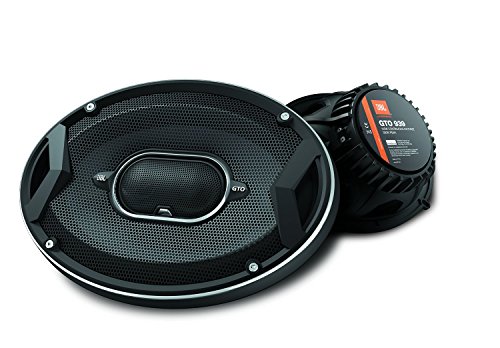
The JBL GTO939 brings a 6×9 inch, 3-way design with a focus on delivering robust output and durable construction. The Plus One woofer cone design with a rubber surround helps maximize bass impact while maintaining reliability. The adjustable Mylar-Titanium tweeter and a level control provide user-tuned high-frequency response, enabling you to tailor brightness to your vehicle’s acoustics. This model is well-suited for listeners seeking strong overall performance without the complexity of separate components.
Considerations: JBL’s GTO line generally emphasizes high sensitivity and efficient power use, meaning good performance even with modest amplifiers. A 3-way configuration aids in resolving busy midrange passages cleanly, which benefits genres from rock to pop and beyond. Installation is typically straightforward, with standard mounting points common to many 6×9 locations.
Buying Guide: Key Purchase Considerations
Speaker selection depends on vehicle fit, desired sound signature, and installation practicality. Here are critical factors to evaluate:
- Speaker size and fit: Confirm mounting depths, hole patterns, and mounting depth limits for your doors or panels. Coaxial and 3- or 4-way designs vary in required space.
- Power handling and impedance: Match the speaker’s RMS power and impedance to your head unit or amplifier to avoid distortion or underpowered performance.
- Sound signature: Decide whether you want punchy bass, bright highs, or a balanced neutral tone. Three-way and four-way designs typically offer more detailed highs and midrange separation.
- Installation practicality: Solder-free terminals, polarity markings, and included grilles or adapters simplify the upgrade process. Some models may require additional wiring adapters or crossovers.
- Durability and build quality: Look for sturdy surrounds, rigid cones, and weather-resistant components if you routinely drive in varied climates or expose panels to sunlight.
- System synergy: Consider how the new speakers will interact with your existing head unit or aftermarket amplifier. Upgrading to higher quality speakers often benefits most noticeably from improved amplification and proper equalization.
Performance perspectives vary by use case. For daily commuting, coaxial designs provide reliable upgrade with straightforward installation and noise-free integration. For enthusiasts seeking concert-like output, three- or four-way systems paired with a capable amplifier can unlock greater dynamics and a more expansive soundstage. When evaluating options, compare sensitivity and efficiency to understand how much power you’ll need from your head unit or amp to reach your target listening levels.
Additional Tips
– For factory mismatches, consider a gentle equalizer or a sunken subwoofer setup to complement midrange and highs without overwhelming the cabin.
– If you have limited installation space, prioritize compact depth or shallow-mount models and confirm wire routing paths to avoid panel damage.